Report Depth Tiers - Basic, Comprehensive, Capital-Grade
Written commercial roof condition reports for Denver buildings - zone diagram plus photo log plus scope columns.
A condition report is useful only if it is specific enough to act on. Every report we produce is anchored to a zone diagram for that building, a photo log keyed to the diagram, and scope columns that assign each zone a disposition - at one of three depth tiers depending on how the report will be used.
Most commercial roof condition reports circulating in Denver are inspection forms with a paragraph summary and a handful of unlabeled photographs. They do not serve capital planning. They do not serve manufacturer warranty claims. They are not usable for property acquisition due diligence because nothing in them is tied to a repeatable reference system, and they cannot be compared to a prior report from a different contractor or inspection season.
Our condition reports are built on a zone diagram that defines the reference system for every subsequent document produced on that building. Every photo is labeled with a zone number. Every defect is logged to its zone. Every scope column - monitor, repair now, budget for replacement - is assigned at the zone level and aggregates to a building-level condition score. That format makes the report comparable to the next one and the one after that, which is what transforms an inspection from a snapshot into the trend data that capital planning and warranty support require.
In Denver's hail-season environment, that format also serves post-storm documentation. A zone-keyed pre-storm report, dated and filed, is the baseline document that lets an insurance adjuster or a manufacturer's field representative distinguish pre-existing conditions from storm damage. The more precise the pre-storm documentation, the less room for dispute in the claim.
Basic tier: Zone diagram, photo log with zone keys, condition rating per zone on a 1-5 scale, and scope column per zone. No written narrative sections. Appropriate for ongoing maintenance documentation on stable buildings where the purpose is warranty maintenance records, post-hail rapid assessment updates, and condition baseline establishment. Turnaround is 3-5 business days after the site visit.
Comprehensive tier: Everything in the basic tier plus written narrative sections for each area of concern, manufacturer detail references for each flashing defect, and a building-level summary with an aggregate condition score. Appropriate for buildings in the repair or replacement planning phase, for insurance claim support, for warranty claim documentation, and for lease-commencement condition establishment. Turnaround is 5-7 business days after the site visit.
Capital-grade tier: Everything in the comprehensive tier plus a cost-band estimate for each identified scope item, a lifecycle cost analysis section, and a formatted executive summary suitable for submission to ownership, a capital committee, or an acquisition due-diligence team. Appropriate for property acquisitions, capital budget approval, and buildings where the report will be reviewed by people without roofing technical knowledge. Turnaround is 7-10 business days after the site visit.
Zone Diagram as the Foundation Document
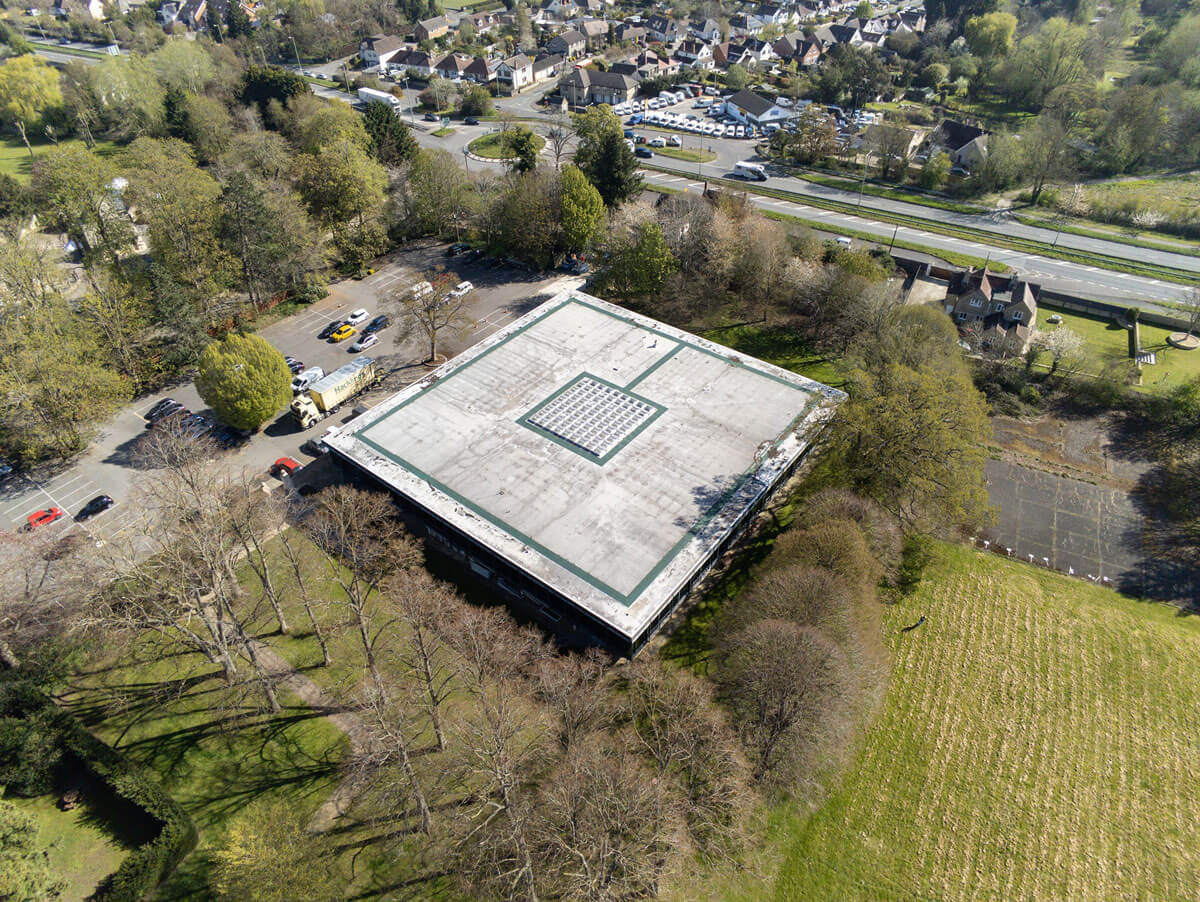
The zone diagram is produced at the time of the first report and updated at subsequent inspections when the building's roof configuration changes - equipment additions, penetration installations, parapet modifications. It is keyed to the building's actual roof layout, not a template, and annotated with zone numbers, drain locations, mechanical equipment positions, and access points.
The diagram travels with the building across ownership transitions and staff changes. When a Denver commercial property changes hands - a common occurrence in the institutional and industrial portfolio sectors - the zone diagram and the full inspection history under it are transferable to the new owner's facilities team. A new facility director can orient to the roof on the first day without starting from scratch, using the same zone reference that every prior inspection produced.
When a Condition Report Is and Is Not Sufficient
A visual condition report is the right document for most inspection and maintenance purposes in Denver. It is not the right document when the capital decision depends on the saturation state of the insulation - specifically in the recover-versus-replace decision where trapped moisture under a new membrane is the risk. If the scope decision is recover versus full replacement, a visual report documents membrane degradation but cannot tell us how much of the insulation below is wet. That determination requires moisture survey.
We are explicit about this distinction in every capital-grade report. Denver's freeze-thaw environment makes wet insulation especially consequential - moisture trapped under a recover membrane freezes and expands through 90 to 110 freeze-thaw cycles per year, degrading the membrane bond and the deck below simultaneously. If the condition data from the site visit is not sufficient to support the decision at hand, we say so before we deliver the report - and we explain what the moisture survey would involve and what additional capital data it would provide.
Frequently asked questions
What is a condition report used for in a Denver property acquisition?
Two things: quantifying the deferred maintenance liability and identifying conditions that are material to the acquisition decision. A capital-grade condition report on a Denver building gives the due-diligence team a priced estimate of near-term roof capital requirements and flags any conditions - active moisture infiltration, non-compliant prior repairs on a warranted system, insulation in the 25-percent-wet range - that could affect the acquisition model. We produce acquisition-targeted condition reports on compressed timelines when the due-diligence window is tight.
Can a condition report support a hail insurance claim?
Yes, if it establishes the pre-storm baseline. A zone-keyed condition report produced before a hail event - or immediately post-event before conditions change - establishes what the membrane looked like before the storm and immediately after it. That documentation is what allows an adjuster to attribute storm damage to the storm rather than to pre-existing deterioration. We produce post-hail rapid assessments that are designed to function as claim-support documentation.
How quickly can you produce a condition report for time-sensitive acquisition due diligence?
For a tight acquisition window, we can typically schedule the site visit within two business days of contact and produce a basic or comprehensive tier report within 48 hours of the site visit. Capital-grade reports take longer due to the cost-band analysis and executive summary formatting. Contact us directly for turnaround discussion on a specific situation.
Can the report be used to set a lease-commencement baseline?
Yes. A documented condition report at lease commencement establishes the roof condition at the start of the lease term, which protects both landlord and tenant in any subsequent dispute over who is responsible for a developing condition. For Denver commercial leases with roof-maintenance obligations on the tenant, the lease-commencement condition report is the reference document for the entire term. We produce these reports specifically for lease-commencement purposes.
Get a condition report on your Denver commercial roof.
| Scope Format | Written roof plan and photo record |
|---|---|
| Primary Market | Denver commercial buildings |