The Post-Hail Inspection - Why August-September Timing Matters
The inspection records membrane, seams, flashings, drains, penetrations, edge metal, moisture indicators, photographs, and practical next steps in a condition report. Twice-yearly commercial roof inspections for Denver metro buildings - post-hail season and pre-snow cadence, zone-keyed photo logs, written condition deliverables, and documented maintenance records that keep manufacturer warranties intact.
Twice-yearly inspections tied to Colorado's actual climate calendar - post-hail-season in late summer and pre-snow in September-October - with a zone-keyed photo log and condition matrix that tells your capital planner and maintenance team exactly what is on the roof and what it requires.
Commercial roof inspections in Denver get scheduled wrong more often than not. A single annual inspection misses half the seasonal damage cycle. Colorado's climate imposes two distinct inspection windows that correspond to real damage mechanisms: a post-hail inspection running late August into early September, after the May-through-August Front Range hail season has run its course, and a pre-snow inspection in September and October, before the first significant snowpack loads and freeze-thaw cycling stress the membrane and flashings through winter.
Skipping the post-hail window means entering winter with undocumented storm damage - membrane bruising, granule displacement on modified bitumen, seam stress at mechanically attached laps - that compounds under freeze-thaw loading and becomes a larger repair or replacement conversation in spring. Skipping the pre-snow window means entering the freeze-thaw season without knowing whether parapet flashings, expansion joints, and drains are in condition to survive 90 to 110 freeze-thaw cycles at altitude.
Our inspection protocol produces a zone-keyed log specific to each building - zones defined by physical boundaries like expansion joints, drain clusters, and mechanical curb islands - with every photograph labeled to a zone number and a scope column that assigns each zone a disposition: monitor, repair within 30 days, or budget for replacement. The log from each inspection builds on the prior one, so the owner has a condition timeline rather than a disconnected snapshot. At the end of each hail season, that timeline is exactly what a manufacturer warranty claim and an insurance adjuster both need.
The Front Range hail season runs May through August, with peak frequency and severity in June and July across Denver County, Adams County, and Arapahoe County. A commercial roof that absorbed multiple moderate hail events over that four-month window may not show active leaks immediately - but the membrane has accumulated damage that is now measurable: bruising and compression at seams on mechanically attached TPO, granule loss on modified bitumen exposing the reinforcing mat, surface indentation on cover boards that compromises future impact-resistance ratings, and seam-edge lifting at the perimeter where ballistic impacts concentrated.
The post-hail inspection documents those conditions before freeze-thaw cycling turns accumulated hail stress into active failures. On buildings where hail damage is evident during the walk - consistent bruise patterns across field membrane zones, loss of aggregate on BUR surfaces, impact marks at seams - we escalate the condition rating and notify the owner that a claim documentation package should be assembled before the storm-event records age. Our zone-keyed photo logs are dated and cross-referenceable to NOAA storm data for that purpose.
Portfolio accounts managing multiple buildings - UCHealth facilities across the Anschutz campus, Denver Public Schools buildings across Denver County, large industrial landlords along the I-70 and I-225 corridors - use the post-hail inspection cycle to prioritize the replacement and repair queue for the following year's capital plan. The inspection data sequences which buildings go to the front of the contract schedule before spring.
The Pre-Snow Inspection - September-October Window
September and October are the reliable window to assess the roof before the first significant snowpack and the beginning of sustained freeze-thaw cycling. Denver averages its first measurable snow in October, but the freeze-thaw cycling at parapet walls and expansion joints begins earlier as nighttime temperatures drop. Parapet flashings that have been stressed by summer heat and hail season begin failing at seams when the first freeze-thaw cycles drive contraction-expansion movement.
The pre-snow inspection specifically examines the elements most vulnerable to freeze-thaw damage: flexible perimeter flashings at parapet walls, pitch-pan conditions at pipe penetrations, expansion-joint cover conditions at building movement joints, and drain elevations relative to the surrounding membrane. Drains that have settled or membrane that has raised around them create ponding conditions that freeze and add concentrated weight loads in winter. We document drain elevation differentials and flag any drain that is holding water at inspection time.
Buildings we maintain across multiple inspection cycles show a consistent pattern: the parapet flashings and penetrations that we addressed in October pre-snow inspections hold through winter, while buildings that deferred that maintenance show accelerated flashing failures by March. The cost difference between a documented pre-snow repair and a March emergency flashing replacement under snow-removal conditions is significant.
What We Walk and What We Photograph
Field membrane: Every zone in the diagram gets photographed - defects and good condition alike. We do not spot-photograph. Blisters, ridges, seam lifting, surface erosion on modified bitumen, alligatoring, lap-seam conditions on TPO and PVC, surface bruising from hail - each defect is photographed and logged to its zone number. The absence of defect is also documentation: if zone 8 is in pristine condition across three consecutive inspections, that record is the baseline for a future warranty claim in that zone.
Flashing at every transition: Parapet flashings, penetration flashings, curb flashings at HVAC units, expansion-joint covers, pitch pans - every transition is photographed individually and logged to its zone. In Denver's freeze-thaw environment, flashings are where most failures originate, and they are also where most manufacturer warranty claim denials originate when the owner cannot document that the flashing was acceptable before the failure.
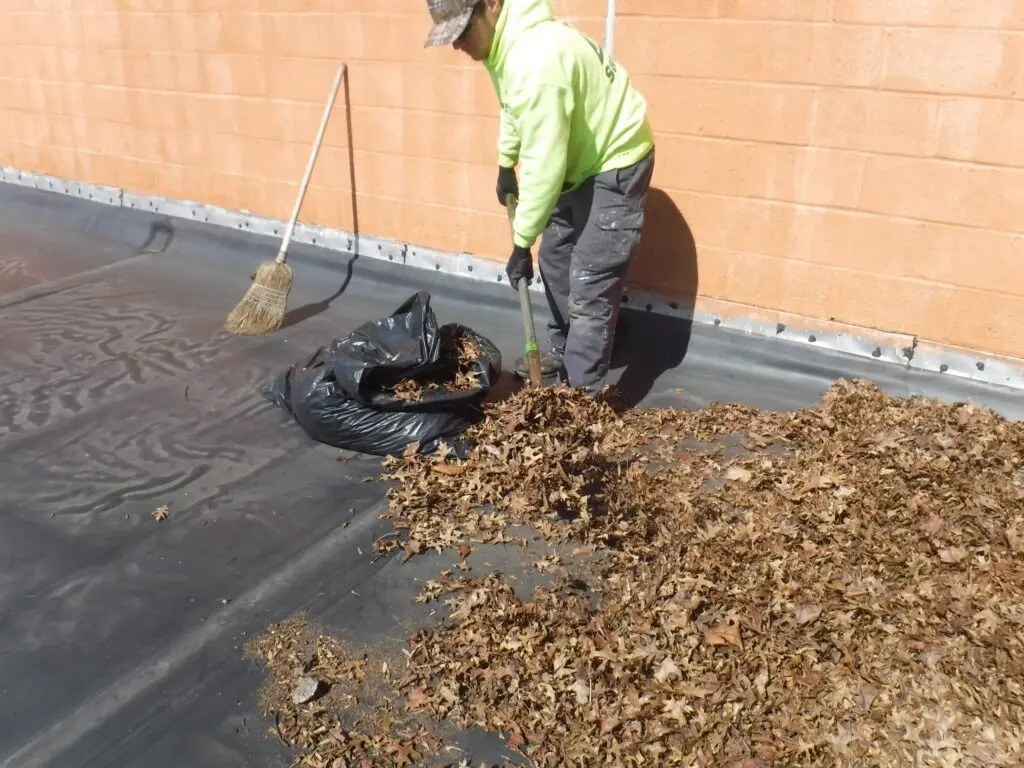
Drains: We photograph every drain surface, remove debris, and note standing water patterns. Denver's freeze-thaw cycling shifts substrate and misaligns drains over time. We document drain elevation relative to the surrounding membrane and flag any drain holding water at inspection time - ponding water freezes, adds concentrated structural load, and is a specific warranty exclusion on most manufacturer NDL programs.
Rooftop equipment: HVAC curb conditions, unit base flashings, condenser line penetrations, and access ladder anchors. Any equipment added or repositioned since the prior inspection is noted - field-installed penetrations that do not follow the manufacturer's published detail are a recurring warranty-denial trigger, and documenting when they appeared is part of the condition record.
Frequently asked questions
How often should a Denver commercial roof be inspected?
Twice per year - post-hail-season in late August or early September, and pre-snow in September or October. Denver's climate imposes two distinct damage mechanisms: the May-through-August hail season and the fall-through-spring freeze-thaw cycle that averages 90 to 110 events per year. A single annual inspection documents only half the damage cycle. Most manufacturer NDL warranty programs require biannual documented maintenance to keep the warranty in good standing.
Can inspection reports support a hail insurance claim?
Yes, if the report documents pre-storm condition. After a hail event, insurance adjusters require evidence distinguishing pre-existing damage from storm damage. A dated, zone-keyed photo log is the documentation that makes that distinction supportable. A post-hail inspection report that cross-references NOAA storm-event data gives the claim a documented timeline. We produce inspection records specific enough to be usable in that process.
What if we have no prior inspection records on our Denver building?
The first inspection establishes a baseline. We note everything found, photograph it against the zone diagram, and produce a condition matrix that starts the record. The value compounds over time - the second and third inspections are where trend data becomes useful for capital planning, warranty support, and post-storm documentation. Starting the record is more important than waiting for the perfect timing.
| Scope Format | Written roof plan and photo record |
|---|---|
| Primary Market | Denver commercial buildings |