Snow Load and Hail Combined: Denver's Structural Roof Loading Context
Structural roof damage assessment for Denver commercial buildings - snow load plus hail combined loading, deck deflection mapping, structural engineer coordination, and documented scope for capital planning and insurance.
Denver commercial roofs carry two structural loading variables that do not typically combine in other major US markets: 30 psf design snow load and repeated baseball-sized hail impact during the May through August hail season. When both loads have been acting on the same building over many years, the result is deck deflection, fastener hole elongation, and parapet wall stress that a membrane-only inspection misses.
Structural roof damage assessment occupies the boundary between roofing and structural engineering - and that boundary is where the most consequential problems hide. A Denver commercial building that has been carrying 30 psf snow load through multiple winters while also sustaining repeated hail impacts from Colorado's top-three-national-ranking hail belt shows deck-level damage that no surface inspection can adequately scope. The membrane may be intact. The insulation below it may be saturated. And the metal deck that both systems depend on may have sustained cumulative deflection and fastener hole elongation that compromise the entire assembly's structural integrity.
We flag structural damage indicators during every roofing inspection we perform - deflection patterns visible through insulation compression, parapet wall cracking or displacement, drain misalignment that indicates substrate settlement, fastener pullout at perimeter rows. When those indicators are present, we produce a roofing-side documentation package that identifies the structural concerns and recommend engagement with a licensed structural engineer before any roofing work proceeds. We do not certify structural conditions - we identify and flag them.
For Denver commercial building owners engaged in capital planning, post-storm assessment, or pre-purchase due diligence, a structural roof damage assessment scoped by a roofing contractor in coordination with a structural engineer produces the most complete picture of the building's condition - one that separates roofing-system issues from structural issues and prices the repair or replacement scope correctly for both.
Denver's 30 psf ground snow load translates to a 21 psf flat-roof design snow load under ASCE 7-22 for most commercial building types and exposure conditions. Buildings in the Denver metro's western foothills communities - Evergreen, Conifer, Golden, Lakewood at higher elevations - carry significantly higher design values. Snow load is the dominant structural design variable for Denver commercial roofs, and it is the variable most often not re-evaluated when a building's occupancy or rooftop loading changes after original construction.
Hail impact adds a cumulative structural loading element that does not appear in standard structural calculations. A single 2-inch hailstone at terminal velocity delivers a concentrated impact load at its contact point that exceeds the membrane and insulation system's design assumptions. Repeated over a decade of Colorado hail seasons - documented 2-inch-plus events most years across Adams and Arapahoe counties - the cumulative insulation compression, facer fracture, and fastener shear stress at impact-concentrated zones produces deck-level deflection that is measurable but not visible from the roof surface.
The combination of sustained snow load and repeated hail impact is the structural loading environment that Denver commercial roofs must be assessed against. A roof that has been carrying snow for 25 winters without a structural deck review, in a zip code that sees regular hail above 1.5 inches, warrants deck probing at core pull locations to assess corrosion, deflection, and fastener hole condition before a new roofing system is specified over it.
Deck Condition Assessment: What We Look For and When We Stop
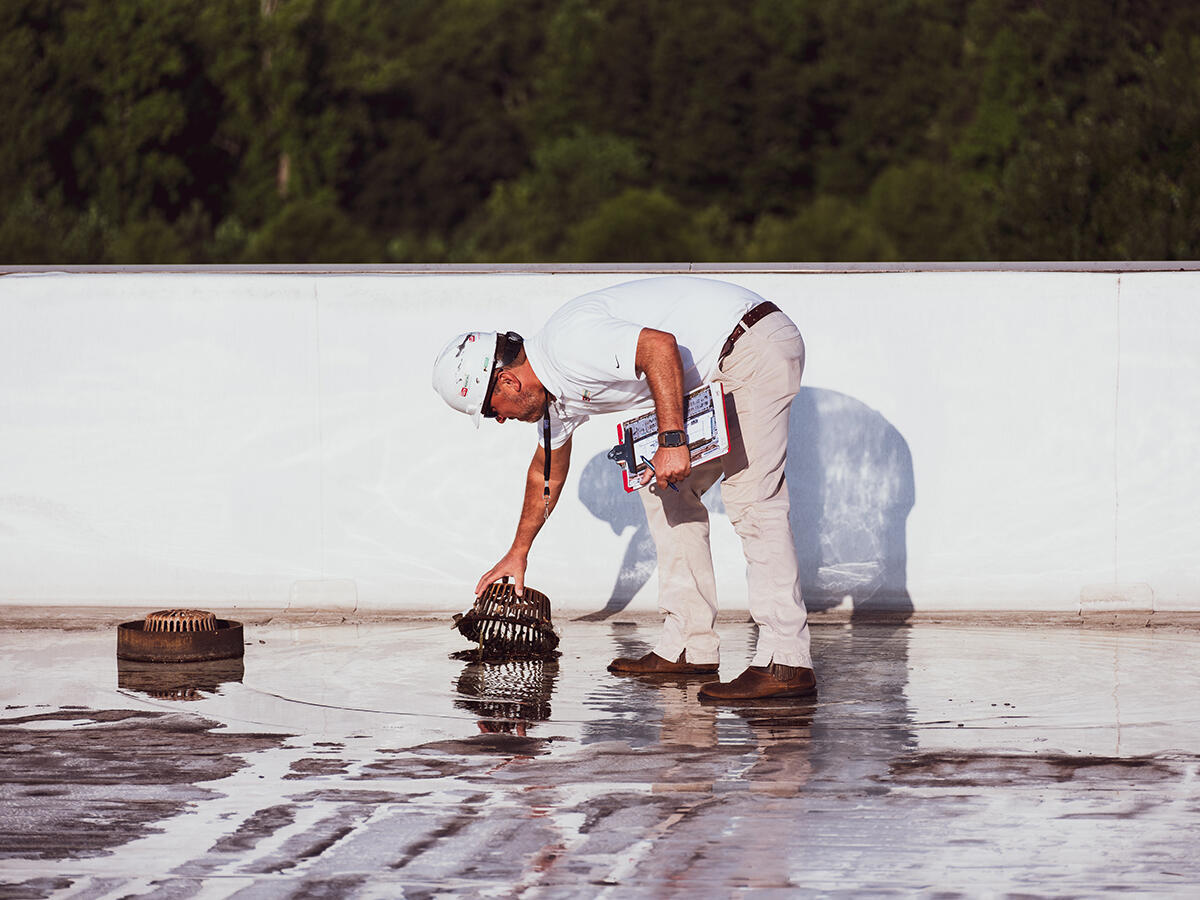
We assess deck condition through core pull inspection ports - the same holes we open to evaluate insulation saturation - and through visual inspection at any structural indicators visible during the roof walk. At each core location, we photograph the deck surface exposed by the pull: galvanizing condition, rust streaking, fastener hole geometry relative to original specification, and any visible deflection at the inspection point. We document what we observe and note locations where the deck condition warrants engineering review.
The threshold for flagging a structural engineer referral is not high - we err toward referral rather than toward roofing-only scope when deck conditions are ambiguous. Deck corrosion that has penetrated the base metal is a structural referral. Fastener holes that are visibly oversized from pullout cycling are a structural referral for the worst-case perimeter locations. Deflection that is measurable with a string line across two structural bays is a structural referral. In each case, we produce a written description of the indicator, a photograph, and the location on the zone diagram - that package goes to the structural engineer as context for their assessment.
We do not certify structural adequacy, perform structural calculations, or issue clearance for work on structurally compromised decks. Those functions require a licensed structural engineer. What we provide is the roofer's-eye documentation that identifies the indicators requiring structural review - and the continuity with that engineer's work to ensure that the roofing scope specified after structural clearance addresses the conditions they identified.
Structural Assessment for Capital Planning and Pre-Purchase Due Diligence
Denver commercial building transactions and capital-planning cycles regularly include roof assessments that need to address structural condition, not just membrane condition. A building owner planning a 20-year hold on a 1985 DTC office building needs to know whether the metal deck under the second-generation TPO has corrosion that will require deck replacement in the next replacement cycle - a scope and cost driver that changes the capital plan significantly. A buyer in due diligence on an Aurora industrial building needs the same information before closing.
We produce structural damage assessment packages for capital planning and due diligence that include: the full core pull grid with saturation mapping, deck condition photography at each core location, parapet wall and coping cap condition notes, drain condition and structural alignment documentation, and a written summary of indicators that warrant structural engineering review. The package is designed to be handed to a structural engineer as the roofing-contractor input to their assessment - not as a substitute for it.
For pre-purchase due diligence on Denver commercial buildings where the inspection timeline is compressed, we mobilize within the due diligence window and produce the documentation package on the same timeline - typically within 3 to 5 business days of the roof walk for most building sizes. We do not adjust scope or documentation detail to meet a compressed timeline; if the timeline does not allow a complete assessment, we document what was and was not assessed and note the limitation in the report.
Frequently asked questions
When does a Denver commercial roof inspection require a structural engineer?
Any time we observe deck corrosion through the base metal, fastener pullout holes that are visibly oversized, parapet cracking or displacement, drain misalignment that suggests substrate settlement, or measurable deck deflection across structural bays - those conditions require a structural engineer's assessment before any roofing work proceeds. We flag these indicators during every inspection and include them in our written report. The structural engineer determines whether the deck is adequate for the new system or requires reinforcement or replacement.
Does Denver's snow load affect what roofing system I can specify?
Yes, in two ways. First, the new roofing system adds dead load to the building - insulation, membrane, cover board, and attachment hardware all contribute to the total roof dead load. On buildings where the structural deck is already at or near its design capacity from original construction plus prior roof system additions, adding another recover layer may not be structurally feasible without deck reinforcement. Second, fully adhered systems perform better under Denver snow load and wind conditions than ballasted systems, which are rarely specified in this market because hail impact on ballasted roofs creates secondary projectile risk and ballast displacement.
Can you do a structural roof assessment for a pre-purchase inspection in Denver?
Yes. We produce structural roof damage assessment packages for commercial due diligence within typical inspection timelines - 3 to 5 business days for a complete package on most building sizes. The package includes the full core pull grid, deck condition photography, structural indicator documentation, and a written summary for structural engineering referral. We are clear about what the package includes and what requires separate structural engineering review - both are part of a complete due diligence scope.
How does hail damage interact with snow load structurally?
| Scope Format | Written roof plan and photo record |
|---|---|
| Primary Market | Denver commercial buildings |