Wildfire and Ember Damage Assessment on Colorado Commercial Roofs
Fire damage roof assessment and repair for Denver-area commercial buildings - wildfire ember intrusion, Marshall Fire 2021 reconstruction context, HVAC smoke damage at rooftop units, and insurance-grade scope packages.
Colorado's wildfire environment reached Denver's commercial doorstep with the December 2021 Marshall Fire, which destroyed over 1,000 structures in Louisville and Superior and sent ember showers across the Boulder-Denver corridor. Fire damage on commercial roofs spans the full range from catastrophic membrane burn-through to ember impact and HVAC smoke infiltration - and each level requires a different scope.
The Marshall Fire of December 30, 2021 was the most destructive wildfire in Colorado history, burning over 6,000 acres and destroying more than 1,000 homes and commercial buildings in Louisville and Superior. The fire's rapid spread in Chinook wind conditions - winds gusting to 100-plus mph in the foothills on the day of the fire - sent ember showers across a wide area of the Boulder County and western Denver metro commercial districts. Commercial buildings that were not in the direct burn zone sustained fire-related roof damage from ember impact on TPO and EPDM membranes, HVAC intake contamination from smoke, and in some cases membrane ignition at rooftop mechanical equipment that had inadequate ember-guard protection.
The Marshall Fire reconstruction period - 2022 through 2025 - involved re-roofing dozens of commercial buildings in Louisville, Superior, and the surrounding Boulder County commercial district, including industrial buildings on the Dillon Road corridor, retail centers in Old Town Louisville, and the commercial park buildings along US-36 in Superior. This context is not just historical - it established the wildfire-ember-intrusion damage mode as a documented Colorado commercial roofing risk category that insurers and building owners now need to plan for proactively.
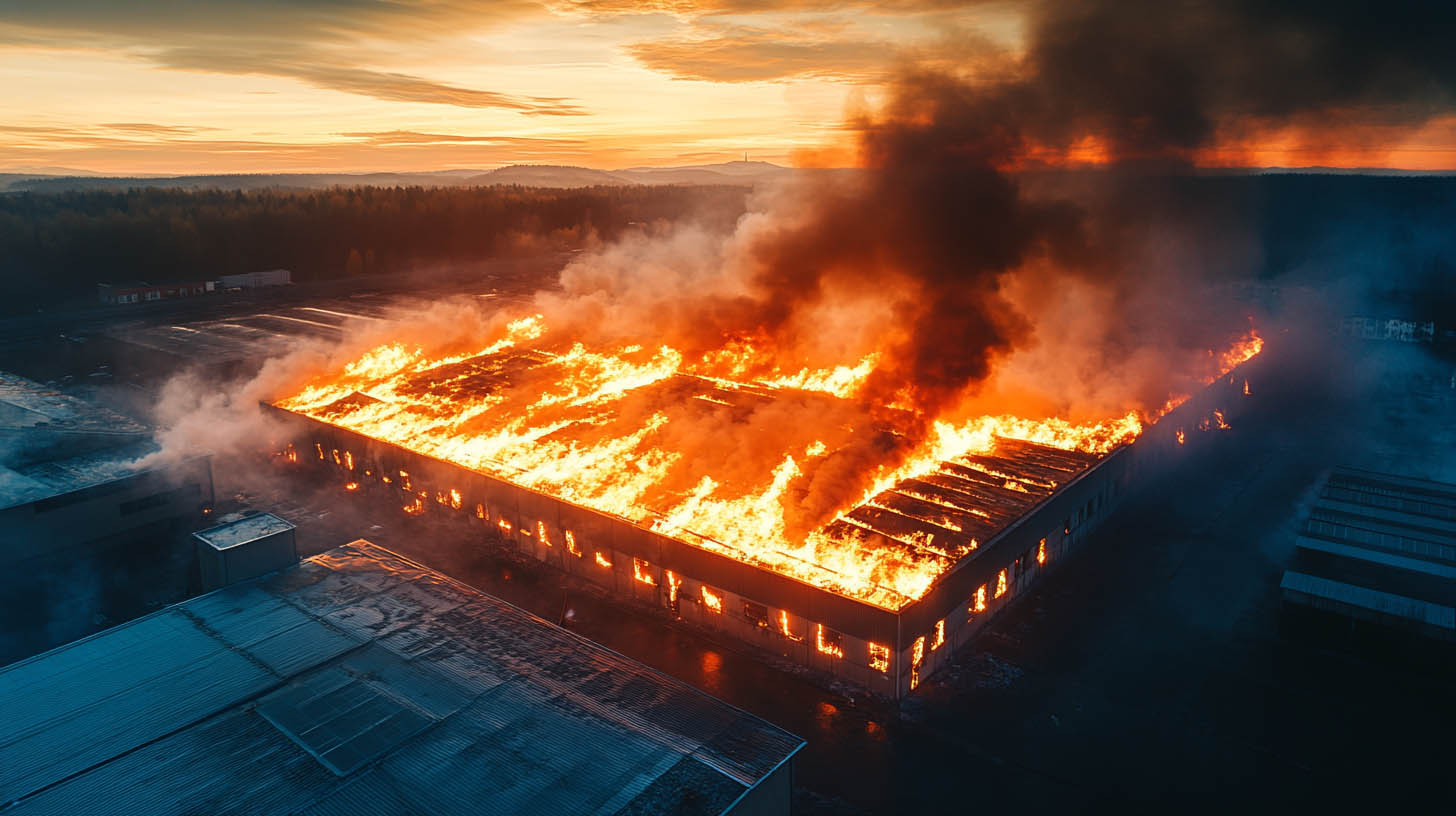
Building fire damage from structure fires - distinct from wildfire - affects Denver commercial buildings across all construction vintages. Industrial and manufacturing facilities with hot-work operations, restaurant buildings with grease-fire risk, and the older mixed-use structures in LoDo and Five Points are the most common sources of commercial building fire calls. In every case, roofing scope follows after fire department clearance and structural assessment confirm that the building is safe to access and that the structural integrity of the roof deck is adequate for crew access.
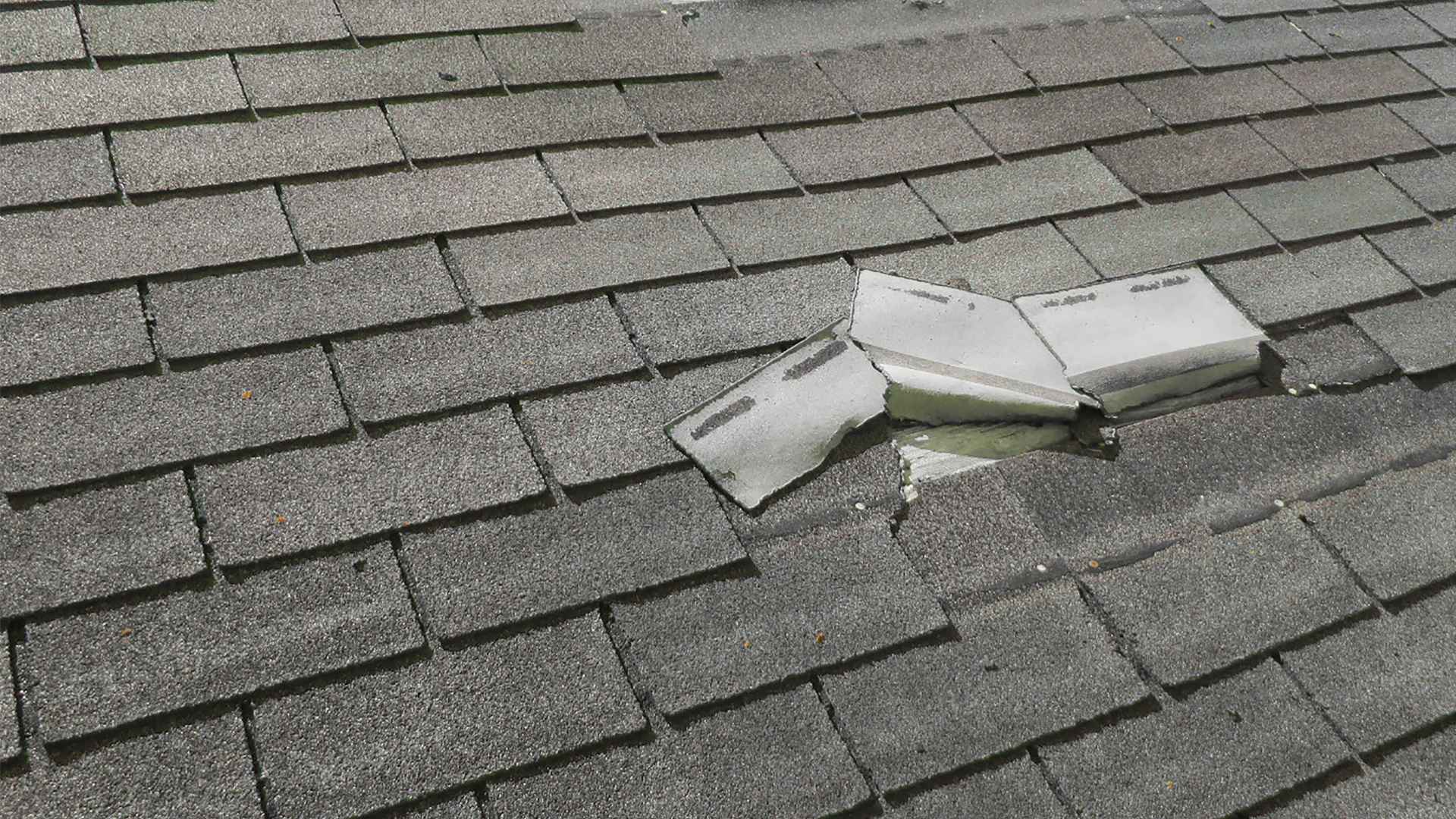
Wildfire ember impact on a low-slope commercial membrane produces a different damage pattern than structure fire heat exposure. Embers landing on a TPO or EPDM membrane create concentrated burn points - typically 1 to 4 inches in diameter - at the point of contact. Multiple ember strikes on the same roof section produce a scattered puncture pattern that is easy to photograph and zone-log for insurance documentation but that requires systematic inspection to find every strike, because small-diameter punctures on a white TPO field can be difficult to see without close inspection.
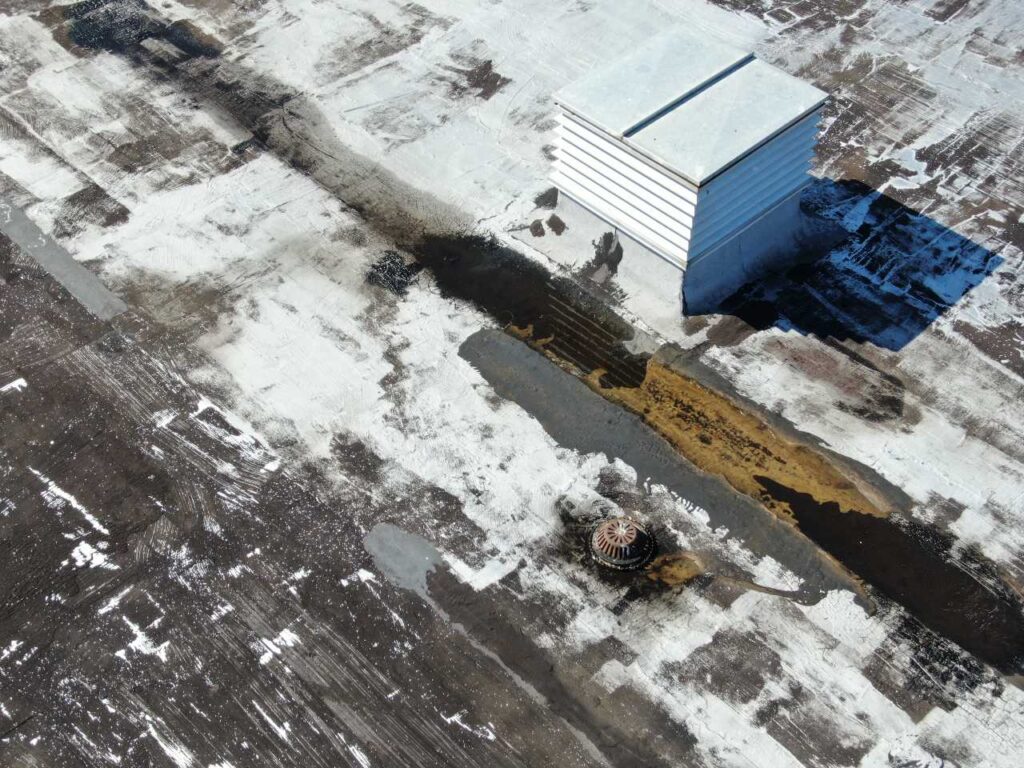
HVAC rooftop units are vulnerable to wildfire smoke and ember intrusion through intake dampers. During the Marshall Fire and subsequent Colorado Front Range wildfire events, commercial buildings in the ember-fall zone that had economizer-mode HVAC running sustained smoke infiltration through the rooftop unit intakes, with ash and particulate deposited throughout the ductwork and interior spaces. The rooftop unit itself - curb mount, electrical connections, refrigerant lines - may show heat stress from ember proximity even when the unit body was not directly burned. We inspect and document rooftop mechanical equipment condition as part of fire-damage roof scopes where wildfire exposure is the cause.
Post-fire membrane specification for Colorado commercial buildings in wildfire-interface zones - the Boulder County foothills corridor, the Jefferson County I-70 mountain gateway, and the rapidly expanding Douglas County wildland-urban interface in the Highlands Ranch and Lone Tree developments - should include ember-resistance documentation. TPO and PVC membranes carry fire ratings that vary by membrane thickness and cover board configuration. We specify membrane systems with documented fire ratings for commercial buildings in high-wildfire-interface exposure zones.
Structure Fire Damage Scope and Sequencing
Commercial structure fire roof damage spans from smoke surface contamination on the membrane in an adjacent-building event to complete deck collapse in a direct burn. The sequencing of assessments after a commercial structure fire is non-negotiable: fire department clearance, then structural engineering assessment, then roofing inspection. We do not access a fire-damaged roof until we have both fire department clearance and a structural engineer's confirmation that the deck is stable enough for crew access.
After structural clearance, the roofing scope addresses three zones. The direct-burn zone - where membrane has melted, blistered, or burned through - requires tear-off and replacement of membrane, insulation, and often the deck substrate. The heat-stress zone - where the membrane surface shows discoloration, granule loss, and seam bubbling from heat exposure without direct flame contact - requires moisture-core assessment and membrane testing to determine whether the system has lost waterproofing integrity. The smoke and debris zone - areas downwind of the fire that received smoke and debris deposits without heat exposure - typically requires cleaning and inspection rather than replacement.
Documentation for structure fire commercial roof claims follows the same zone-level approach as hail and wind claims: GPS-tagged photos at every damage site, zone diagram with damage-type notation, and a written scope that separates the three damage zones with distinct repair or replacement recommendations for each. Fire claims handled by Colorado commercial property carriers require the same documentation detail as weather-event claims - the adjusters are working from the same documentation standard.
Frequently asked questions
Does the Marshall Fire history affect roofing specification in the Denver area?
For commercial buildings in wildfire-interface exposure zones - Boulder County, Jefferson County foothills, Douglas County WUI areas - yes. The Marshall Fire established the ember-intrusion damage mode as a documented risk for commercial buildings that are not in the direct burn path. We specify membrane systems with documented fire ratings and ember-resistance characteristics for commercial buildings in high-WUI-exposure corridors, and we include HVAC rooftop unit intake protection in scopes for buildings where wildfire smoke intrusion is a documented risk.
What comes first after a building fire damages the roof?
Fire department clearance, then structural engineering assessment, then roofing inspection. No exceptions. We do not access a fire-damaged roof until both clearances are documented. After structural clearance, we triage emergency dry-in for any open sections, document the three damage zones - direct burn, heat stress, smoke and debris - and build the insurance scope package from the zone documentation.
Can you assess HVAC rooftop unit damage from wildfire smoke?
We document rooftop mechanical equipment condition - curb mount condition, electrical connection exposure, refrigerant line heat stress, intake damper condition - as part of fire-damage roof scopes where wildfire is the cause. The mechanical assessment is noted for referral to an HVAC contractor; we document what we observe from a roofing perspective and flag equipment that requires mechanical system evaluation separately.
Is fire damage to a commercial roof covered by Colorado property insurance?
Fire is a standard covered peril under most Colorado commercial property policies. The documentation requirements for fire claims are similar to storm claims - zone-level photos, written scope distinguishing damage zones, and documentation that separates fire event damage from pre-existing condition. We produce the roofing documentation. Coverage determination is between you, your adjuster, and your policy.
Fire damage on a Denver-area commercial roof?
After structural clearance, we assess all three damage zones - direct burn, heat stress, and smoke - and build the documentation package your Colorado carrier needs. Call us once the building is cleared for access.
| Scope Format | Written roof plan and photo record |
|---|---|
| Primary Market | Denver commercial buildings |