What Owner's Rep Engagement Covers on Denver Projects
We act as technical owner's representative on Denver commercial roofing projects we are not bidding - reviewing scopes and submittals, walking the roof during construction, and confirming that the Class 4 impact-rated system actually closes out as specified.
We act as technical owner's representative on Denver commercial roofing projects where we are not the installing contractor - advising during procurement, reviewing scopes and submittals, and walking the roof during construction to confirm that the cover board, fastener pattern, and flashing details match the specification.
An owner's representative on a commercial roofing project is the person on the owner's side of the table who can read a submittal, walk a roof during installation, identify a cover board substitution before the membrane covers it, and escalate to the right person at the contractor or manufacturer when a construction deficiency needs to be resolved.
Most Denver building owners do not have this person internally. The facility manager is managing an entire building's worth of systems simultaneously. The property manager is managing tenant relationships. The asset manager is managing capital allocations. None of them necessarily knows the difference between a correctly welded TPO seam at altitude and one that will fail after three freeze-thaw seasons - or why a parapet flashing that does not turn the required distance onto the vertical face voids the manufacturer warranty inspection.
We fill this role on projects where we are not the installing contractor. The arrangement is clean: we are retained by the owner at an hourly or fixed-engagement rate, we have no financial relationship with the installing contractor, and our only interest is that the project is installed correctly, documented with impact-resistance certification, and closed out with a manufacturer warranty that will hold up through Denver's hail seasons.
Pre-construction: We review the contractor's submitted scope, manufacturer submittals, and proposed material samples against the contract documents. On Denver projects, the pre-construction submittal review is where we most often find the cover board substitution - the contractor submits standard-density polyiso where the specification called for HD cover board for Class 4 qualification, or proposes a membrane product that is not part of an FM-approved assembly. These get resolved before installation, not during the punch walk when the membrane is already down.
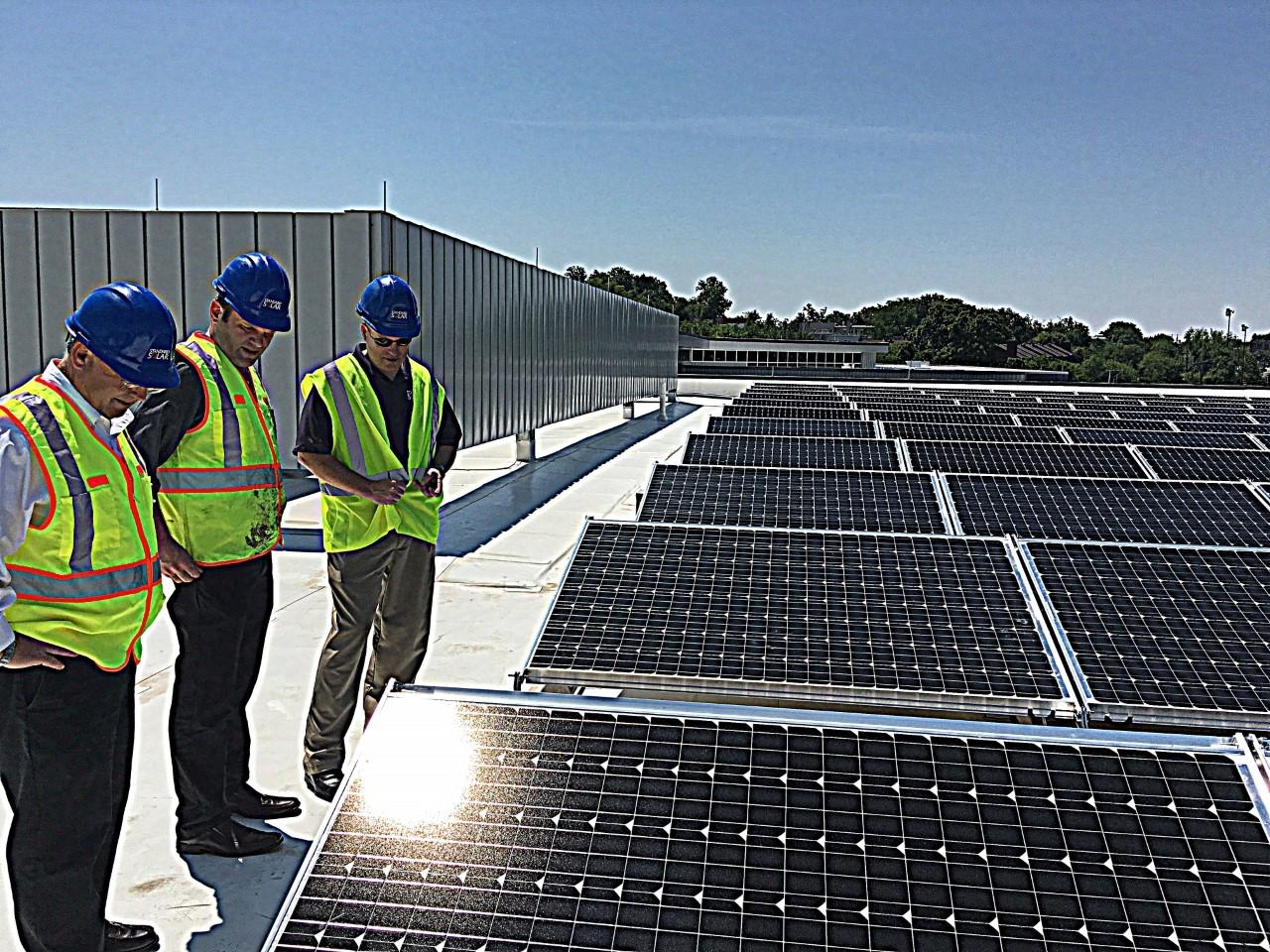
During construction: We conduct field observation visits at defined milestones - insulation and cover board installation prior to membrane cover, membrane installation during progress (not only at punch), flashing detail completion at parapets, penetrations, expansion joints, and drains. For Denver projects specifically, we verify cover board type and thickness before membrane cover and pull the FM assembly number from the products on-site to confirm they match the approved specification.
The High-Risk Deviations We Find on Denver Projects
Cover board substitution: This is the most financially significant deviation we find on Denver commercial projects. A contractor who substitutes standard-density polyiso for the specified HD cover board delivers a roof that cannot qualify for Class 4 impact resistance - and the substitution is invisible once the membrane is installed. We verify cover board type and thickness from delivery tickets before installation and again at exposed edges during construction. Cover board substitution found at delivery costs one phone call. Found after substantial completion costs the owner a full re-roof or a warranty dispute.
Fastener pattern in wind-uplift zones: ASCE 7-22 mechanically attached TPO in Denver's Front Range exposure category requires higher fastener density at perimeter and corner zones than at the field. Denver's Chinook wind events drive sustained gusts exceeding 60 mph along the urban fringe. We pull a sample fastener pattern inspection at perimeter and corner zones on every project we observe - pattern errors appear on roughly one in four Denver projects we review.
Seam clearances at penetrations: Membrane manufacturers specify minimum distances between heat-welded seams and penetration flashings. When Denver crews work in cold-weather conditions - morning starts in April or October when temperatures are below 40°F - seam weld quality and clearances both suffer. We flag cold-weld conditions and minimum-clearance violations before the membrane cools.
Tapered insulation as-built vs. design: Denver flat roofs with tapered systems see the tapered package deviate from the design during installation. A drain that lands 0.5 inches higher than the tapered package assumes creates a permanent pond. Denver's freeze-thaw cycle then converts that pond into a progressive insulation compression failure. We verify that the as-built tapered system matches the design slope before membrane cover.
When Owner's Rep Is Worth the Engagement Cost in Denver
Projects above $300,000 installed value generally have enough at risk to justify owner's rep engagement at standard fees. On a $600,000 Denver commercial replacement, a cover board substitution that voids the Class 4 rating means the owner carries a non-rated roof through Colorado's hail belt for 20 years. The cost of owner's rep observation is a rounding error relative to that exposure.
Federal facility projects at installations like Buckley Space Force Base in Aurora carry additional owner's rep value: the contracting officer documentation requirements for scope compliance and closeout certification are specific to federal facilities management standards, and independent third-party verification of installation compliance is often specified in the contract. We know the federal facility closeout documentation requirements in the Colorado market.
Denver medical campuses - UCHealth, Children's Hospital Colorado, SCL Health facilities - operate under infection-control and occupancy requirements that make construction deficiencies disproportionately costly. A leak during occupied clinical hours creates liability that dwarfs the project cost. Owner's rep observation on medical roofing projects in Denver is worth the engagement on projects above $200,000.
Frequently asked questions
How many site visits does owner's rep typically involve on a Denver project?
For a standard Denver commercial replacement (50,000 to 100,000 sq ft, three to four weeks of production): typically four to six field observation visits, plus pre-construction submittal review and punch walk participation. Projects with phase-by-phase dry-in requirements - common during Denver's May through August storm season - add visits at the weather-risk decision points.
Can you do owner's rep on a federal facility project like Buckley Space Force Base?
Yes, with base access coordination. All personnel entering Buckley require valid federal ID and security clearance. We manage this through our pre-construction checklist and have crew members with current Buckley base access. We are also familiar with the contracting officer documentation requirements and federal facilities management closeout standards that federal projects carry.
What is your authority on site? Can you stop work?
Our authority is advisory. We can direct the owner to stop work - we do not issue stop-work orders to the contractor. If we observe a critical deficiency, we document it in writing, notify the owner's designated representative immediately, and recommend a specific corrective action. In practice, a written deficiency notice from an independent technical observer is generally sufficient to get contractor attention on a Denver commercial project.
Do you coordinate with the manufacturer's field rep during construction?
| Scope Format | Written roof plan and photo record |
|---|---|
| Primary Market | Denver commercial buildings |