The Four-Part Decision Framework for Denver Buildings
Documented replacement-vs-recover decision framework for Denver commercial buildings - moisture survey, freeze-thaw deck condition assessment, hail exposure history, warranty status review, and capital horizon alignment.
We apply a documented decision framework to the recover-or-replace question on aging Denver commercial roofs - moisture core distribution, freeze-thaw deck condition, hail exposure history, warranty status, and capital horizon - and deliver a written recommendation the owner can take to a capital committee.
The replacement-vs-recover decision is the highest-stakes choice in commercial roof asset management. A recover option at 40 to 50 percent of full replacement cost is only sound if the existing insulation is dry, the deck is structurally sound, and the capital horizon supports the extend-now, replace-later strategy. A recover over wet insulation in Denver's 90-to-110 freeze-thaw-cycle-per-year environment does not just trap moisture - it converts that moisture into an expansion-contraction engine that compresses the insulation, degrades the deck bond, and accelerates corrosion on the light-gauge metal deck common in Denver's pre-1990 commercial inventory. A $280,000 recover project executed on that condition becomes a $620,000 emergency replacement four years later.
We apply a structured decision framework to this question on every aging Denver commercial building we assess. The framework is not a sales tool - we have recommended recovers on buildings where a replacement would have generated more project revenue for us. The recommendation goes where the data goes. Denver owners and asset managers use our replacement-vs-recover analysis as a capital planning input because they trust that the recommendation is based on field data, not preferred project size.
The deliverable is a written report with supporting data: moisture survey results keyed to a roof zone diagram, deck condition findings from inspection ports, hail exposure history from NOAA storm data, warranty status documentation, and capital horizon analysis. The report is formatted for a capital committee, a lender, or a board without requiring us in the room to explain it.
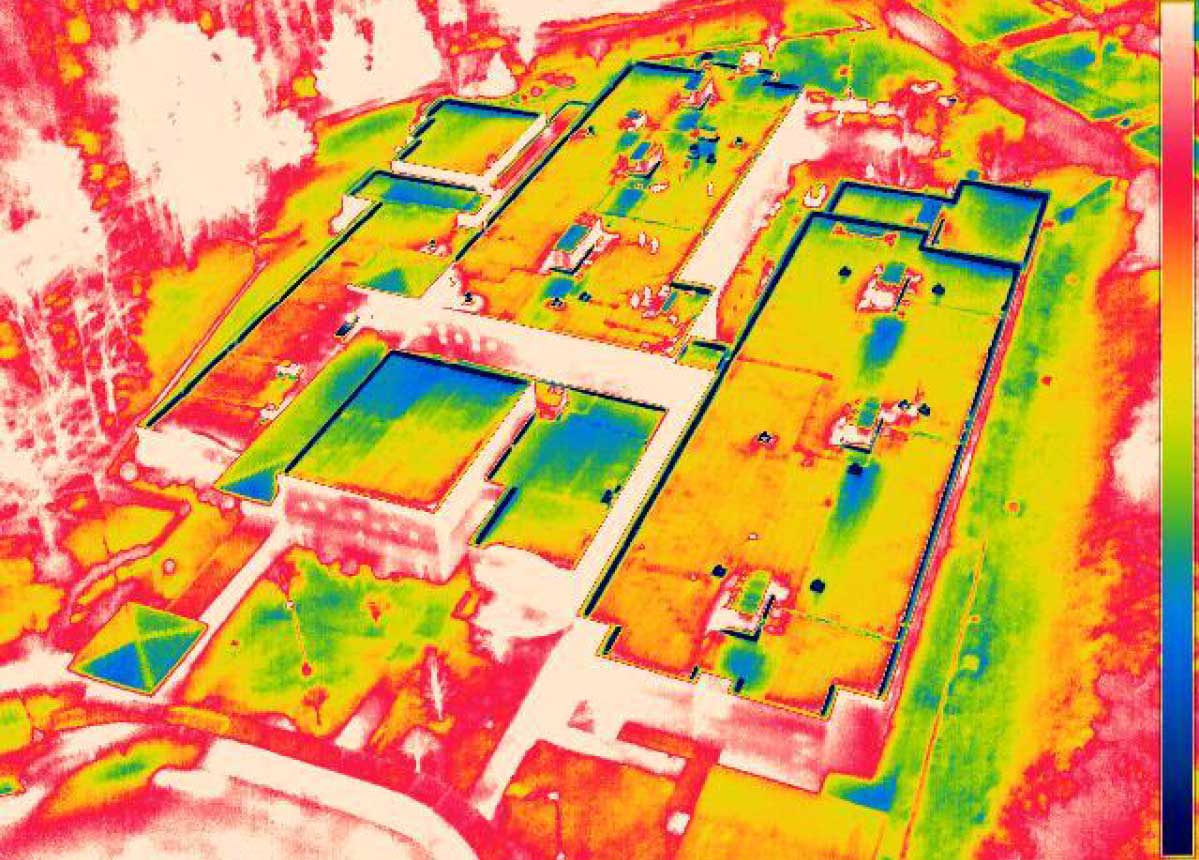
Part 1 - Moisture distribution: We core the existing roof system at one core per 2,000 to 3,000 sq ft of roof area, with additional cores at all reported leak locations, at drain pans, at parapet corners, and at any area where an infrared scan indicated probable saturation. Each core is measured with a calibrated moisture meter and photographed. If more than 20 to 25 percent of the roof area is wet, we recommend replacement. Under 20 percent, the recover path is moisture-viable. Between 20 and 25 percent, distribution matters - concentrated wet areas that can be surgically removed during a recover differ materially from diffuse saturation across the field. Denver's freeze-thaw environment makes wet insulation more damaging than in markets with fewer freeze-thaw cycles; our threshold reflects that.
Part 2 - Deck condition and freeze-thaw history: Wet insulation that has experienced multiple Denver winters is more likely to have compromised the deck underneath it than wet insulation in a milder climate. On metal deck buildings - the majority of Denver commercial construction from the 1970s forward - we pull inspection ports at wet core locations and at any visible deck deflection. Corroded metal deck at drain sumps, at parapet-adjacent fields where water channels toward the wall, and at expansion joints is a failure-of-the-recover-path finding. A building with 15 percent wet insulation but active corrosion under the wet areas needs full replacement plus deck repair. On older DTC and 17th Street corridor buildings on their second or third roof system, deck assessment is non-optional before any recover recommendation.
Part 3 - Hail exposure history: Buildings in the Denver metro hail belt - Adams, Arapahoe, Jefferson, and Douglas counties - that have taken two or more documented hail events without comprehensive cover board condition assessment may have insulation compression damage under the membrane that a moisture survey does not detect. Compressed standard-density polyiso from repeated hail impact loses its designed R-value and its bond strength. We pull cores and cut inspection panels at hail-suspect areas before finalizing a recover recommendation. A recover system applied over hail-damaged insulation inherits the compression damage.
Part 4 - Capital horizon and IECC compliance: Recover extends asset life typically 10 to 15 years for silicone coating systems and 15 to 20 years for single-ply recover systems. The capital horizon analysis asks: when does the owner plan to sell, refinance, or schedule the next major capital event? A recover that extends asset life 15 years is the right call when the capital horizon is 8 years. When the horizon is 18 years and the recover will need replacement at year 15, a full replacement may be more capital-efficient than two events in the same planning window. We also flag IECC 2021 compliance: Colorado Climate Zone 5 requires minimum R-25 for low-slope commercial roofs. A recover that does not add insulation to Some Denver jurisdictions and some lender requirements trigger energy code compliance at recover - we confirm the applicable requirement with the jurisdiction and flag it in the report.
Denver-Specific Factors in the Recover Decision
Freeze-thaw insulation compression: Denver's 90 to 110 freeze-thaw cycles per year create insulation compression patterns that are more pronounced than in markets with fewer but more extreme cold events. Light-gauge metal deck buildings constructed in the 1970s and 1980s - common in the DTC, Lakewood, and Englewood commercial corridors - show deck deflection under prior wet insulation that is often not detectable without inspection ports. We assess deck deflection systematically before any recover recommendation on buildings in this construction vintage.
Parapet and expansion joint flashing condition: Denver commercial buildings on exposed footings and light-gauge steel frames see more parapet and expansion joint movement from thermal cycling than the manufacturer's standard flashing details are designed for. On a recover decision, we assess whether existing flashing conditions at parapets can be remediated to recover-warranty standards or whether the flashing scope alone narrows the cost advantage of the recover path enough to shift the recommendation.
Lockheed Martin and federal facility considerations: Buildings within Buckley Space Force Base and adjacent federal contractor campuses in Aurora have facility-specific recover and replacement documentation requirements. Federal facility managers require NOAA storm data cross-references, inspection port documentation with chain-of-custody photographs, and warranty continuation documentation that commercial building owners typically do not. We structure the assessment report for federal facility use when the building requires it.
What the Written Report Contains
Core log: Core location, layer description (membrane, cover board type, insulation type and thickness, any prior recover layers, vapor barrier, deck type), moisture reading at each layer, and photograph of each core. The core log is the primary data source for the moisture distribution assessment and the document a manufacturer needs to evaluate recover-warranty eligibility.
Deck condition summary: Inspection port findings and photographs with a map of assessment locations. Any conditions that affect the recover recommendation - deck corrosion, deflection, fastener-pullout history - are called out explicitly.
Hail exposure assessment: NOAA storm data for the building's county and zip code covering the last five hail seasons, cross-referenced to any prior hail-event documentation the owner has on file. Core and panel findings at hail-suspect areas are included in this section.
Warranty status documentation: Existing warranty document, remaining term, and the manufacturer's stated recover-warranty policy for the specific existing membrane type.
Recommendation and supporting rationale: Clear written recommendation - recover or replace - with the data points that drive it. When the data supports a borderline case, we present both options with the factors that would tip the decision either way. Preliminary cost comparison: installed cost range for the recover option vs. replacement at current Denver pricing, with a reference to LCC modeling if the owner wants the 30-year NPV comparison.
Frequently asked questions
How many cores do you pull on a typical Denver commercial building?
One core per 2,000 to 3,000 sq ft of roof area as a baseline, plus additional cores at all reported leak locations, drain pans, parapet-adjacent zones, any area with visible deck deflection, and any area where NOAA data indicates prior qualifying hail events. On a 100,000 sq ft building we typically pull 35 to 55 cores. The core log is included in every report.
Does Denver's freeze-thaw cycle change the wet-insulation threshold for recover?
It changes how we evaluate the distribution of wet areas, yes. Denver's 90 to 110 annual freeze-thaw cycles convert wet insulation into a progressive deck-damage mechanism faster than in markets with fewer cycles. We weight concentrated wet areas in parapet-adjacent and drain-adjacent zones more heavily in the recover recommendation because freeze-thaw is more likely to have propagated deck damage under those specific locations.
| Scope Format | Written roof plan and photo record |
|---|---|
| Primary Market | Denver commercial buildings |