Coal-Tar vs Asphalt BUR on Denver's Downtown Buildings
Built-up roofing assessment and replacement for Denver's aging downtown and mid-rise commercial buildings - legacy coal-tar and asphalt BUR systems on the 17th Street corridor, honest end-of-life guidance, and replacement scopes engineered for Colorado's 30 psf snow load.
Denver's downtown core and the 17th Street office corridor carry a meaningful inventory of 1950s through 1980s built-up roofing. Most of it is at or approaching end of life. We inspect it, document it, and give you a written assessment - including the honest recommendation when full replacement is the only viable scope.
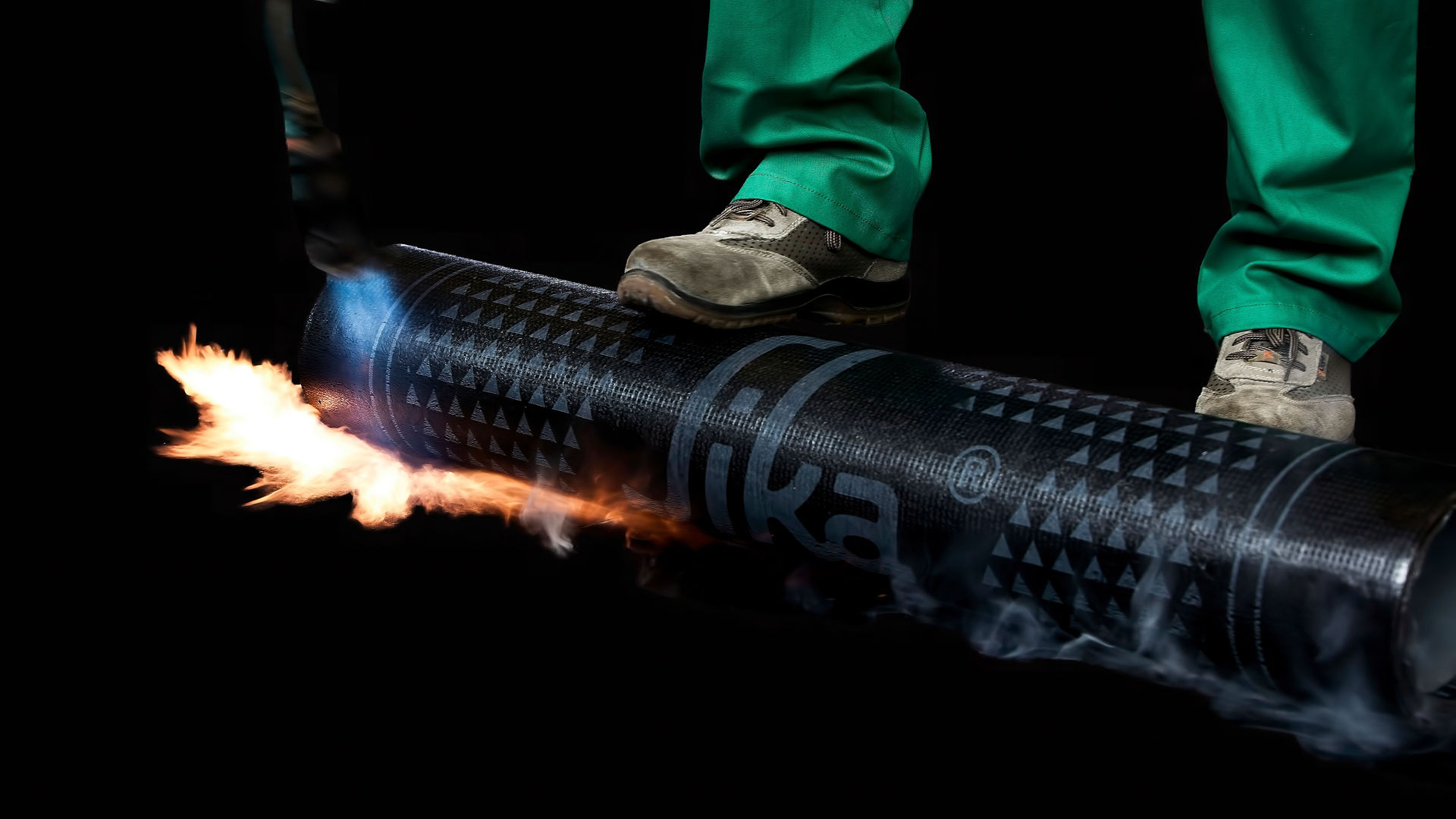
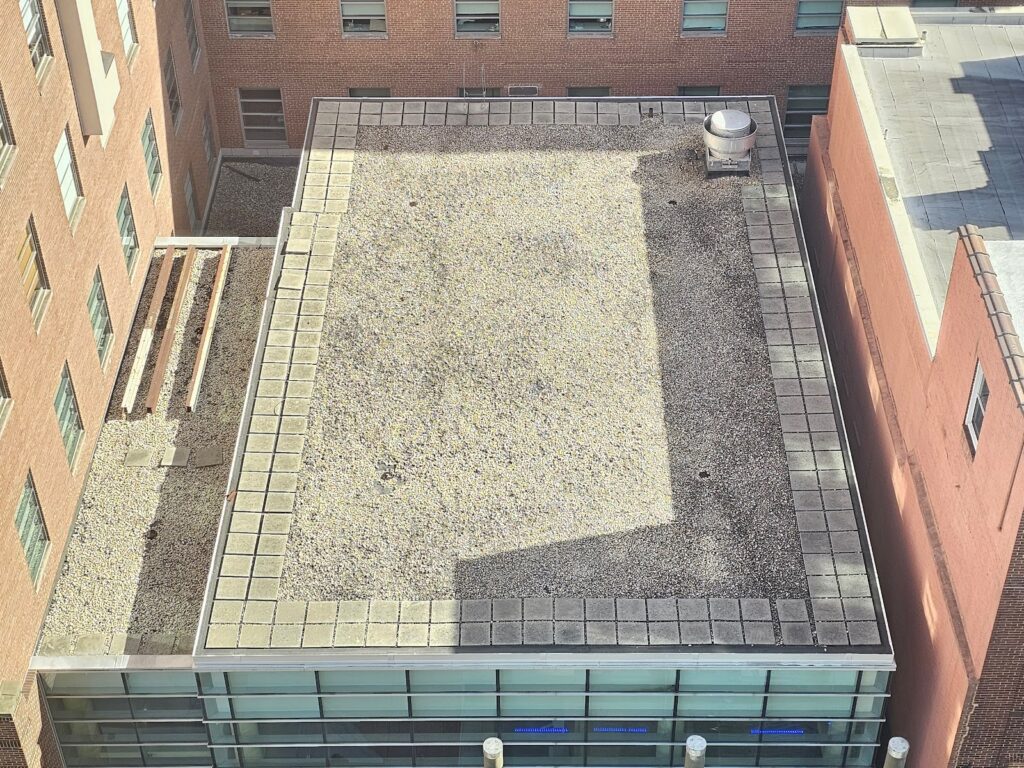
Built-up roofing (BUR) - multiple plies of asphalt-saturated felt mopped together with hot asphalt or coal tar, topped with gravel or smooth surfacing - was the standard commercial flat-roof system in Denver from the 1920s through the early 1980s. The office and commercial buildings that define Denver's downtown core - along 17th Street, the Lincoln Center corridor, the Golden Triangle, and the Commerce City industrial zone - were predominantly roofed with coal-tar or asphalt BUR systems during that construction period.
That inventory is old. A BUR system installed in 1965 on a downtown Denver building is over 60 years old. Even the youngest BUR systems from the early 1980s are past 40 years. Some have been recovered multiple times - layers of modified bitumen cap sheet applied over the original BUR base to extend waterproofing life. Eventually, that recovery path runs out: the deck cannot support additional dead load, the flashing geometry has been re-detailed too many times to reliably seal, and the total roof assembly has to come off.
We do not install new BUR systems. We assess, document, and replace them. If you own or manage a Denver building with original BUR or a multi-layer BUR-over-modified-bitumen recovered system, we can tell you where it stands in its lifecycle and what a replacement scope looks like - including the asbestos survey, coal-tar disposal, and snow-load compliance requirements that downtown Denver BUR replacement involves.
Denver BUR systems from the 1950s and 1960s were built with one of two binder materials: coal-tar pitch or oxidized asphalt (Type III or IV). Coal-tar BUR is actually more durable in the long run - coal tar self-heals minor surface cracks and has better water resistance than asphalt BUR under Denver's freeze-thaw cycling. Downtown Denver buildings with coal-tar BUR from the 1960s that have been adequately maintained and are still watertight are not unusual. The limitation is disposal: coal tar is a regulated hazardous material under EPA guidelines, requires licensed waste hauling, and adds significant cost to removal on the downtown Denver projects where landfill access is restricted.
Asphalt BUR from the same era typically shows more surface cracking and alligatoring, particularly on south-facing and west-facing roof zones that absorb the most Front Range UV radiation. Denver's altitude - 25 to 30 percent more UV intensity than sea-level markets - accelerates asphalt BUR oxidation compared to identical systems in lower-elevation cities. We document which binder material is on the roof during inspection because it affects the disposal cost, removal sequencing, and air-quality plan for occupied buildings in Denver's dense downtown core.
BUR Recover vs Full Replacement on Denver Buildings
We get asked regularly whether a BUR system can be recovered rather than fully replaced. The honest answer is: sometimes yes, but the conditions must support it. If moisture cores show dry insulation across more than 75 percent of the roof area, the deck is structurally sound at core-inspection ports, and the existing BUR surface is intact enough to serve as a recovery base, a mechanically attached TPO or EPDM recover over the existing BUR is viable and significantly cheaper than full tear-off.
We will not recommend a recover when the data says otherwise. When cores show wet insulation in more than 25 percent of roof area, the wet sections must come out regardless - and once we are removing large sections of BUR to replace saturated insulation, the economics shift toward full replacement. If the deck shows deflection or corrosion under wet areas - and Denver's 1970s light-gauge steel deck buildings in the DTC and Stapleton redevelopment areas are candidates for this - deck replacement is required and the roof has to come off entirely. We provide owners with the core data and cost options for both paths before contract signing.
Downtown Denver BUR Replacement Scope and Logistics
BUR removal from a downtown Denver building involves multiple pre-construction requirements: permits with the City and County of Denver Building and Safety Division, asbestos survey by a licensed asbestos consultant (pre-1980 BUR installations frequently contain asbestos in the felt plies - Colorado law requires survey before any demolition disturbing those materials), coal-tar disposal coordination if the binder is coal tar, and crane-access staging in areas where 17th Street, 16th Street Mall, and the Lincoln Center corridor impose pedestrian-protection and street-use permit requirements.
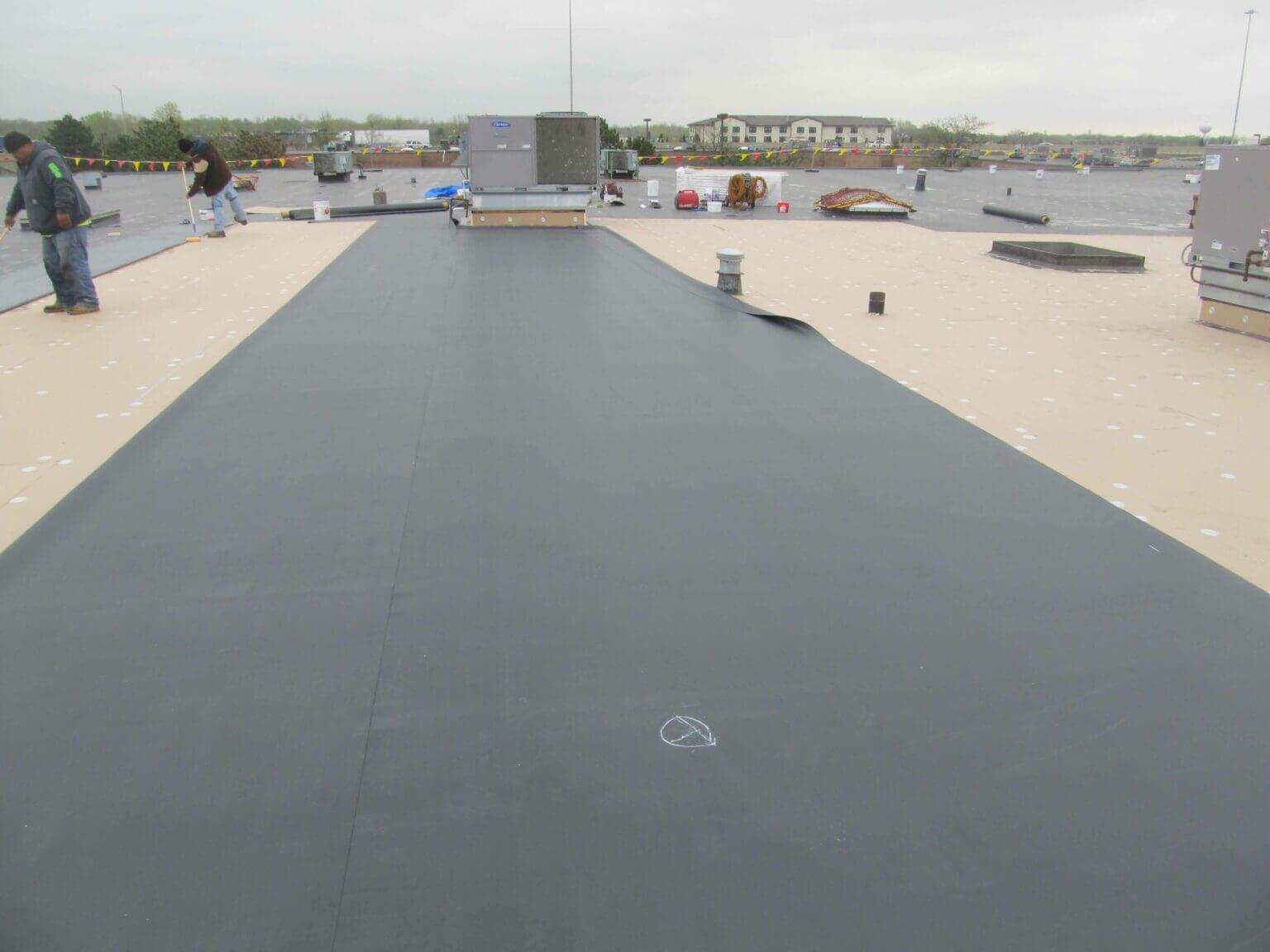
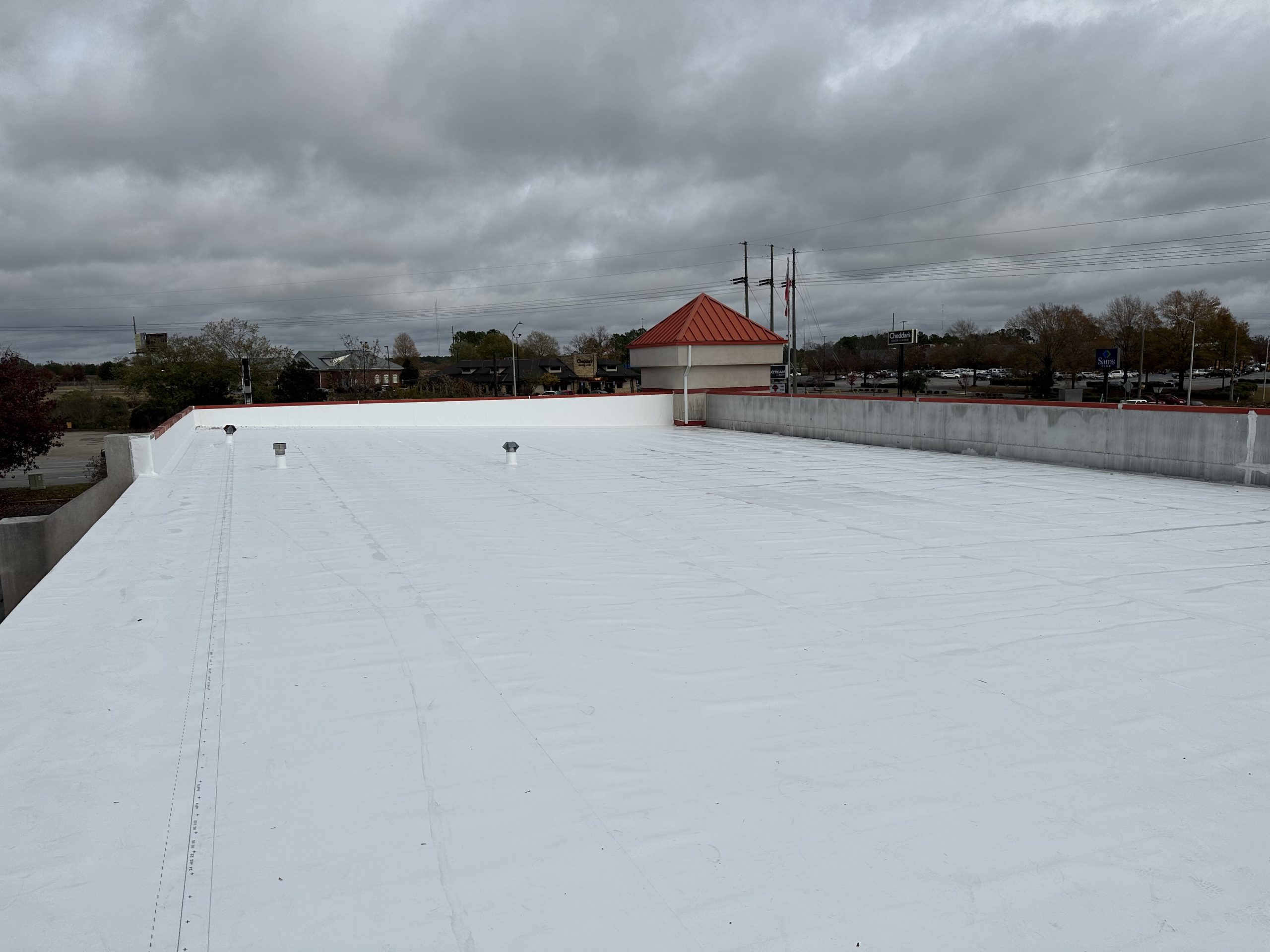
After removal, the replacement system is typically fully adhered TPO or EPDM over new polyiso insulation to Colorado's 2018 IECC minimum R-values, with a complete re-detail of all parapets, drains, and penetrations. The insulation stack is specified to meet the 30 psf ground snow load structural requirements for downtown Denver buildings - adding insulation thickness on a building near its design-load capacity requires coordination with the structural engineer of record. We close out with a manufacturer NDL warranty and a documented roof asset file.
Frequently asked questions
Does my 1970s Denver building need an asbestos survey before BUR removal?
Almost certainly yes. Asphalt felts manufactured before approximately 1980 frequently contained chrysotile asbestos as a binder stabilizer. Colorado Regulation 8 and CDPHE requirements mandate asbestos sampling and abatement before any demolition or renovation that disturbs roofing materials on pre-1980 buildings. We do not remove BUR materials without a completed survey. We can refer you to licensed asbestos consultants we have worked with on downtown Denver projects.
Can a Denver built-up roof be recovered instead of replaced?
Yes, if the data supports it. We pull moisture cores at five to ten representative locations, inspect the deck at core ports, and assess the surface and flashing condition. If the insulation is dry and the deck is sound, a mechanically attached TPO or EPDM recover over the existing BUR is often a viable 15 to 20 year extension at roughly half the cost of full tear-off and replacement. We provide the core data and both cost options in writing.
How do you handle BUR removal on occupied downtown Denver buildings?
Staged tear-off in 5,000 square foot sections maximum with same-day dry-in on each section. No section left open overnight - Denver's May through August afternoon thunderstorm and hail season requires this discipline, and we maintain the same protocol through the remaining construction months. Dust and odor control for coal-tar roofs includes negative-air systems at the roof penetration closest to occupied spaces. Crane staging and pedestrian protection coordinated with Denver Public Works requirements on downtown streets.
BUR system on a Denver downtown or legacy building?
We walk the roof, core-pull the insulation, document the deck condition, and produce a written assessment with costs for recover and full-replacement options - including asbestos-survey coordination and snow-load compliance documentation.
| Scope Format | Written roof plan and photo record |
|---|---|
| Primary Market | Denver commercial buildings |