Why EPDM Elongation Matters in Denver's Freeze-Thaw Climate
EPDM 60-mil roof systems for Denver commercial and industrial buildings - superior elongation through Colorado's 90-plus freeze-thaw cycle climate, Class 4 hail-rated assemblies over HD cover board, and fully adhered installation for Front Range Chinook wind conditions.
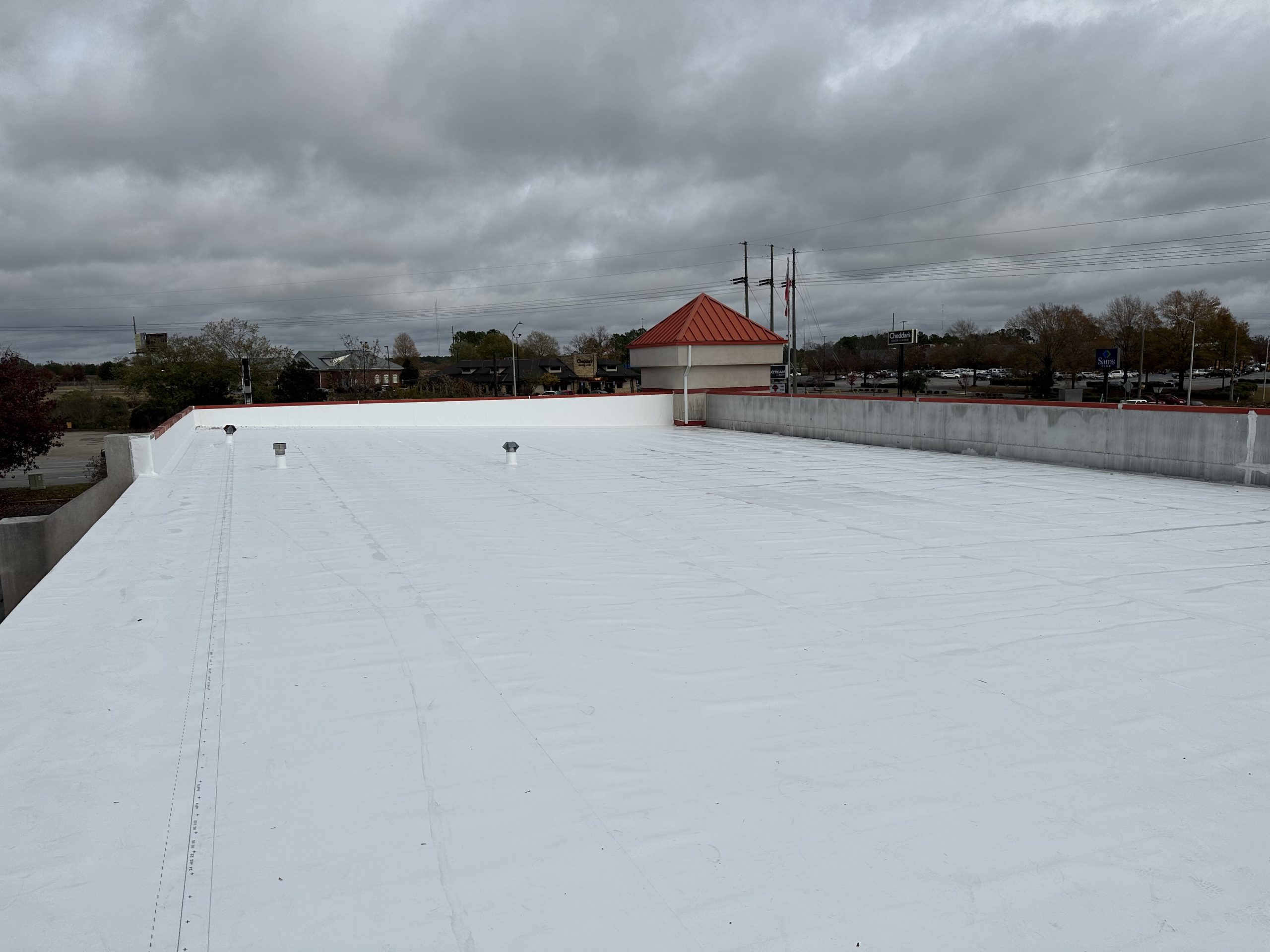
EPDM's elongation characteristics make it one of the best-performing single-ply membranes in Denver's high-altitude freeze-thaw environment. We install 60-mil fully adhered and mechanically attached systems on Denver commercial and industrial buildings - always over HD cover board for Class 4 hail qualification, always detailed for Colorado's 30 psf snow load and 90 to 110 annual freeze-thaw cycles.
EPDM (ethylene propylene diene monomer) earns a meaningful share of Denver commercial roofing specifications for a reason that is directly tied to Colorado's climate: elongation at low temperatures. EPDM retains 250 to 300 percent elongation capacity at temperatures well below freezing, compared to TPO and PVC formulations that become stiffer as temperatures drop. Denver averages 90 to 110 freeze-thaw cycles per year - more than Chicago or Minneapolis - and the rapid cycling through transition months puts cumulative stress on membrane flexibility at seams and flashings. On buildings where that thermal cycling is the dominant performance driver, EPDM's low-temperature elongation is a genuine specification advantage.
The Denver commercial buildings where EPDM specifications make the most sense are industrial facilities in the I-70 and I-225 corridors, older buildings in the DTC and Stapleton redevelopment zones where the freeze-thaw cycling history argues for a membrane with more elastic recovery, and buildings adjacent to mechanical operations where chemical exposure to petroleum-based compounds is a factor. EPDM handles most petroleum-based chemical exposures better than TPO - a meaningful consideration for the industrial inventory around Aurora and the Adams County I-70 zone.
Like all single-ply systems in Denver, EPDM over HD cover board is the only specification we write. Standard-density insulation under EPDM does not qualify for FM 4470 Class 1 or UL 2218 Class 4 impact resistance, and Colorado's hail exposure makes that qualification non-optional for commercial property insurance in this market. We specify the cover board by type, thickness, and manufacturer in every EPDM scope.
Denver's freeze-thaw cycling pattern differs from other cold-weather markets in a way that is relevant to membrane specification. Cities like Minneapolis and Chicago experience sustained deep winters - temperatures stay below freezing for weeks at a time, and the cycling across 32 degrees Fahrenheit happens fewer times per year. Denver's semi-arid climate produces a different pattern: temperatures cross the freeze-thaw threshold 90 to 110 times per year, often multiple times per week during October, November, March, and April. That frequency of cycling is a more demanding test of membrane flexibility than deep sustained cold.
EPDM's elongation recovery - the ability to stretch and return to original dimensions repeatedly without permanent deformation - is superior to TPO in this environment. At minus 20 degrees Fahrenheit, standard TPO formulations have elongation below 100 percent; EPDM retains 200-plus percent. For parapet flashings, expansion joint covers, and penetration details where thermal movement is greatest, that retained flexibility reduces the stress concentration that produces seam failures. We specify EPDM on Denver buildings where the flashing geometry involves long parapet runs with limited expansion-joint separation - situations where low-temperature membrane stiffness would otherwise be the failure mode.
EPDM Attachment Methods for Front Range Wind Conditions
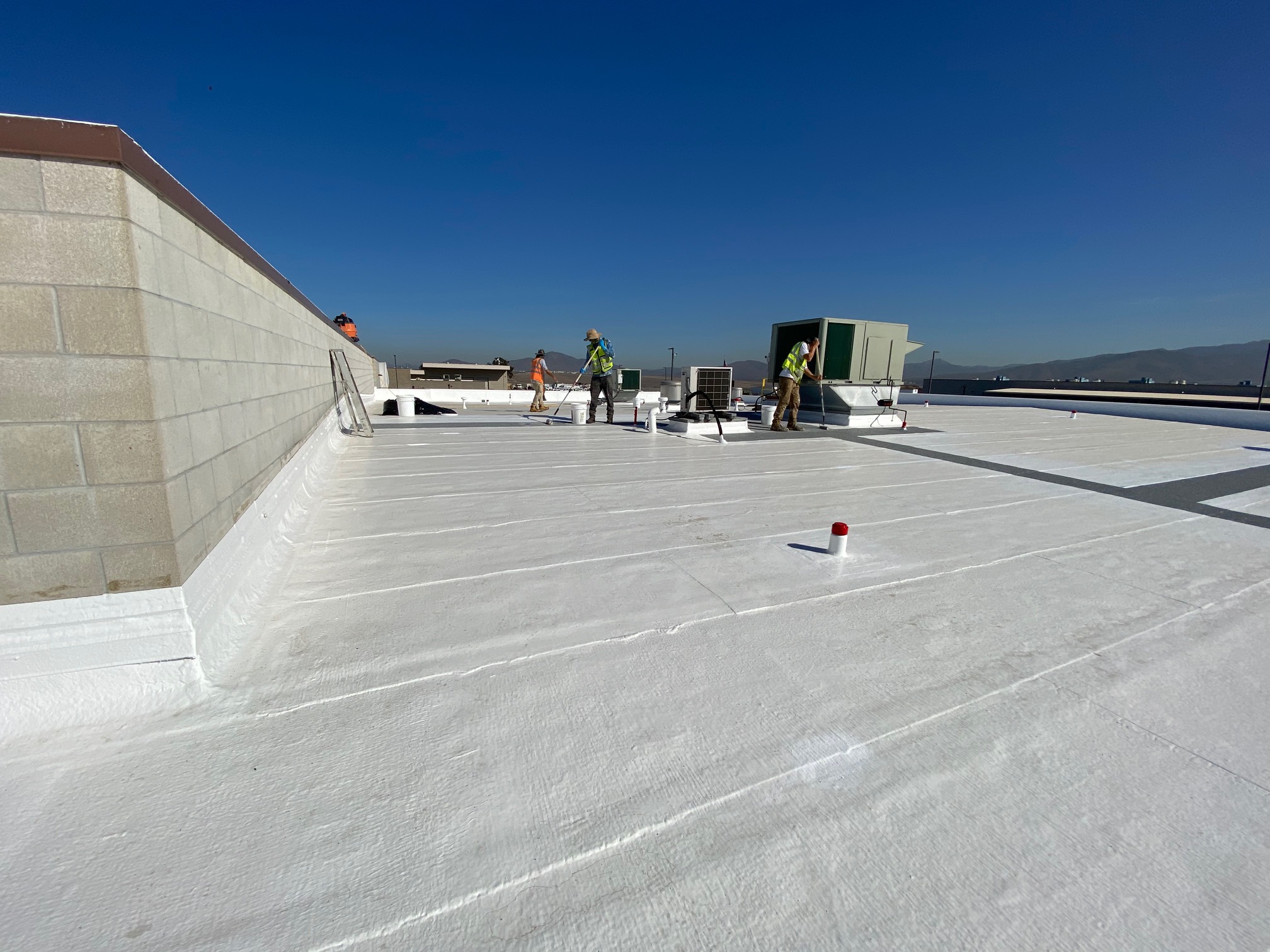
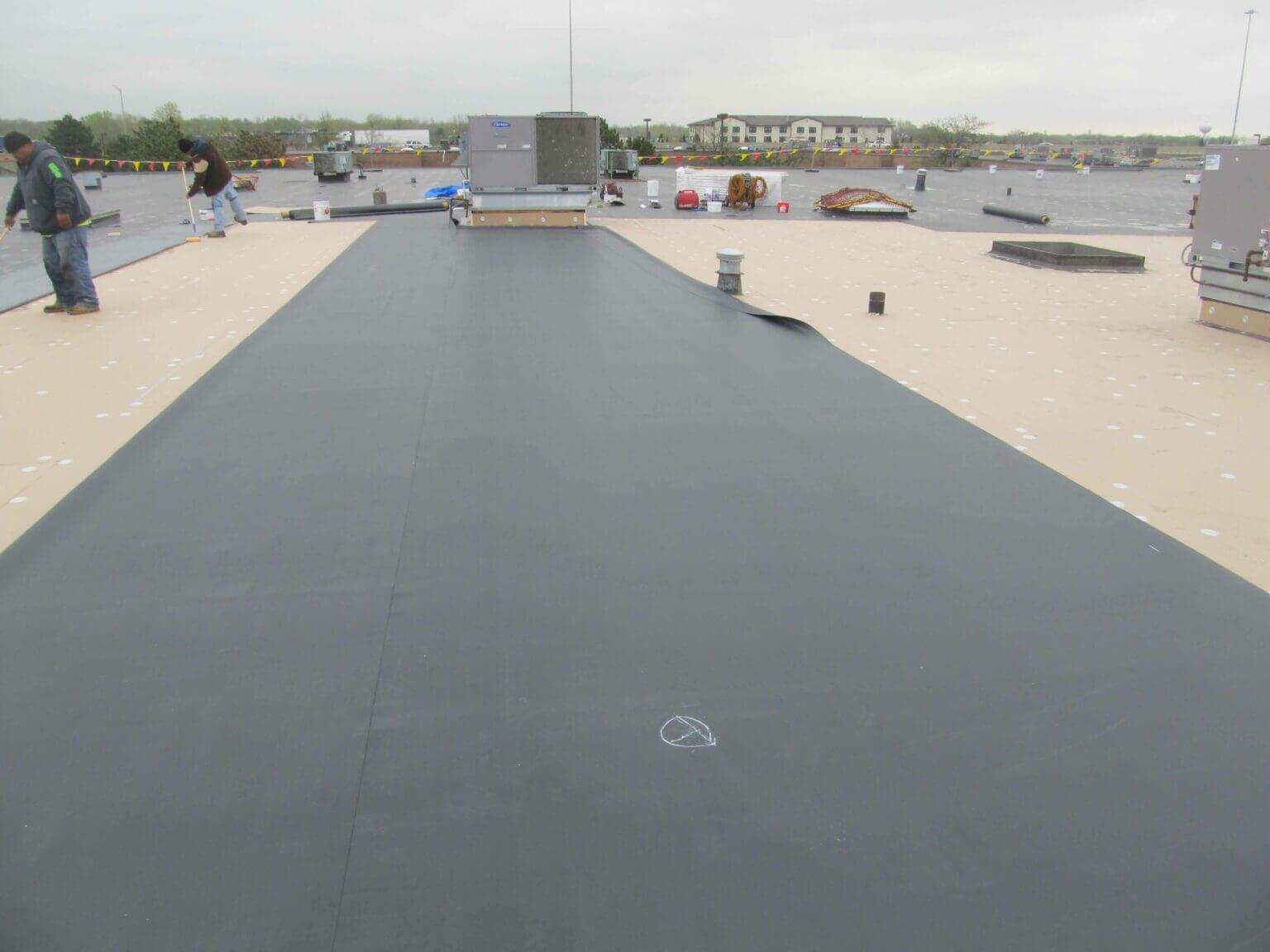
Fully adhered EPDM is our preferred specification for most Denver commercial buildings. The continuous bond eliminates the membrane flutter that develops in mechanically attached systems under Chinook wind events - the Front Range's characteristic high-velocity wind pattern drives sustained gusts that stress unconstrained membrane between fastener points. Fully adhered also produces cleaner penetration and parapet details, which matters on Denver buildings where freeze-thaw cycling amplifies any detail gap into a moisture entry point over time.
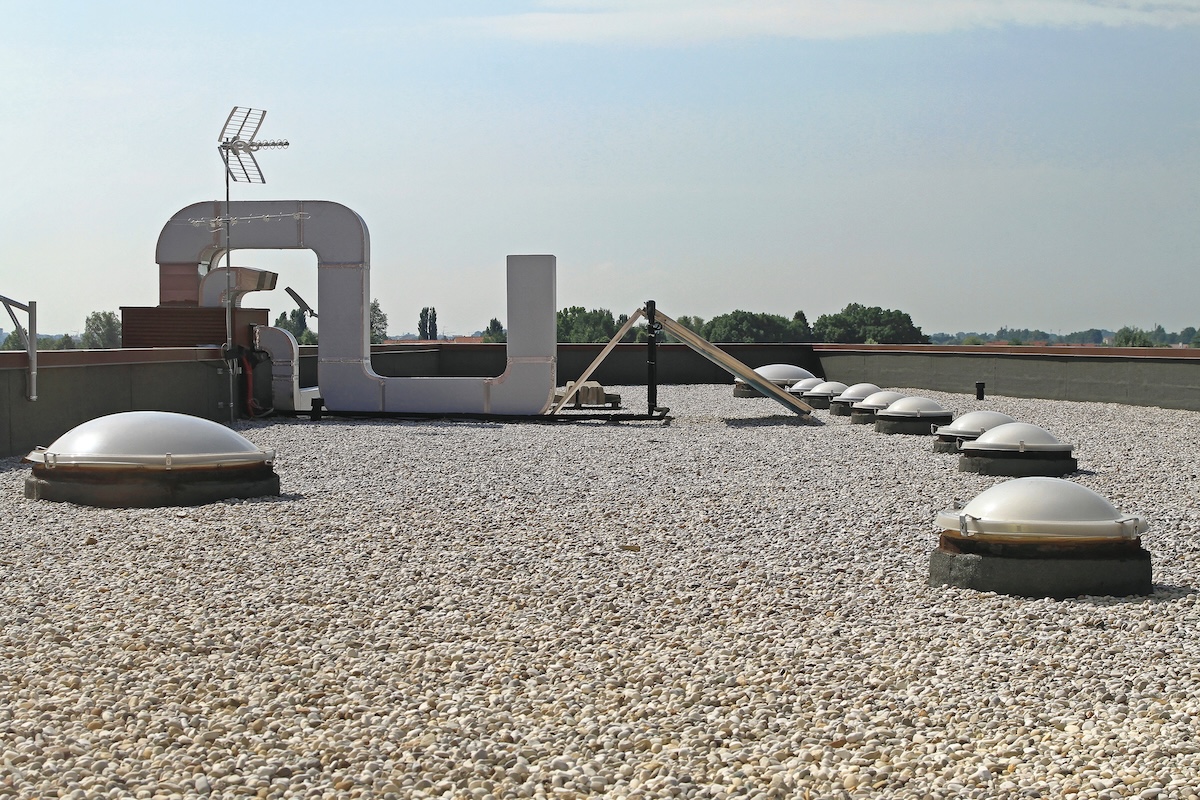
Mechanically attached EPDM uses plates, fasteners, and battens in a pattern engineered against the building's wind-uplift requirement. We use this on large-footprint industrial buildings in open-exposure categories - the I-70 industrial corridor east of Aurora, the Adams County warehouse zones - where the faster installation speed and lower cost offset the flutter risk at appropriate fastener density. Ballasted EPDM is not a system we specify on Denver buildings. The 10 to 12 psf ballast dead load combined with Denver's 30 psf ground snow load creates a structural demand that most commercial roofs cannot support, and hail impact on loose stone creates secondary projectile risk.
Black EPDM and White EPDM - Denver Considerations
Black EPDM absorbs solar radiation rather than reflecting it. On most Denver commercial buildings, that is the wrong specification - white or light-gray membranes are the standard for both energy performance under Colorado's 2018 IECC code requirements and UV longevity at altitude. However, black EPDM has a specific application advantage in Denver's climate: on industrial buildings where winter heat absorption offsets the summer performance penalty, the membrane's solar absorptance reduces HVAC heating load during Colorado's November through March period. We assess each building's energy balance before defaulting to white.
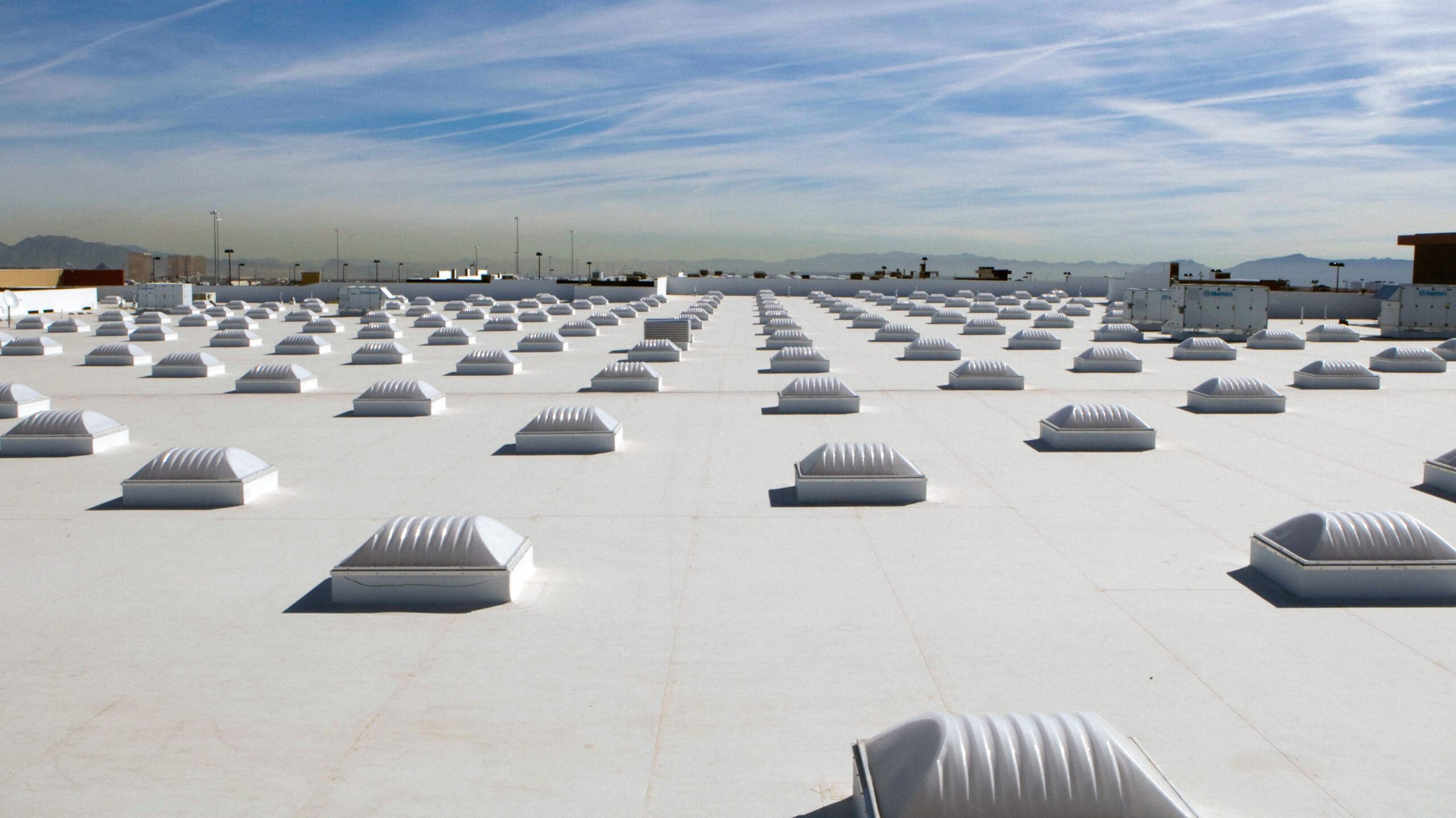
White EPDM - factory-laminated white fleece or white-formulation membrane - achieves Solar Reflectance Index values that meet Colorado's 2018 IECC reflectance thresholds for low-slope commercial roofs. Buildings pursuing LEED credits or utility rebates from Xcel Energy's commercial efficiency programs need a CRRC-listed product with published SRI data - white EPDM qualifies, and we include the CRRC documentation in the closeout package.
Frequently asked questions
Is EPDM or TPO better for Denver's freeze-thaw climate?
Both perform well in Denver's climate when properly specified and installed. EPDM's low-temperature elongation advantage is most relevant on buildings with long unbroken parapet runs, complex flashing geometry, or industrial chemical-exposure conditions. TPO's heat-welded seam advantage is most relevant on large-field applications where seam consistency is the primary quality variable. We give you a written comparison for your specific building - the answer depends on the building, not on a general preference.
Does EPDM qualify for Class 4 hail resistance in Colorado?
Yes - EPDM over HD polyiso or HD gypsum cover board qualifies for FM 4470 Class 1 or UL 2218 Class 4 impact resistance. The cover board is the critical component: EPDM over standard-density insulation does not make the rating. We specify the cover board in every EPDM scope and provide the impact-resistance certification documentation at closeout.
Can EPDM be installed in winter in Denver?
Fully adhered EPDM installation has temperature constraints on the bonding adhesive - most manufacturers require ambient temperatures above 40 degrees Fahrenheit during adhesive application, though some cold-weather formulations extend the window to 25 degrees. Seam tape application has similar constraints. Denver's fall and spring are often workable for EPDM; mid-winter installation requires careful adhesive selection and temperature monitoring. We do not install fully adhered systems in conditions that fall outside the manufacturer's published application window.
Scoping an EPDM roof system for a Denver or Front Range building?
We inspect the existing system, assess the freeze-thaw and chemical-exposure conditions, and produce a written EPDM scope with cover board specification, hail-resistance certification path, and manufacturer warranty documentation.
| Scope Format | Written roof plan and photo record |
|---|---|
| Primary Market | Denver commercial buildings |