Cold-Weather Application Windows - Denver's Seasonal Constraint
Fluid-applied silicone coating systems for Denver commercial roofs - UV performance at 5,280 feet, cold-weather application windows, 20 to 30 mil dry film thickness, and 10 to 20-year manufacturer warranties on qualifying substrates.
Silicone fluid-applied coating is a legitimate 10 to 20-year life extension for qualifying Denver commercial roofs. Silicone's UV stability at 5,280 feet outperforms acrylic and polyurethane coatings in Colorado's high-altitude solar environment. The critical variables are substrate qualification and application temperature - a coating applied over wet or failing membrane fails in the same locations within two years. We do the assessment work that determines whether your roof qualifies before we apply anything.
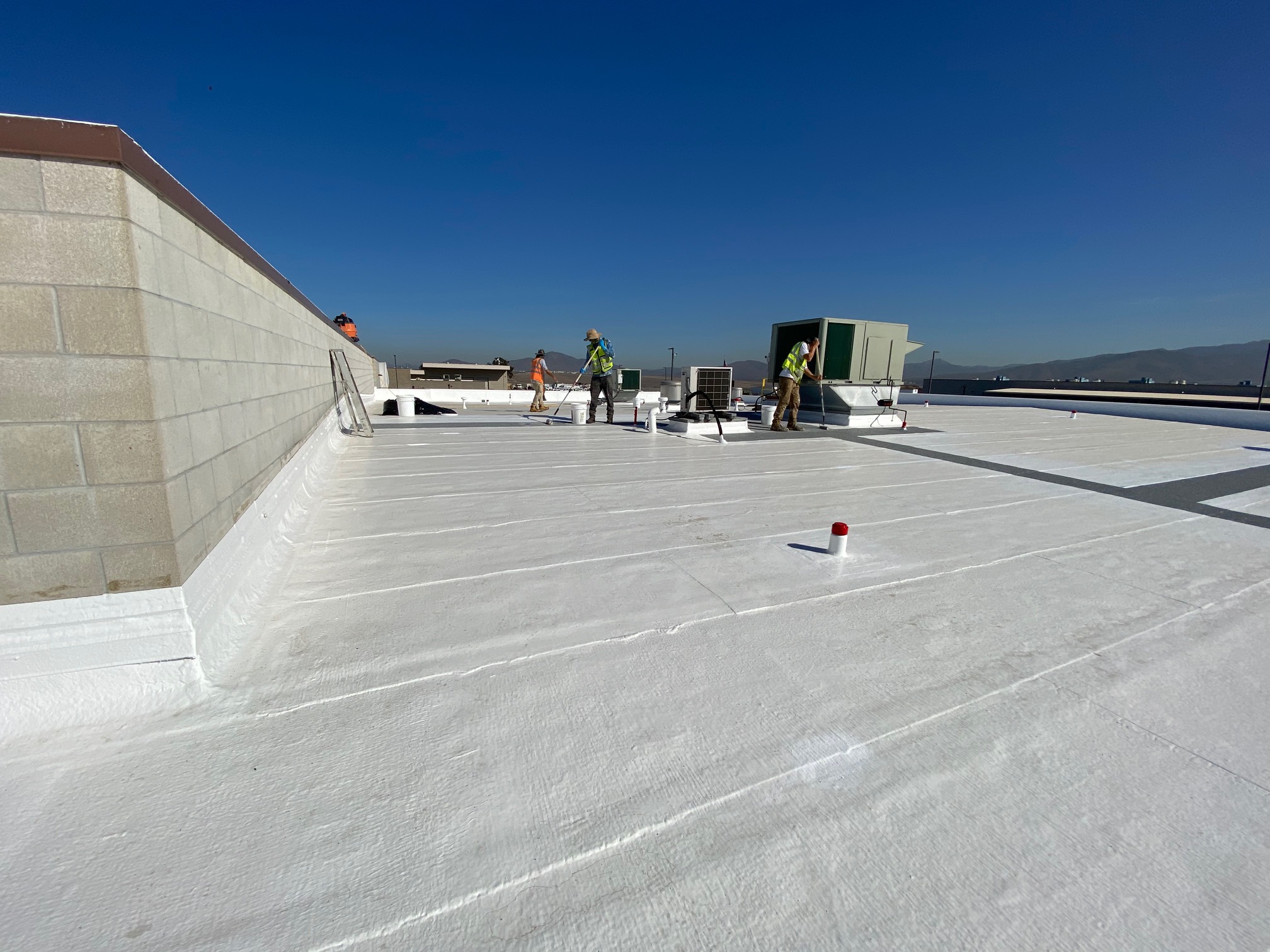
Silicone fluid-applied coating systems are one of the most oversold products in commercial roofing nationally, and Denver is not immune to that pattern. The proposition is legitimate: a 25 to 30 mil silicone coating applied to a clean, dry, properly primed roof surface can extend the system's life 10 to 20 years and carry a manufacturer warranty. The abuse is equally real: contractors who skip substrate preparation, apply coating over wet or failing membrane, and hand over a warranty document the manufacturer will deny when the roof leaks in year two.
We install silicone coating systems on Denver commercial roofs where the substrate qualifies - and we turn down coating work where it does not. The buildings where silicone coating makes sense in this market are specific: an aging TPO or modified bitumen system with dry insulation, intact seams, and sound flashings that needs another 10 to 15 years of life without the capital cost of full replacement. The buildings where it does not make sense include any roof with wet insulation, failed seam laps across significant areas, or parapet flashings that have lost their bond.
Silicone has a specific advantage in Denver's climate that makes it a better coating choice than acrylic or polyurethane for most Front Range applications: silicone resists UV degradation at altitude better than either alternative, does not chalk or peel under Denver's 25 to 30 percent higher UV intensity compared to sea-level markets, and retains elastomeric flexibility through freeze-thaw cycling that would crack or delaminate less resilient coating products.
Silicone coating application has a narrow temperature window that is a genuine scheduling constraint on Denver commercial projects. Most manufacturer specifications require ambient temperature above 40 degrees Fahrenheit and substrate temperature below approximately 130 degrees Fahrenheit during application. In Denver, that window closes from roughly mid-October through mid-April - not because Denver is uniformly frozen during those months, but because the diurnal temperature swings that characterize Colorado fall and spring create unreliable ambient conditions that interfere with cure. A coating applied at 55 degrees Fahrenheit in the morning that drops to 28 degrees before cure is complete does not achieve the manufacturer's specified film properties.
We schedule silicone coating work primarily from mid-April through mid-October on Denver commercial projects. Within the summer months - June through August - early-morning application windows are necessary because Denver rooftop surface temperatures in direct sun can exceed 130 degrees Fahrenheit by mid-morning, which compromises adhesion on hot substrate. Early-morning crew starts and a defined temperature cutoff for the application day are standing protocol on summer coating projects.
Dry Film Thickness and Warranty Qualification
Silicone coating warranty terms are tied directly to dry film thickness (DFT). A 10-year manufacturer warranty typically requires 20 mil DFT. A 15-year warranty requires 25 mil. A 20-year warranty requires 30 mil on most manufacturer systems. These are dry film measurements after solvent flash-off - the wet application rate is higher because silicone coatings lose volume during cure.
We verify DFT during application with a wet-film gauge on every lift and document the final DFT with a dry-film gauge after cure. Manufacturer warranty inspectors perform the same measurement at closeout - projects that do not pass the DFT check do not receive the warranty. At Denver's altitude, solvent flash-off during application is faster than at sea level, which affects the application technique for achieving consistent wet-film thickness. Our crews account for this in their application pattern on Front Range projects.
Substrate Assessment - UV Degradation and Moisture in Denver Roofs
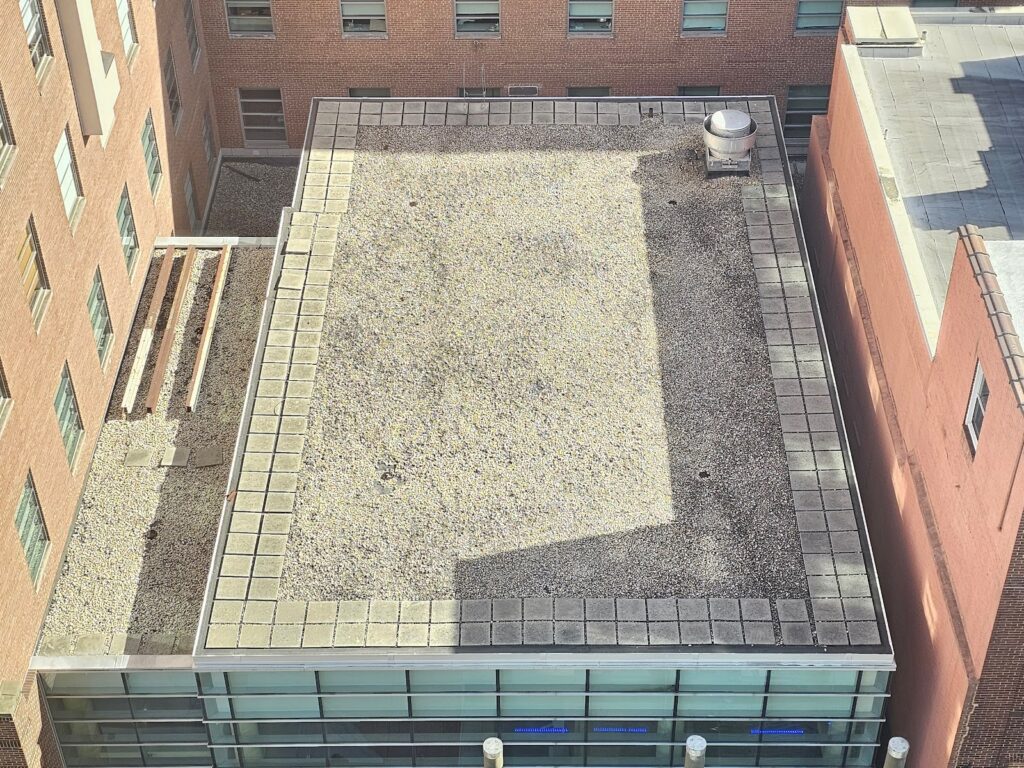
Denver's high-altitude UV environment accelerates membrane chalking and surface oxidation compared to lower-elevation markets. A TPO membrane that would be a coating candidate at 15 years in Houston may show UV chalking sufficient to require aggressive pressure washing and primer before silicone adhesion is achievable in Denver at the same age. We assess UV degradation level during the substrate inspection - chalked, oxidized, or granule-depleted surfaces require pressure washing at a minimum of 3,000 PSI and manufacturer-specified primer before coating application.
Moisture assessment on Denver roofs uses a combination of impedance metering at representative locations and electronic leak detection where we have subsurface moisture concerns. Denver's semi-arid climate makes trapped moisture in commercial insulation less intuitively obvious than in humid markets - the air is dry, so building managers sometimes assume a dry-feeling roof means dry insulation. Freeze-thaw cycling can move moisture through the insulation stack in ways that are not apparent at the surface. We do not coat a roof that does not pass moisture assessment, and we report the result in writing before any coating decision is made.
Frequently asked questions
How do I know if my Denver roof qualifies for silicone coating?
The qualification test is a moisture core pull and seam inspection. If insulation reads dry at five to ten representative locations, seams are sound or can be repaired before coating, and flashings are intact, the roof is likely a coating candidate. If we find wet insulation, failed seams across significant areas, or parapet flashings that have lost their bond, coating is not the right scope and we will tell you so in writing before you make any commitment.
Why is silicone better than acrylic coating at Denver's altitude?
Silicone's UV stability at high altitude outperforms acrylic. Acrylic coatings at 5,280 feet tend to chalk, peel, and lose film thickness faster than at sea level because the UV intensity is 25 to 30 percent higher. Silicone is inherently UV-stable without requiring UV-absorbing additives - its silicon-oxygen backbone is not susceptible to UV-driven chain scission the way acrylic polymer chains are. For Denver commercial buildings that need a coating warranty to run its full 15 to 20 year term, silicone is the more defensible specification.
What does silicone coating cost compared to TPO replacement on a Denver building?
A 20-mil silicone coating system on a qualifying 50,000 square foot Denver building typically costs 30 to 45 percent of a full TPO replacement on the same building. If your roof qualifies, it is a significant capital deferral. The trade-off is a 10-year warranty term versus 20 years for TPO replacement - at the end of the coating warranty, the decision recurs. We model the lifecycle cost for both options so you can choose based on your capital horizon.
Is silicone coating a viable option for your Denver commercial roof?
We assess the substrate, conduct moisture testing, evaluate UV degradation, and give you a written determination - with a coating scope and a TPO replacement scope side by side, so you can compare the 10 to 20-year paths on the same document.
| Scope Format | Written roof plan and photo record |
|---|---|
| Primary Market | Denver commercial buildings |