60-mil vs 80-mil - When Thickness Matters in Denver
TPO 60-mil and 80-mil roof systems for Denver commercial buildings - fully adhered and mechanically attached, Class 4 hail-rated assemblies over HD cover board, 20-year NDL warranty paths engineered for Colorado's 30 psf snow load and 90-plus freeze-thaw cycle climate.
TPO is the dominant commercial flat-roof membrane on the Front Range because it handles mile-high UV, qualifies for Class 4 hail-resistance ratings over HD cover board, and carries 20-year NDL warranty paths from every major manufacturer. We specify fully adhered and mechanically attached systems to manufacturer details - engineered against Colorado's 30 psf snow load, Chinook wind events, and the 90 to 110 freeze-thaw cycles Denver averages each year.
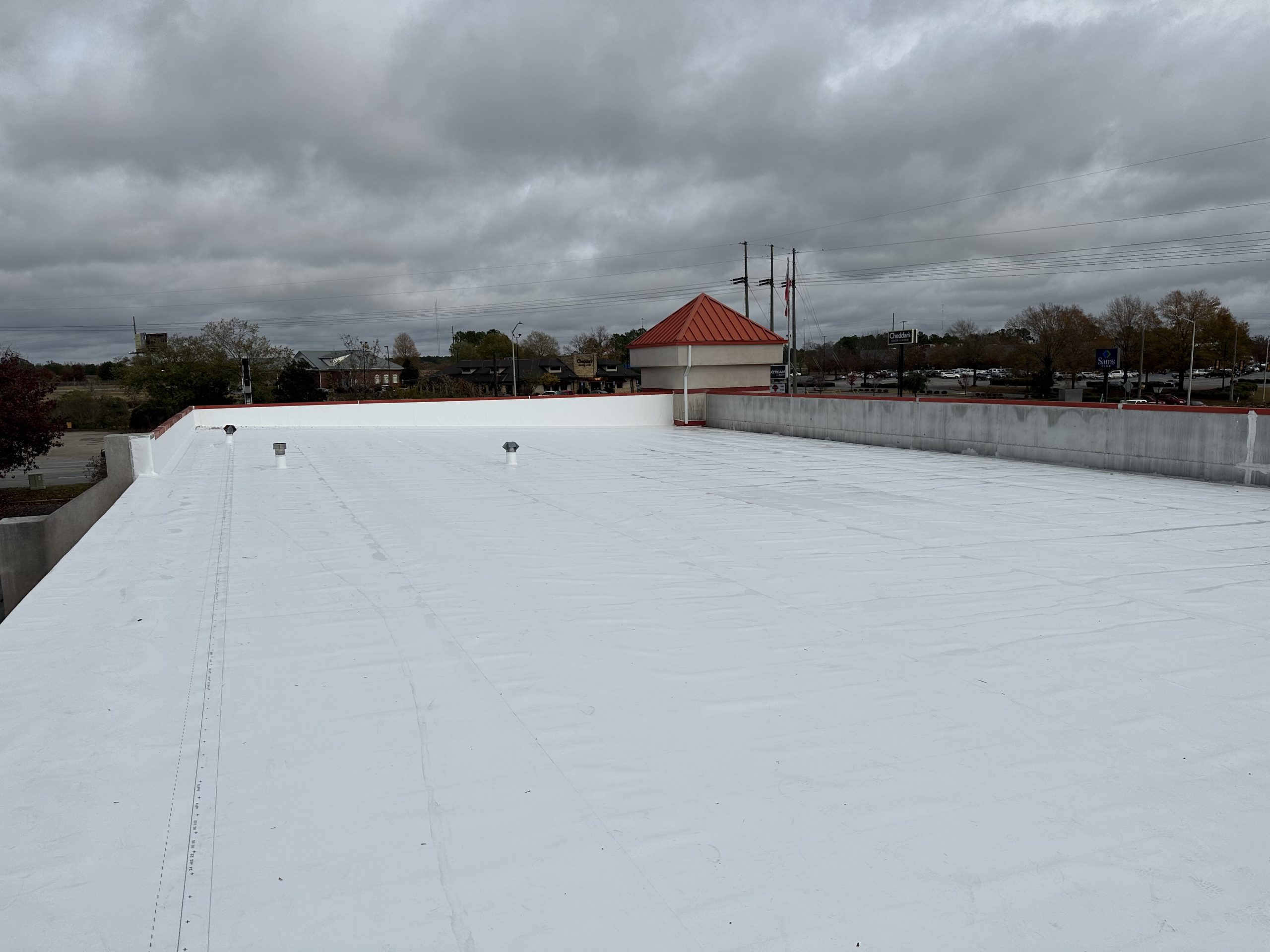
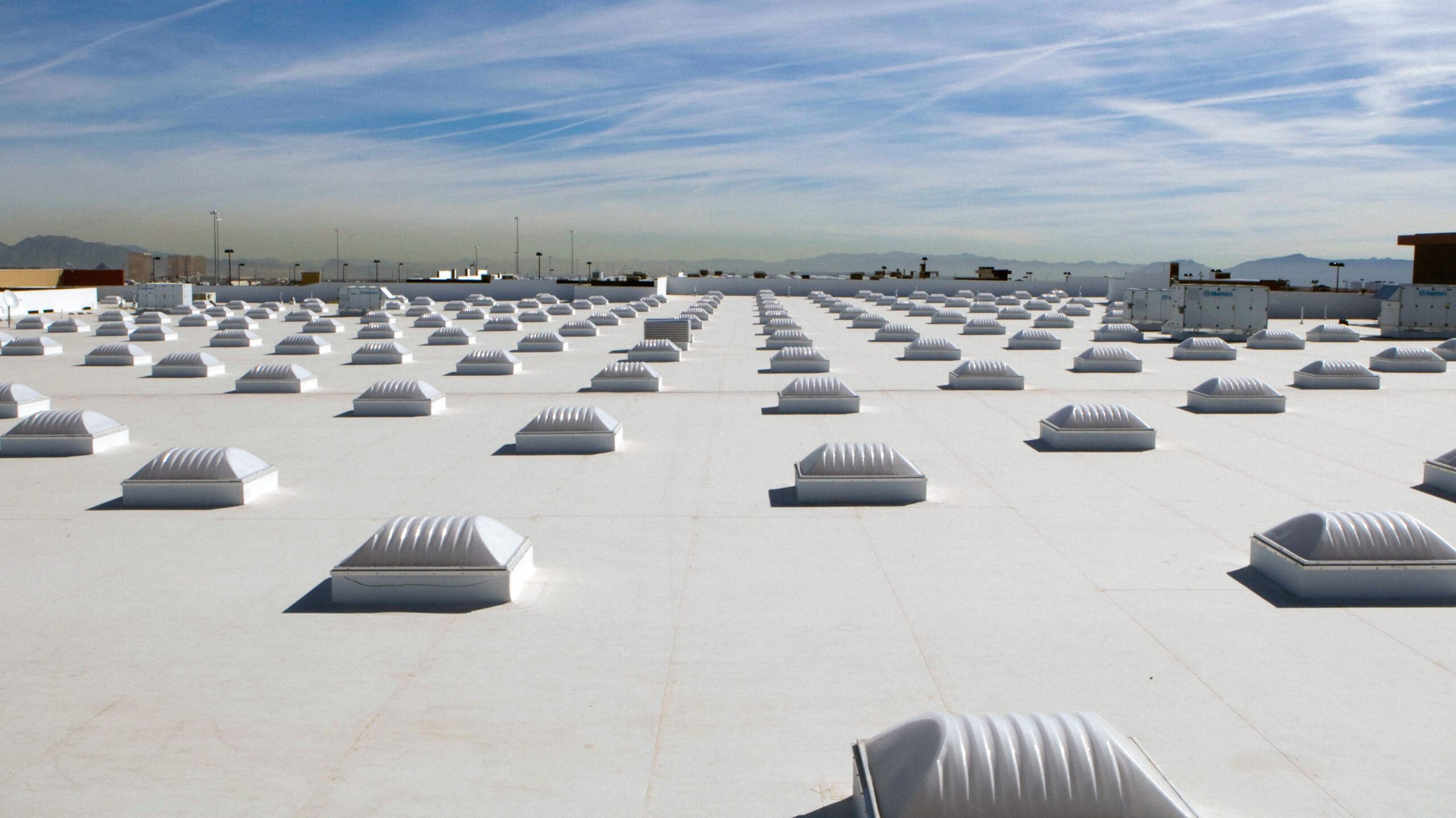
TPO accounts for the majority of Denver commercial flat-roof replacements we scope on the Front Range. The membrane earns that position in this market for reasons that are specific to Colorado's climate. At 5,280 feet, UV radiation is 25 to 30 percent more intense than at sea level - white TPO reflects the majority of that radiation rather than absorbing it, which reduces rooftop surface temperatures and membrane aging rates simultaneously. The hot-air seam weld creates a monolithic waterproofing layer that outperforms lap adhesives through Denver's 90 to 110 annual freeze-thaw cycles, which put more cumulative stress on seam adhesion than comparable markets at lower altitude.
What separates a TPO system that performs for 25 years in Denver from one that fails in year four is the insulation stack beneath it - specifically, whether an HD cover board is specified. Standard-density polyiso under a single-ply membrane is technically code-compliant, but it does not qualify for FM 4470 Class 1 or UL 2218 Class 4 impact resistance. In Colorado, that matters: most Front Range commercial property insurers now require Class 4 documentation for premium qualification. Every TPO scope we write includes an HD polyiso or HD gypsum cover board. That is not optional in this market.
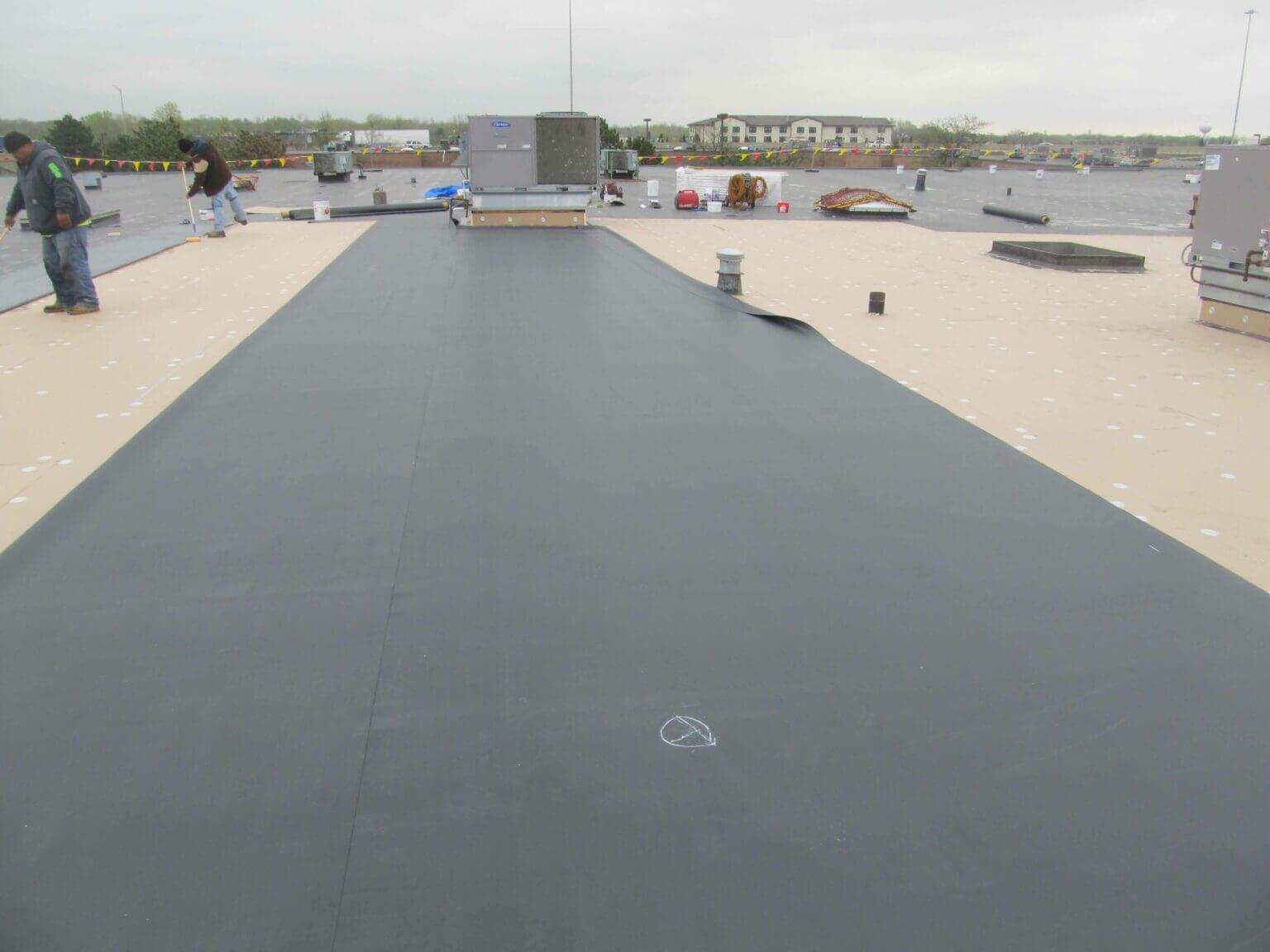
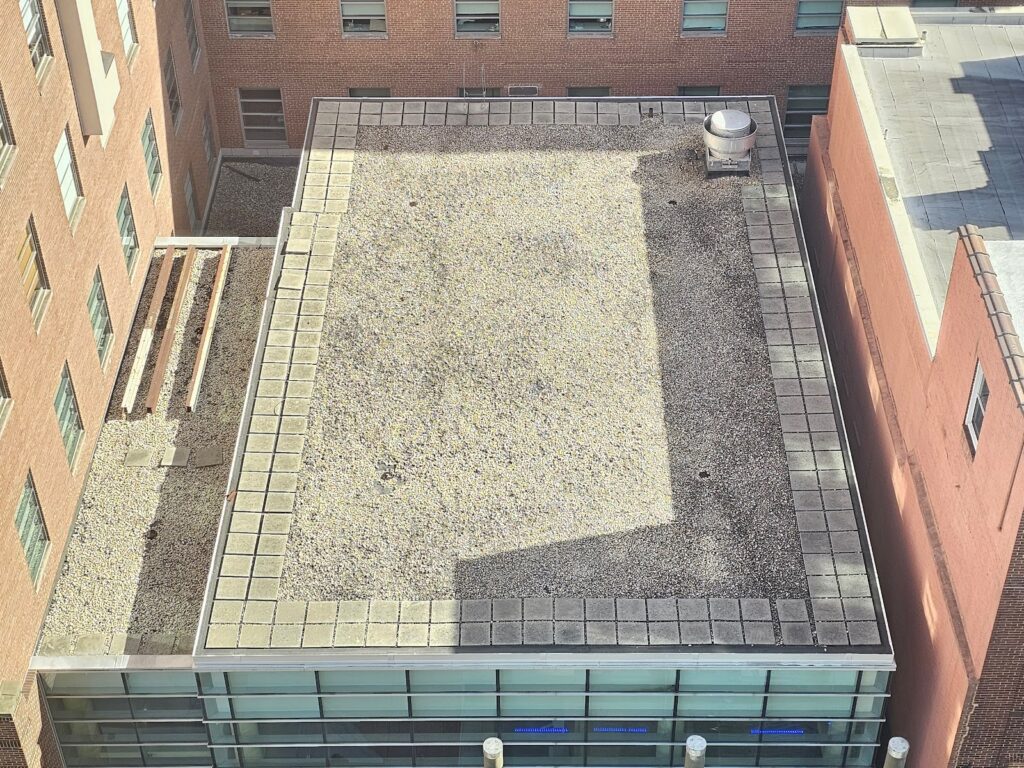
We install TPO mechanically attached on most Denver commercial buildings and fully adhered where wind-uplift calculations, structural conditions, or deck considerations require it. Our project managers have walked extensive TPO inventory across the DTC, LoDo, Cherry Creek, and Aurora industrial corridors, and we will tell you in writing whether your existing system is a recover candidate or needs full replacement before we hand you a contract.
60-mil TPO is the standard specification for Denver commercial buildings with normal rooftop traffic - office buildings along 17th Street, warehouse and distribution buildings in the I-70 industrial corridor, retail centers in Lakewood and Aurora. It carries a 20-year NDL warranty from every major manufacturer and handles Denver's UV and freeze-thaw load without accelerated degradation in current formulations. For most owners, it delivers the right balance of installed cost and lifecycle performance.
80-mil TPO adds meaningful value in specific Denver situations: buildings with heavy rooftop equipment traffic - data centers, medical-office buildings with dense rooftop mechanical, industrial facilities requiring quarterly maintenance access - and owners who want the extended warranty term that some manufacturers offer on 80-mil products. Denver's hail season is also a factor: the additional thickness improves puncture resistance on systems that will be walked during post-hail assessments. The cost delta runs roughly $0.40 to $0.60 per square foot installed. We model the lifecycle cost difference for each project so the decision is based on numbers, not assumptions.
Mechanically Attached vs Fully Adhered for Denver Conditions
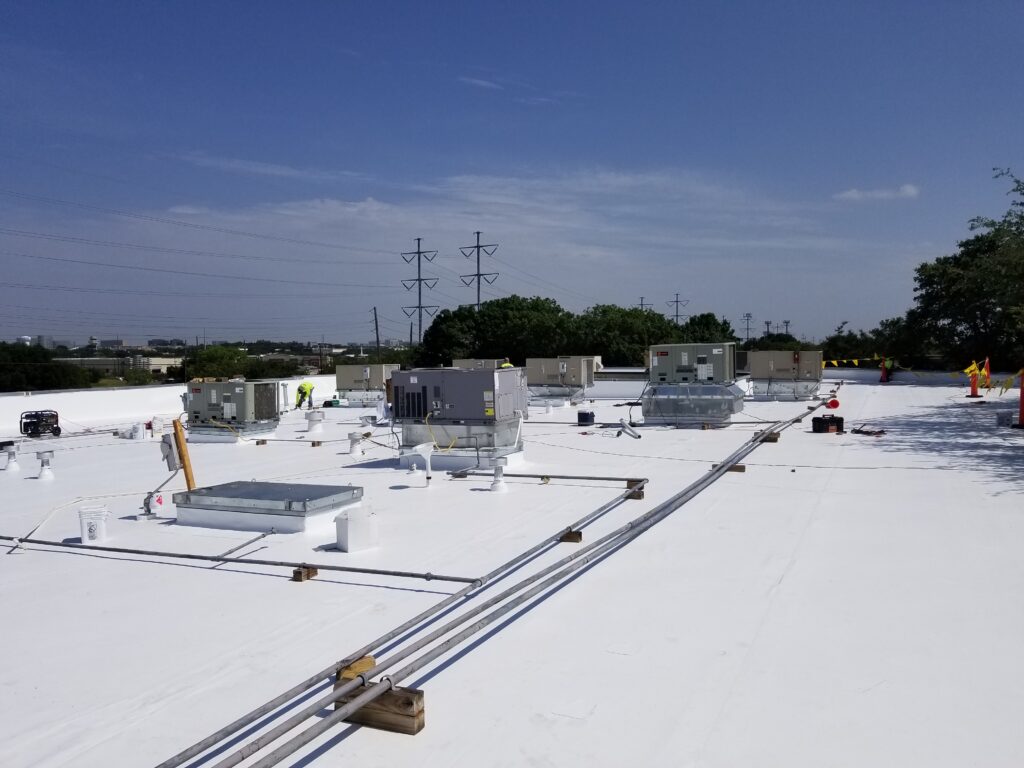
Mechanically attached is the volume attachment method for Denver commercial TPO. The membrane and insulation are fastened through a pattern of screws and plates engineered against the building's wind-uplift requirement under ASCE 7-22. Denver's Chinook wind patterns drive sustained gusts exceeding 60 mph along the Front Range, and buildings in open-exposure categories - the I-70 industrial corridor east of the urban core, the E-470 commercial zone in Aurora and Arapahoe County - require tighter fastener densities than sheltered urban sites. We calculate the attachment pattern against the specific building's exposure category, not a default grid.
Fully adhered systems bond the membrane directly to the cover board using a TPO-compatible bonding adhesive. We specify fully adhered when the building has deck conditions that cannot tolerate additional fastener penetrations, when wind-uplift resistance requires the continuous bond that adhesion provides over mechanical attachment at elevated fastener counts, or when the project involves a historically sensitive structure in LoDo's historic districts. Fully adhered systems are preferred in Denver over ballasted systems for virtually all commercial building types - hail impact on ballasted roofs creates secondary projectile risk, and the snow load combination with ballast dead load frequently exceeds structural capacity on the pre-1990 commercial inventory.
20-Year NDL Warranty Path - What It Requires in Colorado
Every major TPO manufacturer offers a 20-year no-dollar-limit warranty on qualifying Denver installations. NDL means if the roof leaks during the warranty period due to a manufacturing defect or installation deficiency, the manufacturer pays to repair it - no labor cap, no material cap. That is materially different from a prorated material-only warranty, which is what most low-bid contractors deliver even when they call it a '20-year warranty.'
Frequently asked questions
Does my Denver building's existing TPO qualify for recover or does it need full replacement?
We pull moisture cores at five to ten locations across the roof and do a visual seam and flashing inspection. If the existing insulation is dry, the deck is sound, and the membrane has not reached the chalking or cracking stage of UV degradation, a recover with new 60-mil TPO over the existing system is often the right scope. If the insulation reads wet on more than 25 percent of cores, replacement is the honest call - recovering wet insulation traps moisture and voids the new warranty. We provide the core results and a written recover-versus-replace recommendation before you make any commitment.
What TPO manufacturers do you work with in Denver?
How does Denver hail affect TPO roofing?
Standard-density TPO over standard-density polyiso is vulnerable to puncture and compression under the 2-inch-plus hailstones the Front Range produces regularly from May through August. Our standard spec includes an HD polyiso or HD gypsum cover board under the membrane, which is what qualifies the assembly for FM 4470 Class 1 or UL 2218 Class 4 impact resistance. That rating is what your insurer needs to apply the impact-resistance premium credit. We include the certification documentation in every project closeout package.
Does TPO meet Colorado's snow load requirements?
TPO membrane selection is separate from snow load compliance - snow load is a structural design question that governs the deck and insulation stack, not the membrane type. Denver's 30 psf ground snow load and the significantly higher values in foothills communities to the west affect insulation stack design and fastener-pattern engineering. We coordinate with the building's structural engineer of record when snow load calculations show the existing deck is near design capacity.
Scoping a TPO roof system for a Denver building?
We walk the roof, pull cores where the recover-versus-replace question depends on it, and produce a written TPO scope with manufacturer warranty path, hail-resistance specification, cover board detail, and installed-cost estimate.
| Scope Format | Written roof plan and photo record |
|---|---|
| Primary Market | Denver commercial buildings |