Boulder Commercial Roof Inventory by District
Boulder's commercial roof inventory spans four distinct categories: the University of Colorado campus and its adjacent research facilities, the Pearl Street and downtown retail and hospitality district, the technology and aerospace employers along the Diagonal Highway and Arapahoe Avenue corridors, and the light industrial and research facilities in East Boulder. Each runs different replacement cycles, different institutional protocols, and different wind and hail exposure conditions driven by Boulder's unique position at the base of the Front Range.
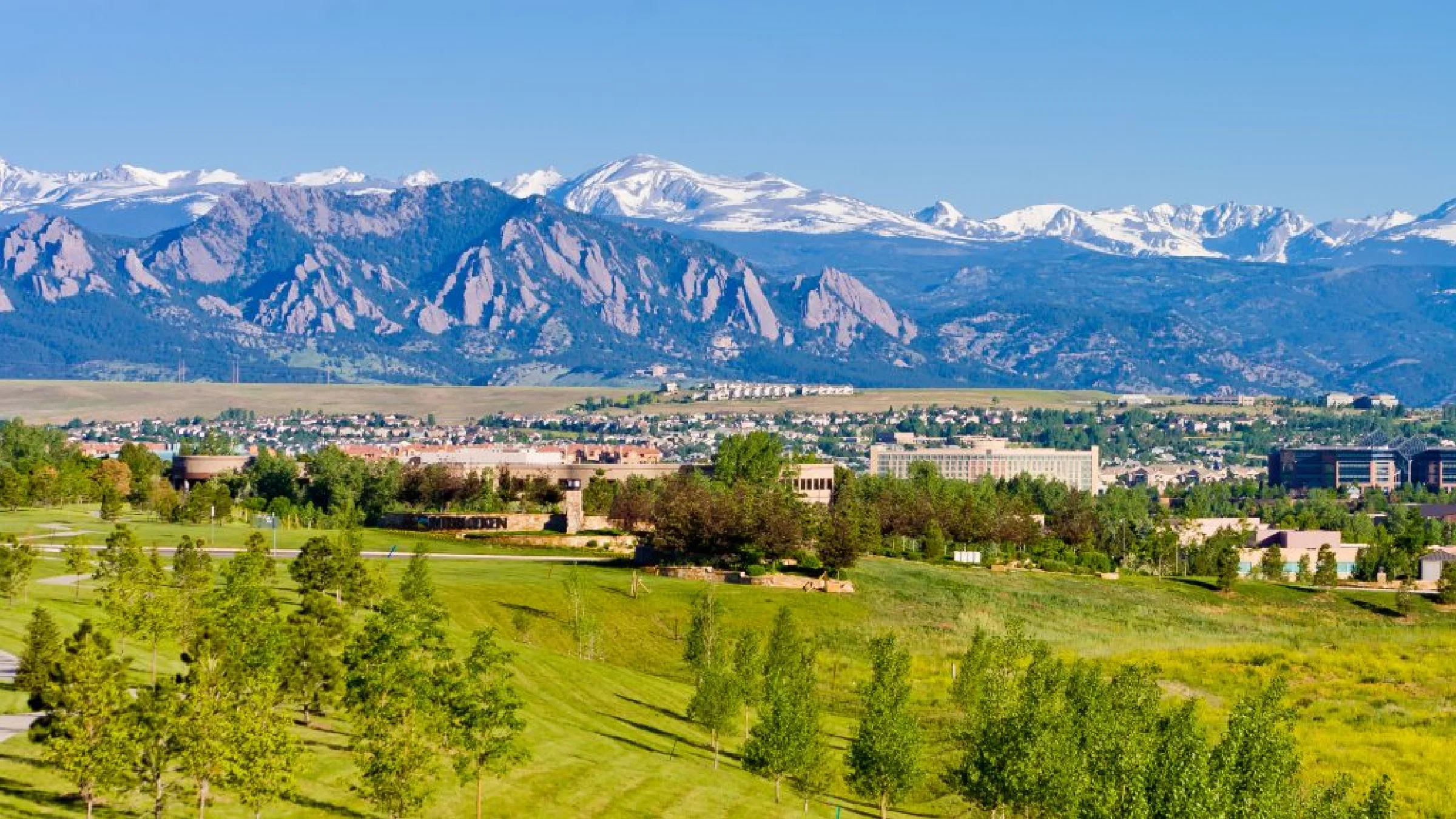
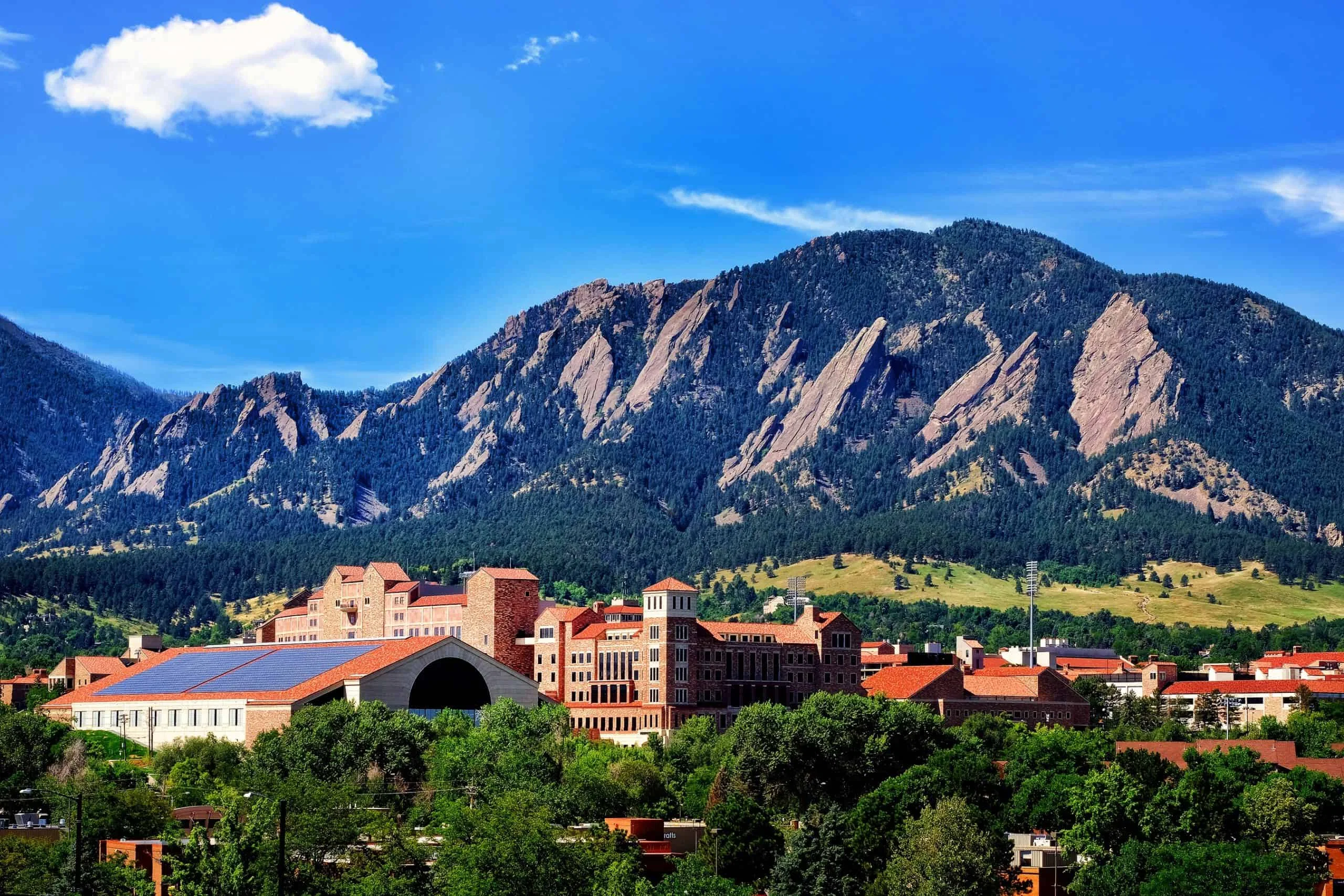
Boulder sits at 5,430 feet at the base of the Flatirons - the most exposed commercial roofing environment in our service area. The mountain-plain interface at Boulder's western edge produces the strongest, most frequent Chinook wind events in the metro, with documented sustained gusts exceeding 100 mph in extreme events. Wind is the primary specification driver for Boulder commercial roofing in a way that does not apply with the same intensity to the flatter eastern metro communities. Fully adhered membrane systems are the standard specification for occupied commercial buildings across Boulder's exposed western districts.
The University of Colorado Boulder campus is one of the largest institutional commercial roofing accounts in Colorado. CU Boulder's building inventory spans construction from the 1870s through ongoing current development - a range that includes everything from original red sandstone academic buildings with period roof structures to modern research facilities with complex rooftop laboratory equipment, HVAC systems sized for cleanroom operations, and PV arrays specified as part of CU's sustainability commitments. Institutional campus roofing requires coordination with CU's Facilities Management division, compliance with CU-specific sustainability and procurement requirements, and planning horizon alignment with CU's capital improvement program cycle.
CU Boulder campus (Broadway / Regent Drive / Colorado Avenue): A multi-building campus inventory spanning 150 years of construction history. CU Facilities Management coordinates roofing capital planning through a multi-year CIP. The oldest historic structures require historic preservation review before roofing alterations. Modern research and laboratory buildings carry rooftop infrastructure - fume hoods, laboratory exhaust systems, specialized HVAC - that requires detailed pre-construction survey. PV arrays on more recently constructed academic buildings require panel-relocation coordination with CU's energy management division before any membrane work beneath them proceeds.
Pearl Street Mall and downtown Boulder commercial corridor: The Pearl Street pedestrian mall and surrounding downtown commercial blocks contain retail, restaurant, and hospitality buildings from the late 19th century through 2010s infill. Older Pearl Street buildings have parapet and historic front facade conditions that require careful edge-metal and perimeter flashing specification to maintain the appearance standards the City of Boulder's historic preservation guidelines require. New construction infill in downtown Boulder runs fully adhered TPO or PVC.
University Hill commercial district (Broadway / University Avenue): The commercial district immediately adjacent to the CU campus. Student-market retail, restaurants, and commercial buildings from the 1940s through 1990s. Older buildings in this zone are on original or early-recovery built-up systems. Proximity to CU campus operations means weekend and evening scheduling is often preferred to avoid disruption during move-in and major event weekends.
Boulder's Wind Exposure and High-Altitude Roofing Conditions
Boulder's exposure to mountain-plain wind events is the defining difference between Boulder commercial roofing specification and Denver metro specification. The Boulder Valley sits in ASCE 7-22's highest surface-roughness exposure categories for large portions of the city's western and central commercial districts. Chinook events at Boulder regularly produce gusts that would qualify as extreme weather at sea-level cities. The April 2021 wind event - with gusts documented at over 100 mph at Boulder Municipal Airport - caused significant edge-metal, flashing, and membrane damage across western Boulder's commercial inventory. Mechanically attached membrane systems that are under-attached for Boulder's actual wind-uplift loads are a known failure mode in this market.
Hail exposure in Boulder is moderate on the metro frequency scale but highly consequential when events do occur. Boulder's position at the mountain-plain interface means storms that move east off the mountains can retain large stone sizes - the mechanism that produces disproportionately large hail at the foothills edge versus the open plains corridor farther east. Pearl Street and the CU campus have documented hail losses in the past decade that involved significant membrane damage on non-rated systems.
At 5,430 feet, UV degradation in Boulder is marginally more intense than at Denver's 5,280 feet - a small difference, but meaningful when selecting between membrane systems with different UV resistance profiles. All-white reflective TPO and PVC are standard across Boulder's commercial spectrum, both for UV longevity and for compliance with Boulder's energy efficiency requirements, which are among the most stringent for commercial buildings in Colorado.
Frequently asked questions
Do you work on CU Boulder campus buildings?
Yes. CU Boulder roofing requires coordination with CU Facilities Management through their capital improvement program process. We are familiar with CU's procurement requirements, sustainability specifications, and the multi-building inspection and documentation approach that campus facilities management uses to prioritize roofing capital allocation. Historic structures require historic preservation review routing that we manage as part of pre-construction permitting.
How does Boulder's wind exposure affect commercial roof specifications?
Boulder's ASCE 7-22 wind exposure categories are among the highest in Colorado for commercial buildings in the city's western and central zones. Mechanically attached systems in exposed positions require fastener densities substantially higher than Denver metro standard, and many buildings are found to be under-attached when we pull the wind-uplift calculation against Boulder's actual exposure category. Fully adhered membranes are preferred in the most exposed western and central Boulder commercial districts.
What extra protocols apply to tech and aerospace facilities in East Boulder?
Facilities like IBM, Ball Aerospace, and the defense contractor campus buildings in East Boulder may have clean-room or data-center environments where any water intrusion is a production-stopping event. We treat inspection frequency for these accounts differently - semi-annual rather than annual - and our emergency response protocol for after-hours calls prioritizes these buildings. We also confirm rooftop access clearances with each facility's security team before any inspection or production crew is scheduled, as some areas of these campuses require escort.
Does Boulder have specific roofing permit or energy code requirements?
The City of Boulder's Building Services Division requires permits for commercial roof replacements. Boulder has adopted energy efficiency requirements for commercial buildings that are more stringent than the state base code - insulation R-value minimums and reflectance requirements for commercial membranes are relevant to every Boulder replacement spec we write. We design every Boulder commercial replacement to the current Boulder energy code requirements and document code compliance in the project closeout package.
Need a Boulder commercial roof inspection or scope?
Our project managers cover Boulder as part of the US 36 corridor route - CU campus, Pearl Street district, Diagonal Highway tech corridor, and East Boulder research park. We will walk the roof, document the condition, and produce a written scope engineered for Boulder's wind exposure, energy code requirements, and institutional planning timelines.
| Scope Format | Written roof plan and photo record |
|---|---|
| Primary Market | Denver commercial buildings |