State Capitol Complex and Government Buildings
Commercial roofing for Capitol Hill's government buildings, historic structures, and urban mixed-use inventory - Colorado State Capitol complex, Governor's Residence, Cathedral Basilica of the Immaculate Conception, and the mixed-use blocks along Colfax Avenue.
Capitol Hill is Denver's oldest and most architecturally varied commercial and civic district - from the gold-leaf dome of the Colorado State Capitol to the Cathedral Basilica on Logan Street to the Colfax Avenue commercial corridor. The inventory spans 140 years of construction and presents historic preservation requirements, government facility protocols, and the dense urban rooftop conditions of one of Denver's most densely built neighborhoods.
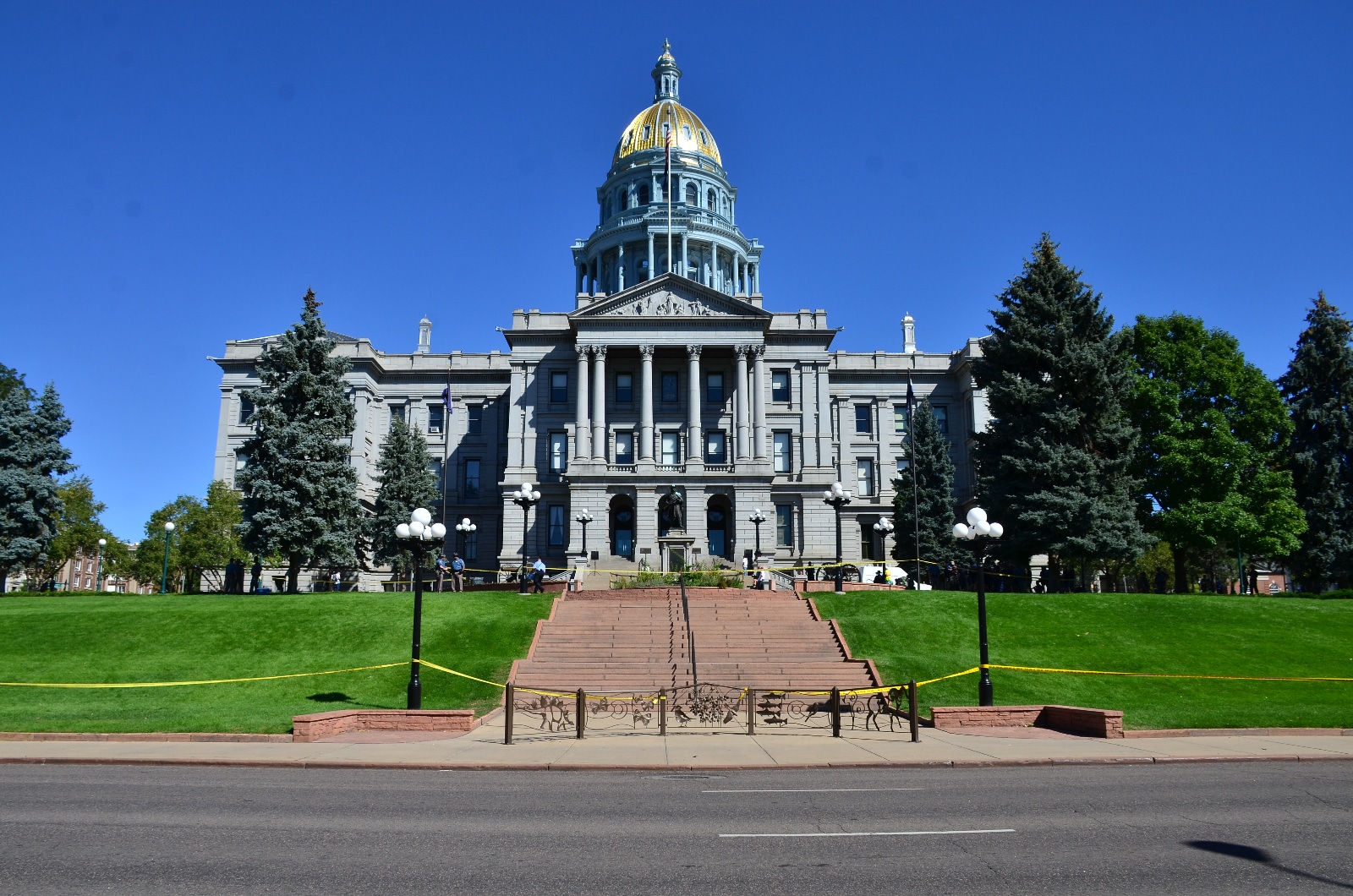
Commercial roofing in Capitol Hill covers more institutional and governmental building types per square mile than any other Denver neighborhood. The Colorado State Capitol complex at Colfax and Grant, the Governor's Residence at Colfax and Race, and the cluster of state office buildings along Lincoln and Sherman streets are all government facilities with prevailing-wage requirements and procurement protocols that differ from standard commercial contracts. The Cathedral Basilica of the Immaculate Conception - the twin-spire Gothic Revival landmark on Logan and Colfax - is one of the most technically complex commercial roofing sites in Denver, with slate roof sections on the nave that require preservation-grade repair methodology rather than standard membrane replacement.
Away from the civic institutions, Capitol Hill's commercial inventory is a dense mix of 1890s through 1950s apartment-commercial buildings along East Colfax Avenue, 1920s through 1960s mixed-use buildings on East 13th and 14th avenues, and newer infill development. Colfax Avenue itself is classified as a Historic Commercial District by Denver Landmark Preservation, and any exterior alteration to a contributing building - including visible rooftop work - requires Landmark review. East Colfax property owners are often managing older buildings on tight maintenance budgets, and our role in this corridor is frequently roof condition assessment and capital planning documentation rather than immediate replacement scope.
The Denver Health medical campus at West 8th Avenue and Bannock Street - technically adjacent to Capitol Hill in the adjacent Baker neighborhood - is the largest acute-care public hospital in Colorado. We service Denver Health with the same infection-control and off-hours scheduling protocols we use at St. Joseph in Cherry Creek and the Anschutz campus in Aurora. Government hospital procurement at Denver Health goes through the Denver Health Capital Projects office, and contracts above certain dollar thresholds require competitive bid regardless of prior relationship.
The Colorado State Capitol, managed by the Department of Personnel and Administration's Real Estate Programs division, is a historic structure under the jurisdiction of both the Colorado State Historic Preservation Office and the Denver Landmark Preservation Commission. Roofing work on the Capitol or adjacent state buildings requires prevailing-wage compliance under Colorado's Little Davis-Bacon Act and pre-bid qualification through the DPA's contractor registry. The copper standing-seam roof sections visible from the east and south approaches are preservation work requiring a specialty contractor with documented experience in historic metal-roof restoration.
The state office buildings along Sherman, Lincoln, and Broadway - including the Ralph L. Carr Judicial Center at - are government facilities with standard DPA procurement requirements. Flat-roof sections on these buildings carry contemporary single-ply or modified-bitumen systems and are serviced under standard commercial roofing specifications, though the procurement and compliance documentation requirements remain government-grade.
Colfax Avenue Commercial Corridor
East Colfax Avenue is Denver's longest commercial street, and the Capitol Hill section - roughly from Broadway to York Street - is the oldest and most architecturally complex portion. Buildings here are predominantly 1920s through 1950s mixed-use commercial construction with flat roofs on original BUR or first-replacement modified bitumen. Common conditions: failed parapet cap metal, interior drain configurations that do not match current tenant layouts, and aging flashings at rooftop mechanical equipment that has been added over decades of tenant turnover.
The Landmark Preservation overlay on East Colfax means that replacement of visible rooftop elements - parapet cap metal, edge profiles, equipment screens - requires a Landmark Certificate of Appropriateness before permit application. We identify overlay-contributing status for every Colfax project during the pre-application phase and build the Landmark review timeline into the project schedule. For non-visible elements - field membrane, insulation, drain replacement - standard commercial permits apply without Landmark review.
Frequently asked questions
Do you work on state government buildings in the Capitol Hill district?
Yes. State government roofing in Colorado goes through the Department of Personnel and Administration's procurement process, which includes contractor pre-qualification and prevailing-wage compliance under the Little Davis-Bacon Act for covered trades. We are familiar with DPA procurement documentation requirements and carry the required prevailing-wage compliance records. Contact our project management office for pre-qualification documentation.
How does the Landmark Preservation overlay affect East Colfax roofing projects?
The East Colfax Historic Commercial District overlay requires a Landmark Certificate of Appropriateness for any exterior alteration to a contributing building that is visible from the public right-of-way. For roofing, this typically applies to parapet cap metal, edge profiles, and rooftop equipment screens. Field membrane and below-parapet work does not require Landmark review. We identify contributing-building status and review requirements at the pre-application stage on every Colfax project.
What is your response time for Capitol Hill emergency roof leaks?
Capitol Hill is within the Denver core service ring. Emergency response is typically two hours or less during business hours. After-hours emergency response is available for buildings on our maintenance contracts. Government facilities with after-hours emergency protocols coordinate through the building's facilities management team.
Do you have experience with historic or ornamental roofing in Capitol Hill?
For historic structures with slate, tile, copper, or ornamental roofing, we coordinate with preservation-specialist subcontractors who hold documented experience in the applicable material system. The Cathedral Basilica and similar institutional landmarks require preservation-grade methodology that differs from standard commercial flat-roof work. We scope preservation projects in coordination with the building's architectural representative and the relevant preservation authority.
Get a Capitol Hill commercial roof assessment.
Our project managers understand Capitol Hill's government procurement requirements, Landmark Preservation overlays, and institutional building complexity. We will produce a written scope that accounts for all regulatory and scheduling requirements before the project starts.
| Scope Format | Written roof plan and photo record |
|---|---|
| Primary Market | Denver commercial buildings |