Wheat Ridge Commercial Roof Inventory by Zone
Commercial roof inspections, replacements, and maintenance for Wheat Ridge commercial buildings - Wheat Ridge Lutheran Medical Center, 38th Avenue commercial corridor, the Ward Road industrial district, and Jefferson County commercial properties along I-70.
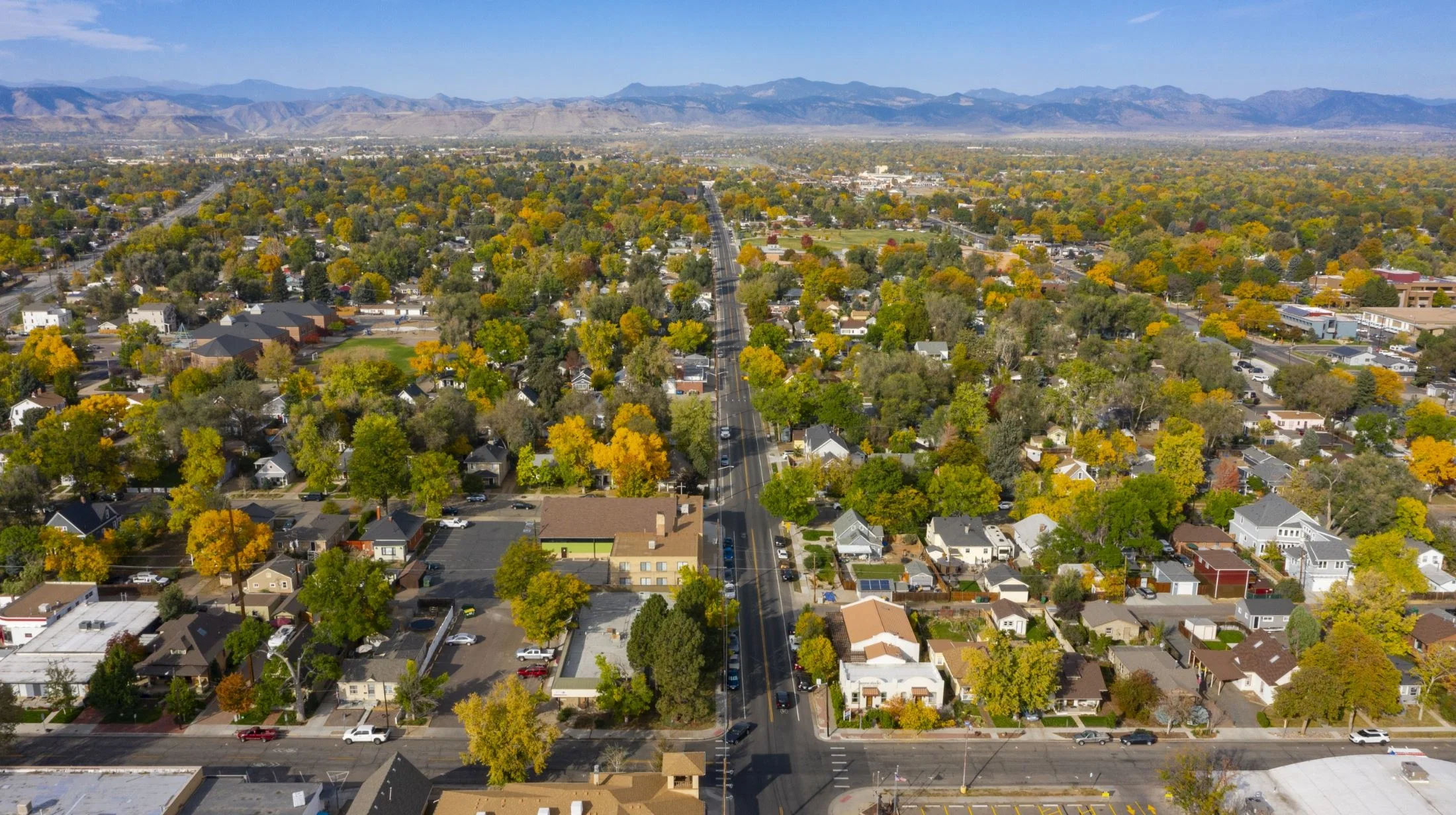
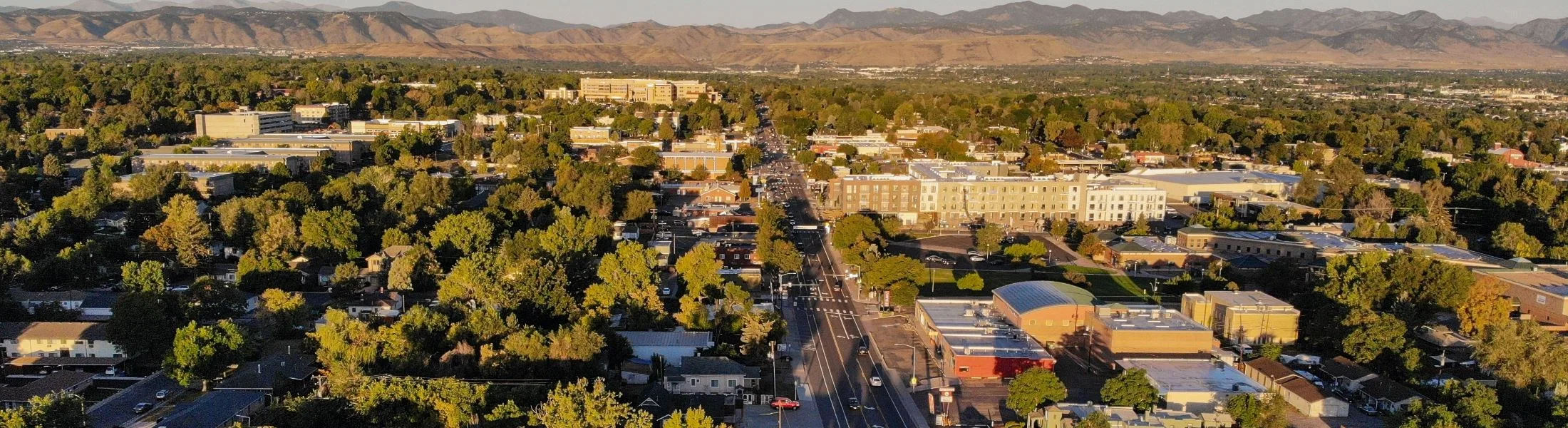
Wheat Ridge is Jefferson County's most directly urban community - bordered by Denver to the east and Lakewood to the south, with I-70 running through its northern commercial spine. Wheat Ridge Lutheran Medical Center anchors the city's healthcare roofing demand, while the 38th Avenue commercial corridor and the Ward Road industrial district represent the city's older commercial inventory.
Wheat Ridge's commercial character reflects its position as a transit city between Denver and the foothills communities. The I-70 corridor through Wheat Ridge - from Kipling Street east to Sheridan Boulevard - is the city's primary industrial and commercial spine, with auto-related commercial, small warehouse, and retail along the frontage roads. The Ward Road interchange is Wheat Ridge's major industrial node, with light industrial and contractor commercial that dates from the 1960s through the 1990s. Many of the buildings in this zone are carrying original or first-replacement roofing systems that have never been assessed since install.
Wheat Ridge Lutheran Medical Center - now operating as Lutheran Medical Center under SCL Health - is a Level II trauma center with a long construction history stretching back to the 1960s. The campus has expanded through multiple additions, and the rooftop infrastructure reflects that layered history. The original hospital structures have seen multiple membrane systems over the decades. More recent additions from the 1990s and 2000s are on first- or second-generation TPO or modified bitumen. Healthcare roofing at Lutheran requires the same infection-control coordination and off-hours scheduling discipline that any active trauma center demands.
The 38th Avenue corridor through Wheat Ridge has undergone a gradual commercial revitalization over the past decade, with independent retail, restaurants, and small professional services businesses occupying older commercial buildings that were built in the 1950s through 1970s. Many of these buildings have flat-roof commercial construction with original or early-recovery built-up systems that have not been assessed in years.
Lutheran Medical Center campus (West 38th Avenue / Lutheran Way): A Level II trauma center with a multi-generational construction history. Original hospital structures from the 1960s carry multiple recovery layers. 1990s and 2000s medical office additions are on first- or second-generation single-ply. Active helipad, emergency generator infrastructure, and HVAC system complexity require pre-construction survey before any section is planned for tear-off. All hot-work coordinated with facilities management. Off-hours scheduling required for work adjacent to occupied patient floors.
I-70 commercial corridor (Kipling Street to Sheridan Boulevard): Auto dealers, auto repair, retail, fast food, and small commercial buildings from the 1970s through 2000s. Variable roof conditions - some buildings on original built-up systems, some on first-replacement modified bitumen or early TPO. This corridor is worth a condition survey for any building not assessed within the past five years. Open-terrain wind exposure along the I-70 corridor requires attention to fastener density in mechanically attached membrane specifications.
Ward Road industrial district: Light industrial, contractor yard, warehouse, and flex-industrial buildings from the 1960s through 1990s. Conventional metal-deck construction with built-up or modified bitumen systems. Some buildings are in their original roofing systems at 40-plus years. Deck assessment through inspection ports is standard practice on any building in this zone with no documented replacement history.
38th Avenue commercial corridor: The revitalizing commercial corridor through central Wheat Ridge. Older commercial buildings from the 1950s through 1970s, predominantly flat-roof construction. Original or early-recovery built-up systems are common. Some buildings may carry asbestos-containing materials in original flashing mastics - pre-survey assessment is standard in this corridor.
Jefferson County Wind and Hail Exposure for Wheat Ridge Buildings
Wheat Ridge sits at the edge of Jefferson County's higher wind-exposure zone, where the mountain-plain interface produces Chinook wind events that drive sustained westerly gusts along the I-70 corridor. Buildings along I-70 in Wheat Ridge are in a higher wind-exposure category than sheltered urban sites, and mechanically attached membrane systems in this corridor require fastener density calculations that account for the open-terrain uplift loads. Fully adhered systems are preferred in the most exposed I-70 positions.
Hail frequency in Jefferson County's urban tier - Wheat Ridge, Lakewood, and Arvada - is lower on average than in Adams and Arapahoe counties to the east, but the proximity to the mountain-plain interface means storm energy retention can produce larger-than-average stone sizes when storms do develop in the foothills and track east. Impact-rated cover board is standard in our Wheat Ridge specifications regardless of specific site position.
The 38th Avenue corridor's older building inventory presents an additional exposure consideration: built-up roofing systems from the 1960s and 1970s that have developed brittleness through repeated thermal cycling lose their ability to flex under hail impact. Brittle built-up systems are far more vulnerable to fracture from direct hail impact than modern single-ply systems, and a direct hail event on an original system in this corridor can produce immediate active leaks rather than latent damage.
Frequently asked questions
How do you assess roofing systems on very old commercial buildings in the 38th Avenue corridor?
For commercial buildings from the 1950s through 1970s, we start with a pre-survey assessment that identifies the membrane type, documents visible surfacing condition, and flags any penetrations that suggest prior repair or patch history. On buildings with suspected original built-up systems, we pull moisture cores at representative locations to assess insulation condition and check for ACM in original flashings and mastics before any physical disturbance is planned.
What are the access protocols for roofing work at Lutheran Medical Center?
Lutheran Medical Center requires pre-construction coordination with the facilities management team before any roof crew is scheduled - access routes are documented, hot-work permits are reviewed and approved by the hospital's safety officer, material delivery timing is coordinated with patient transport corridors, and work schedules adjacent to occupied patient floors are cleared against the clinical operations calendar. We manage this coordination process on every Lutheran campus project.
Do older Wheat Ridge industrial buildings have deck assessment issues?
Yes. Ward Road district buildings from the 1960s and 1970s on light-gauge steel deck are frequently found to have deck corrosion when inspection ports are cut under wet moisture cores. Corroded deck sections cannot support the new membrane system and must be replaced before any new roofing goes down. We include deck inspection protocol in our pre-replacement scope for any Ward Road building without a documented replacement history, and we provide deck assessment findings in writing before contract execution.
What is your response time for Wheat Ridge emergency roof leaks?
Wheat Ridge is 15 to 20 minutes from our Denver office. Same-day mobilization for emergency dry-in on all Wheat Ridge commercial buildings. After-hours response is available for buildings on maintenance contracts.
Need a Wheat Ridge commercial roof inspection or scope?
Our project managers cover Wheat Ridge as part of the Jefferson County west corridor route - Lutheran Medical Center campus, I-70 commercial, the Ward Road industrial district, and the 38th Avenue corridor. We will walk the roof, document the condition, and produce a written scope for planned replacement, emergency repair, or capital planning.
| Scope Format | Written roof plan and photo record |
|---|---|
| Primary Market | Denver commercial buildings |