Tornado Damage Patterns on Colorado Commercial Flat Roofs
Tornado and rotating-cell wind damage documentation and repair for Denver-area commercial buildings - Larimer and Weld County events, structural assessment coordination, and insurance-grade scope packages.
Tornado touchdowns in the Denver metro are rare - the urban core almost never takes a direct track - but the eastern suburbs and the Larimer and Weld County corridors north of the metro produce documented tornado activity most years from May through September. When a rotating cell damages a commercial building, the roof scope is only the starting point. Structural assessment comes first.
The Colorado Front Range generates documented tornado activity primarily along the northern corridor - Larimer County, including Fort Collins and Loveland, and Weld County, which SPC storm reports consistently place among Colorado's most tornado-active counties annually. The June 2023 tornado outbreak that produced multiple confirmed touchdowns across Weld County damaged commercial agricultural and industrial buildings across the Greeley and Windsor commercial districts. These events affect Front Range commercial building owners whose properties lie north of the metro core along the I-25 corridor.
Metro-area tornado activity is less frequent but not absent. Brief rotating cells and funnel clouds have been documented over Adams County and in the eastern Aurora corridors during high-shear events in June and July. The EF0 and EF1 events that touch down in the eastern suburbs typically produce membrane pull-off at corners and edges, parapet displacement, and structural damage at rooftop mechanical equipment supports - not the catastrophic structural failure of a higher-rated event, but more than a standard hail or wind scope can adequately assess.
When any building has sustained rotating-cell or tornado-path wind loading, structural assessment precedes roofing scope. We work with structural engineers on any post-tornado commercial engagement to confirm that the deck and structural supports are sound before any roofing crew accesses the roof surface. The roofing scope follows the structural clearance - not the other way around.
Tornado-path damage on a commercial flat roof is distinguishable from straight-line wind damage by the multi-directional pull pattern. Straight-line Chinook or microburst wind loading produces edge lift concentrated on the upwind face of the building. A tornado or rotating cell produces edge lift and membrane pull-off that wraps the building perimeter - corner zones on multiple faces show simultaneous damage, parapet walls can have outward displacement on one face and inward displacement on an adjacent face from the rotational load, and rooftop mechanical equipment can be displaced off its mounting pads in directions that do not match the storm's reported track.
Structural damage at the deck-to-wall connection is the primary concern after any event with confirmed rotational wind loading. Parapet walls on Denver commercial buildings from the 1970s and 1980s - common in the DTC, the Stapleton redevelopment districts, and the older Aurora industrial corridors - are often unreinforced or minimally reinforced CMU construction that is vulnerable to rotational wind loads. Parapet displacement or cracking after a tornado-event inspection triggers a structural engineer referral before any roofing access or work proceeds.
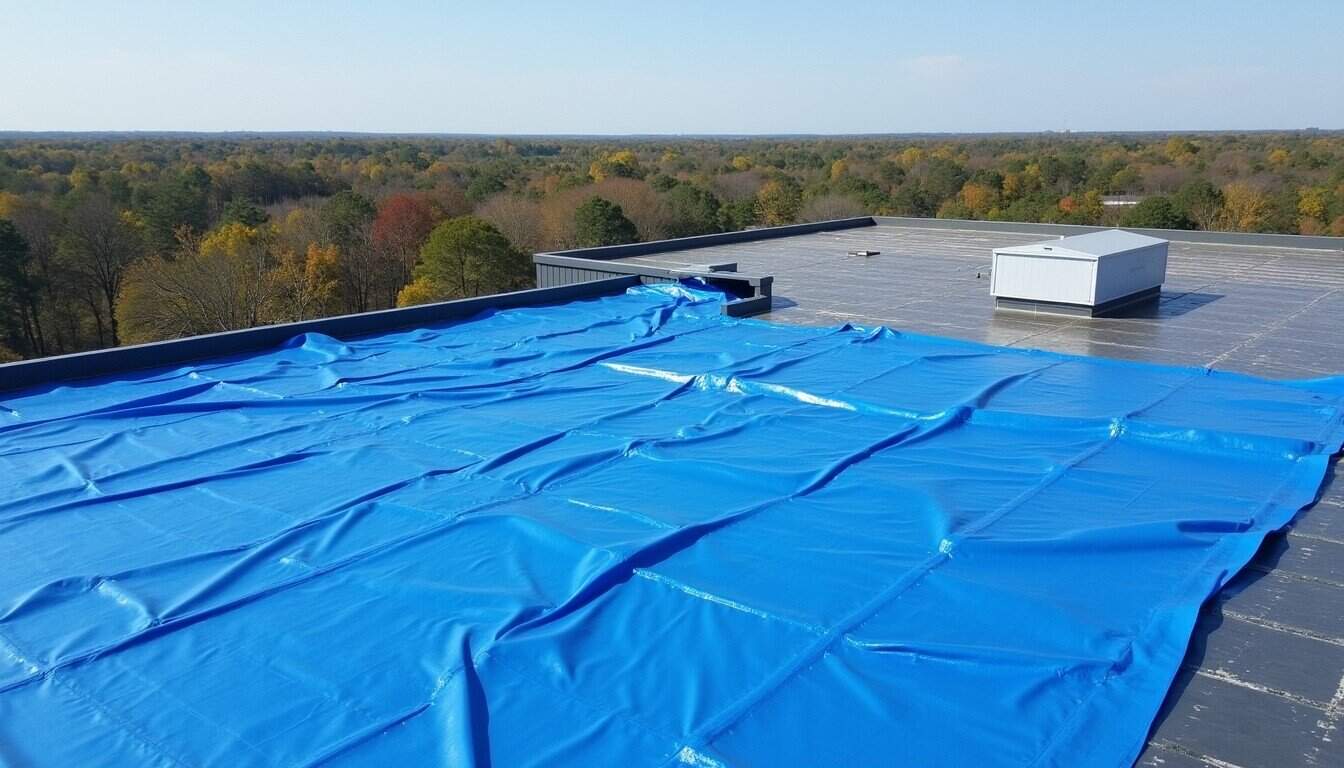
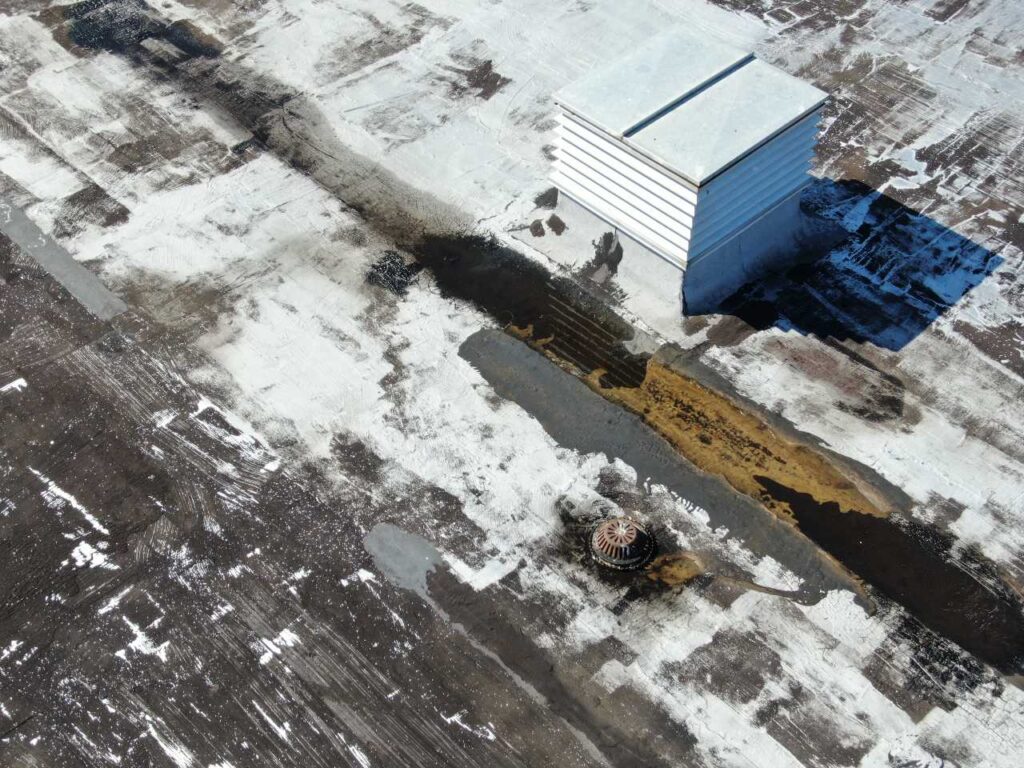
Rooftop equipment damage - HVAC units displaced from curb mounts, exhaust fans overturned, satellite dish and communications equipment torn from penetration flashings - creates secondary roofing damage at the penetration points. Each displaced equipment penetration is a potential infiltration point. We document and temporarily seal every displaced equipment penetration as part of the emergency stabilization scope, and note each location for the permanent re-flashing scope that follows structural clearance.
Working in the Larimer and Weld County Tornado Corridors
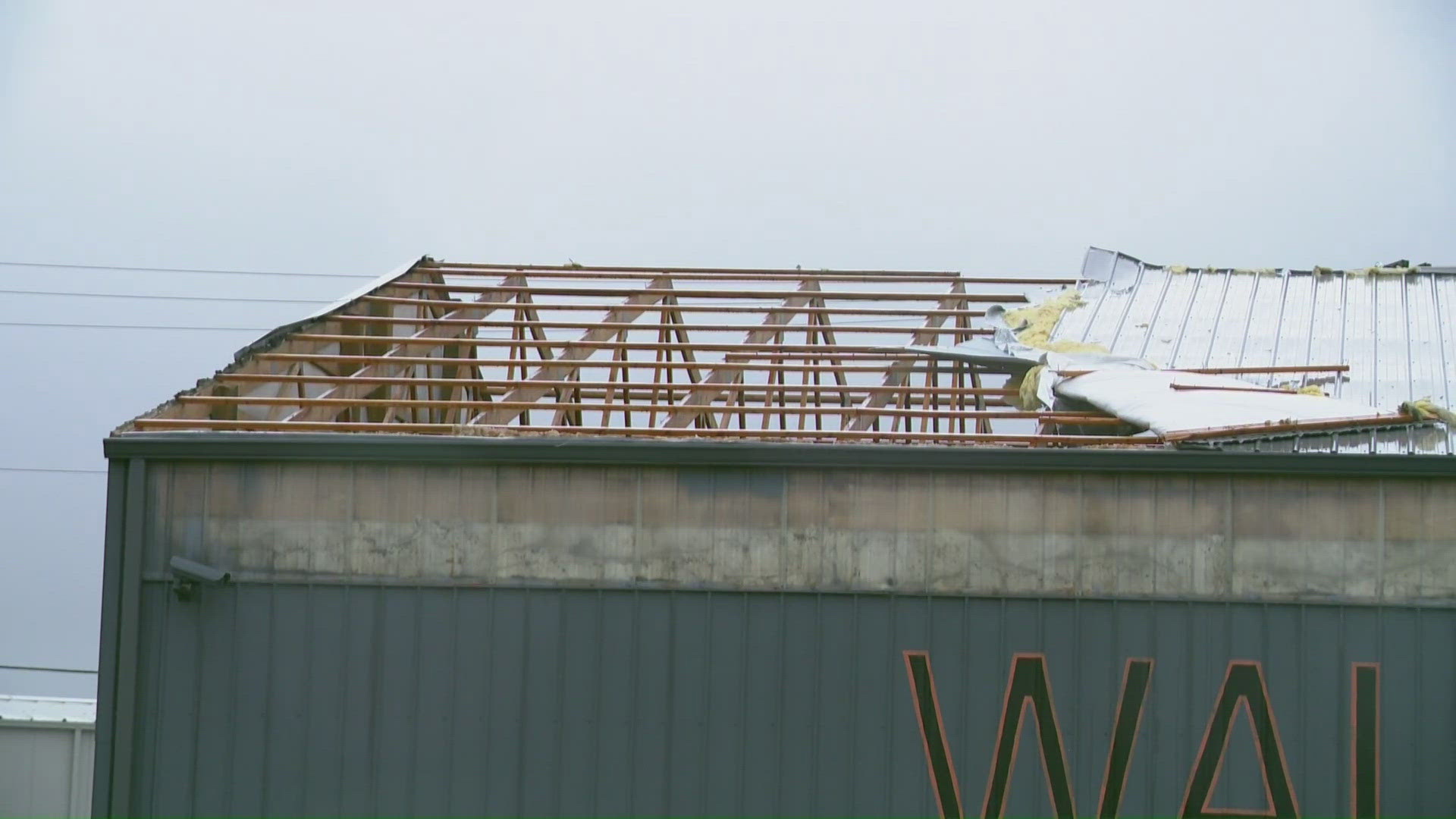
Commercial buildings in Fort Collins, Loveland, Greeley, Windsor, and the growing I-25 commercial corridor between Denver and Fort Collins are in the most tornado-active portion of the Colorado Front Range. The agricultural and industrial building stock in Weld County - grain storage, cold-storage logistics buildings, light industrial manufacturing facilities - carries wide-span metal deck roof systems that respond differently to rotational wind loading than the ballasted or adhered single-ply systems common on urban commercial buildings. Metal building systems with standing-seam roof panels can sustain panel uplift and clip failure that creates large open sections rapidly under tornado-level wind loading.
We mobilize to the Larimer and Weld County corridors for commercial roof emergency response after documented tornado events. From Denver, Fort Collins is approximately 65 miles north on I-25 - a conditions. Greeley is approximately 55 miles northeast. For acute emergency dry-in after a tornado event in these corridors, we coordinate with the building's facilities team and local building department on access and any mandatory structural inspection holds before roofing crews can access the building.
Documentation for Larimer and Weld County tornado events includes SPC storm report cross-reference, county emergency management declaration status where applicable, and wind-speed estimate from the nearest weather station or WSR-88D radar damage indicators. These documentation elements support Colorado commercial insurance claims for buildings in confirmed tornado-path areas.
Frequently asked questions
Does Denver actually get tornadoes?
The downtown Denver urban core rarely takes a direct tornado track, but the eastern Denver suburbs - Adams County, the eastern Aurora corridors - and the northern Front Range communities of Larimer and Weld counties see documented tornado activity most years. EF0 and EF1 events are the most common in the metro-adjacent areas. Colorado's eastern plains produce EF2 and higher events that occasionally affect commercial buildings in Weld and Morgan counties along the I-76 corridor. We respond to rotating-cell and tornado-path damage across the Front Range commercial footprint.
What comes first after a tornado damages a Denver commercial building - structural assessment or roofing?
Structural assessment always precedes roofing access after any event with confirmed rotational wind loading or visible structural damage. We do not put roofing crews on a building that has not been cleared by a structural engineer after a tornado or severe rotating-cell event. Once structural clearance is issued, we mobilize for emergency dry-in and then complete the full documentation scope.
How do you document a Colorado tornado damage claim for insurance?
The package includes: GPS-tagged zone photos of membrane pull-off, edge displacement, and equipment damage; parapet and structural condition notes with referral to the structural engineer's clearance report; SPC storm report and county emergency management documentation cross-referenced to the building location; and a written repair-or-replace scope that accounts for the structural clearance findings. We produce the roofing-specific documentation - the structural engineer produces theirs - and both packages go to the adjuster together.
Do you respond to Weld and Larimer County commercial buildings after tornado events?
Yes. Fort Collins, Loveland, Greeley, Windsor, and the I-25 commercial corridor between Denver and Fort Collins are within our service area. Emergency dry-in mobilization for confirmed tornado events in these corridors is coordinated with building access and any structural inspection holds. We will coordinate with the county building department and the building's structural team before roofing crews access the building.
Tornado or rotating-cell damage on a Colorado commercial building?
We coordinate structural clearance and roofing assessment as a sequenced engagement - not competing parallel tracks. Once the building is cleared, we document and scope the roofing damage for your Colorado carrier.
| Scope Format | Written roof plan and photo record |
|---|---|
| Primary Market | Denver commercial buildings |