Frequently asked questions
Commercial roofing for DST ownership properties and 1031 exchange investors throughout Denver, CO.
Denver is one of the most competitive DST acquisition markets in the Mountain West, with institutional sponsors including Cantor Fitzgerald Real Estate, Rich Uncles, and multiple regional syndicators regularly competing for NNN industrial assets in the Denver Tech Center and DIA logistics corridor, suburban medical office in the Douglas County growth belt, and NNN retail in the Front Range suburban grid from Boulder to Castle Rock. Denver's population growth, technology sector employment base, and position as a Mountain West distribution hub have made it a primary destination for 1031 exchange capital from California investors selling appreciated assets. For a Southern California or Bay Area DST sponsor closing on an Aurora distribution facility or a Greenwood Village medical office building, the roof condition report is the document that either validates the offering memorandum reserve figures or exposes a capital shortfall that will surface during the hold period.
Denver DST due diligence operates under the same 1031 timeline pressure as every exchange market, but Colorado's hail environment adds an inspection dimension that out-of-state sponsors frequently miss. A pre-close roof inspection that documents current membrane condition without assessing hail damage history - prior events that may have produced informal patch repairs rather than full membrane replacement - is an incomplete document. A contractor who has inspected commercial roofs across the Denver metro after major hail events knows to look for hail strike patterns in membrane surfaces, to check flashing terminations for impact deformation, and to document whether prior insurance claims were closed with restoration-grade repairs or temporary patches. That knowledge is not available in a Phase I report or a national engineering firm's standard scope.
Colorado's hail corridor is not abstract risk for Denver commercial properties - it is recurring reality. The Denver metro averages multiple significant hail events annually, with storms capable of producing baseball-sized hail occurring every three to five years. The suburban commercial corridors from Littleton to Lakewood to Aurora sit directly in the hail alley that extends from Denver's eastern suburbs through the DIA corridor. A flat commercial roof on an Englewood NNN retail pad or a Centennial medical office building that experienced a major hail event in 2021 and received patch repairs rather than full membrane replacement is carrying latent damage that will become active leaks during the next significant storm. A pre-close inspection that identifies that history protects both the offering memorandum and the investor capital that underwrites it.
Capital reserve calculations for Denver DST offerings must incorporate altitude-adjusted membrane life expectancy and hail event probability over the hold period. At 5,280 feet, Denver's UV radiation intensity accelerates polymer degradation in TPO and EPDM membranes at a rate meaningfully higher than sea-level markets. Combined with the Front Range's 300-plus days of annual sunshine, flat commercial roofs in Denver accumulate UV stress in years 10 through 20 that moves membrane performance toward end of useful life faster than national benchmarks predict. An offering memorandum that uses national reserve calculator figures without altitude and hail adjustments is presenting incomplete data to investors, and sophisticated financial advisors will push back on it.
The DST passive structure creates specific demands in Denver because the metro's rapid commercial development pace means active tenant use frequently modifies roof systems. Denver's technology sector tenants routinely install rooftop HVAC, communications equipment, and data infrastructure that creates new penetrations in flat commercial membranes. A DST operator managing a Denver Tech Center office building or an Aurora flex facility remotely from New York or Dallas has no awareness of those modifications unless a contractor with a maintenance agreement and periodic inspection visits is actively monitoring the property. The trustee cannot call an investor meeting to authorize a repair resulting from unauthorized tenant penetrations - they need a contractor who is already on site periodically and can flag the issue before it becomes a leak event.
Denver's DST deal profile spans a wide range. Large-format distribution and industrial assets in the DIA corridor and Brighton/Commerce City area serve the metro's logistics function. Medical office in the Douglas County growth belt - Parker, Castle Rock, Highlands Ranch - anchors high-income suburban DST income streams. NNN retail across the suburban grid from Lakewood to Centennial to Parker serves one of the fastest-growing metro populations in the country. Each asset class requires a different inspection profile. DIA corridor industrial assets often have large TPO membrane spans on steel decks with complex drainage networks. Medical office carries patient-care disruption sensitivity. NNN retail accumulates the HVAC penetration patches common across all active commercial properties.
A roof failure during a Denver DST hold can produce investor consequences that compound through multiple channels. A hail event that produces a major claim on the building's property insurance policy - particularly if the sponsor has been underreporting roof condition to the insurance carrier - can trigger premium increases or coverage disputes that affect the entire portfolio. If a tenant in a hail-damaged medical office building or retail center invokes lease abatement provisions while repairs are pending, the income stream interruption affects the monthly distributions that passive investors depend on. The communication chain from a Denver hail event to a DST investor distribution suspension to a financial advisor inquiry to a regulatory review is shorter than sponsors typically anticipate.
Out-of-state DST sponsors managing Denver properties need a local contractor who understands the Front Range's specific roofing environment: altitude-accelerated UV degradation, hail event frequency and severity patterns by submarket, the temperature swing dynamics that affect membrane performance across Denver's 50-plus-degree daily temperature variation ranges, and the regulatory and warranty implications of roofing work in Colorado's major commercial construction codes. A national firm managing Denver as a subset of a Southwest regional operation typically lacks the specific Front Range market knowledge that makes the contractor genuinely useful for both due diligence documentation and emergency response.
The pre-close contractor engagement for a Denver DST acquisition should be treated as a comprehensive risk assessment, not a standard inspection. The inspection scope should address hail damage history with specific documentation of any prior claims and repair scope, altitude-adjusted remaining useful life estimates for the specific membrane type installed, current drainage adequacy for Front Range storm intensity, and a reserve recommendation that explicitly accounts for hail contingency probability over the hold period. A Denver contractor who has been through multiple hail seasons on commercial properties across the metro brings exactly that knowledge - and the offering memorandum that incorporates their assessment is a materially stronger document for it.
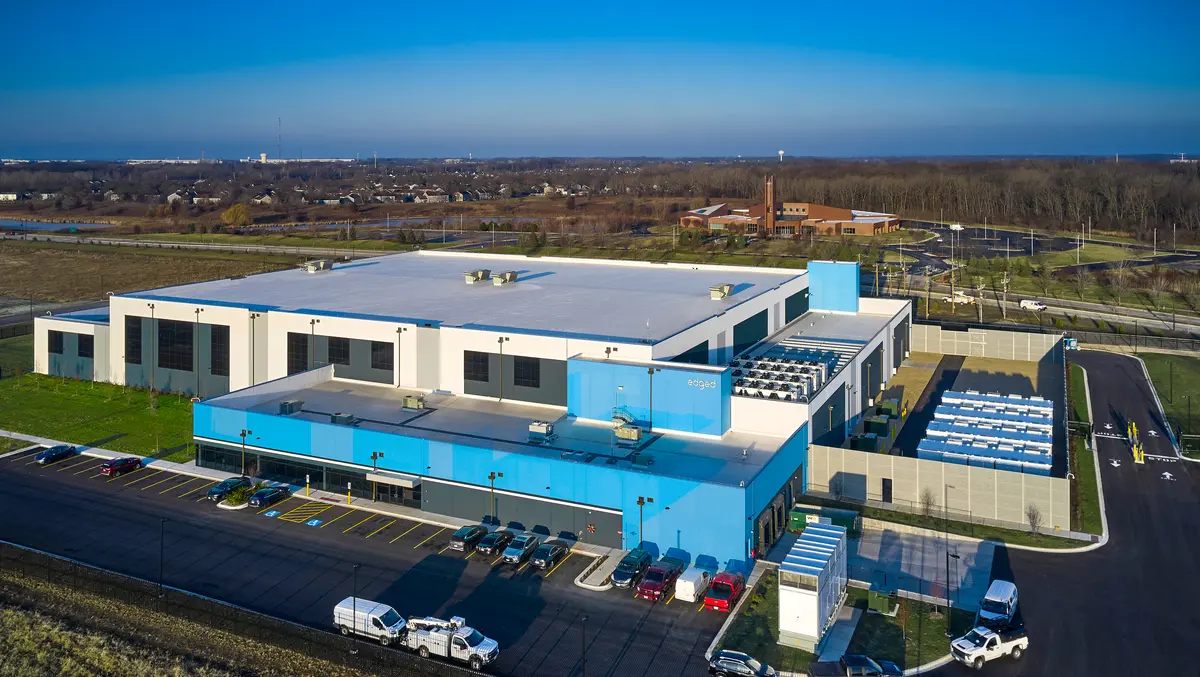
Can you work on a live data center in Denver without interrupting cooling systems?
Yes, but it requires active cooperation from the facility's operations team on the production schedule. We build our sequence around the cooling system's maintenance windows, work cooling-adjacent penetrations during planned low-load periods, and never independently shut down or disturb any mechanical penetration without the facility's written approval for that specific action on that specific date.
How do you handle fiber conduit penetrations at CoreSite or Cologix facilities?
We log every fiber conduit penetration before production begins. Each one is stripped to deck, a properly-sized pitch pan or curb flashing installed to manufacturer specification, and a secondary water stop placed inside the conduit bore. We photograph the completed detail and include it in the penetration manifest delivered at closeout. Equipment and tools are never routed across active conduit bundles.
How does Denver's hail season affect data center roof maintenance?
Significantly. A Front Range hail event can damage CRAC After a documented NOAA-verified event crossing the Denver metro, we run rapid assessments for data centers on our maintenance contracts that include both membrane condition and a visual inspection of rooftop cooling equipment. That documentation tells the operations team whether they are looking at a roof insurance claim, a cooling equipment claim, or both.
Do you produce the penetration manifest and closeout documentation that data center facilities management requires?
Yes. Our data center closeout package includes the manufacturer warranty document, a photo-keyed zone diagram, maintenance contract terms, and a penetration manifest that maps every roof penetration to the system it serves, the flashing detail installed, and the completion date. This is the document that makes every future contractor working on the roof accountable to an accurate inventory.
Data center roof scope in the Denver metro?
We will walk the roof, inventory every penetration, and produce a scope that accounts for your cooling system constraints and change-management requirements before we propose a production schedule.
| Scope Format | Written roof plan and photo record |
|---|---|
| Primary Market | Denver commercial buildings |