At this scale, the roof is a logistics project
Large-deck roofing for Front Range vehicle and advanced-manufacturing plants.
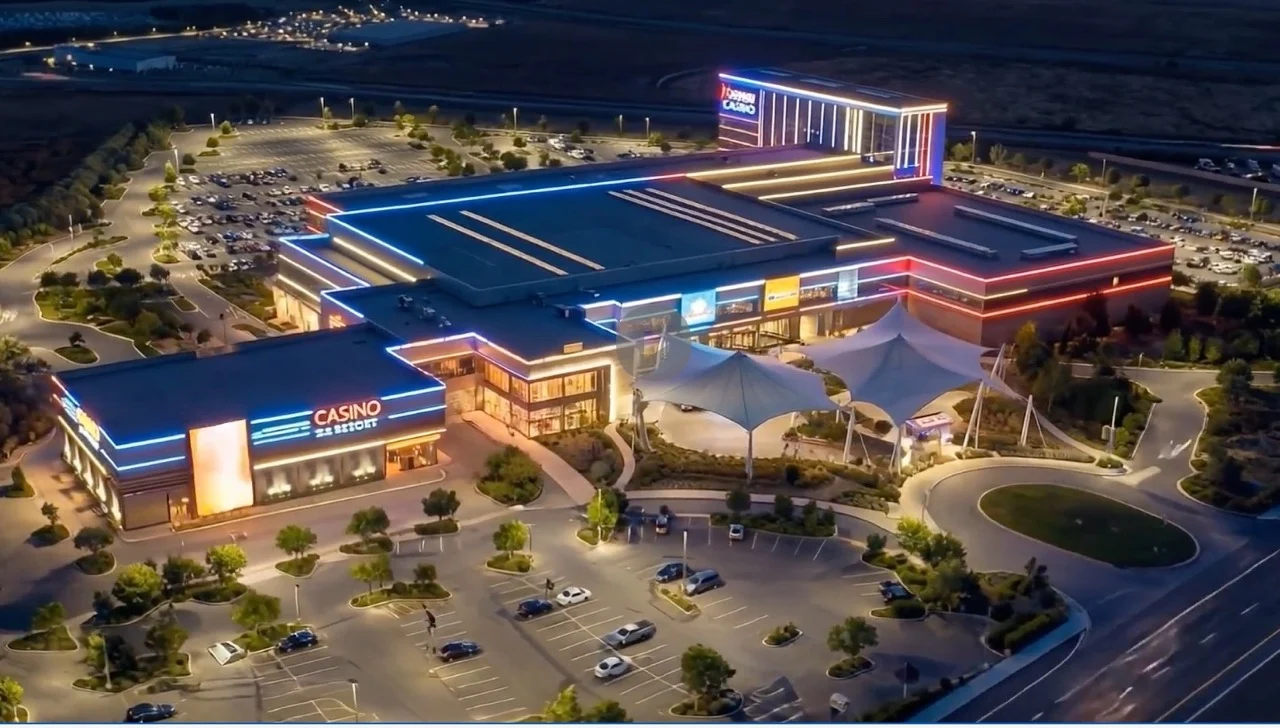
An automotive or vehicle-manufacturing plant has a roof measured in acres, not squares. Assembly buildings, stamping and body shops, powertrain plants, and the larger Tier 1 supplier facilities routinely run from several hundred thousand to a few million square feet under one membrane. A reroof on a building like that is not a roofing job with some scheduling around it - it is a logistics operation in which the roofing happens to be the deliverable. Material staging, crane reach, tear-off sequencing, debris handling, and crew movement all have to be planned with the same rigor as the production line below, because there is no version of this work that is simply rolled out across the whole roof at once.
Colorado's vehicle and advanced-manufacturing base sits mostly along the northern Front Range and the I-25 and I-76 industrial spine running up from Denver through Adams and Weld counties. Wind-energy component plants, electric-vehicle and aerospace supplier facilities, and heavy fabrication shops in this corridor share the defining traits of automotive production: enormous metal-deck roofs, heavy process ventilation, and multi-shift schedules where downtime has a number attached to it. We approach all of them the same way we would an assembly plant.
Multi-shift production sets a cost on every disruption
The first number a plant's facilities engineer gives us is usually the cost of an hour of lost production, and that number governs every decision that follows. A roofing crew cannot cause an unplanned line stop, drop debris into an open process, or leave an opening unsealed when a shift hands off. So before mobilization we sit down with plant engineering, document the shift schedule, map which roof zones sit over active lines, and build a zone-by-zone phasing plan that keeps work clear of production. Dry-in is confirmed before every shift change, and we keep a direct line to the maintenance foreman for the duration so a problem is communicated in minutes, not discovered hours later.
The paint shop changes the rules
Paint operations are the part of an automotive plant where a roofing crew has to slow down and coordinate hardest. Paint shops generate solvent vapor and carry fire-suppression and ventilation requirements that directly restrict what we can do on the roof above them. Open flame and hot work are tightly controlled or prohibited near paint zones, which rules out torch-applied work and forces us toward cold-adhesive or mechanically attached systems there. Solvent-based adhesives are also off the table above active paint. We develop the hot-work plan with the plant's environmental, health, and safety team during pre-construction, and we treat the torch-exclusion areas as fixed boundaries, not obstacles to argue about on the day.
Vibration and process loads the roof has to live with
Stamping presses, casting equipment, and heavy machining put vibration into the building structure that reaches the roof, and that vibration matters to how seams and flashings hold up. A seam design that is perfectly adequate on a quiet office can fatigue over time above a large press line if it was welded or bonded without accounting for the cyclic movement. We factor vibration exposure into the membrane specification and the welding procedures in press-adjacent zones, and we look closely at how process ventilation, makeup-air units, and exhaust stacks are flashed, because manufacturing roofs carry far more and far hotter equipment than a typical commercial deck.
Specifying for a roof that gets walked on constantly
These roofs see heavy maintenance traffic - equipment service, coil cleaning, and contractor access - all year. We lean toward heavier-gauge membranes where puncture resistance pays off and incorporate walkway protection on the established service routes. Where the existing structure has load limits, we confirm deck capacity before adding insulation thickness rather than assuming the building will carry whatever the energy code would prefer.
- Phased, zone-by-zone planning that keeps work clear of active production lines
- Hot-work plans and torch-free assemblies coordinated with plant EHS for paint-shop zones
- Seam and flashing details engineered for press and machining vibration
- Robust flashing of heavy process ventilation, makeup-air, and exhaust equipment
- Deck-capacity confirmation before insulation and assembly decisions
- Closeout documentation formatted to the plant's corporate facility standards
Wind, hail, and insurer requirements on a giant roof
A roof this large is also a large target for the two weather forces that define the Front Range: wind and hail. The open terrain around the northern metro's industrial corridor produces strong, sustained winds, and uplift on a long unbroken membrane span is far more demanding than on a sheltered urban site. We run the uplift calculation for the actual building and exposure and specify attachment to match, rather than carrying a generic fastener pattern across acres of roof. On the hail side, this region sees severe storms most years, and on a plant where a puncture means water over process equipment, impact-resistant cover board is a baseline part of the assembly, not an optional upgrade.
Large manufacturers frequently carry property insurance that dictates approved assembly specifications, and that requirement is about the whole system - membrane, cover board, insulation, and attachment together - not a single product. We specify to the approved assembly, verify that every component delivered matches it, and document the approval in the closeout file so the insurer's requirement is satisfied with evidence rather than a claim. Confirming that coverage requirement is part of pre-construction, so the specification is keyed to it from the start.
Plan the reroof before the leaks reach the line
On a plant this size, the expensive surprises come from waiting until water reaches production equipment and forces an emergency. A staged capital plan, built from a real condition survey and a roof-zone map of every penetration, lets a plant replace the roof on its own timeline and in the right sequence. If you run a vehicle assembly plant, a component or powertrain facility, or a large Tier 1 or Tier 2 supplier building along the northern Front Range, we can survey the full deck, document the production constraints, and deliver a phased scope that protects your output while the roof gets replaced over you.
| Scope Format | Written roof plan and photo record |
|---|---|
| Primary Market | Denver commercial buildings |