Grease Exhaust Penetration Management
Commercial roofing for Denver restaurant buildings - LoDo and Larimer Square, Cherry Creek, RiNo, and 16th Street Mall.
LoDo's Larimer Square dining corridor, Cherry Creek's restaurant row along East 2nd and East 3rd avenues, RiNo's converted warehouse dining and hospitality scene along Brighton Boulevard, and the 16th Street Mall's ground-floor food and beverage tenants make Denver's restaurant building inventory one of the most operationally demanding property types we work on.
Restaurant roofing in Denver presents a combination of technical and operational constraints that are unique to the property type. The technical challenge is the grease exhaust penetration: every commercial kitchen runs Type I hood exhaust through a dedicated rooftop penetration, and that penetration is, without exception, the highest-maintenance flashing detail on the roof. Kitchen exhaust carries airborne grease that deposits on the curb flashing, the membrane around the penetration, and the roof field in the exhaust plume path. Grease degradation of single-ply membranes is well documented - TPO and EPDM both experience accelerated breakdown in direct grease contact zones - and a restaurant building roof that has not had its exhaust penetration flashings properly maintained will show membrane failure in the exhaust plume zone before the membrane fails anywhere else.
The operational challenge is the schedule. LoDo restaurants on Larimer Square operate from 11 a.m. through runs lunch and dinner seven days a week. RiNo hospitality venues along Brighton Boulevard operate Wednesday through Sunday with late-night service. The 16th Street Mall food and beverage tenants run 8 a.m. to midnight during peak tourist season from May through September. These are not buildings with a standard 9-to-5 window that allows daytime production without disrupting business operations. Heavy demolition, material delivery, and any work that generates odor or particulate must be scheduled outside the restaurant's service windows - which typically means before 9 a.m. and after 2 a.m.
Denver's altitude adds a compounding factor for restaurant roofing in the spring and summer months: rooftop temperatures in July and August reach 140 to 160 degrees Fahrenheit on dark surfaces, and kitchen exhaust systems running at maximum capacity during a summer dinner service add a heat plume to the membrane surface immediately adjacent to the exhaust termination. We document the exhaust plume path on every restaurant building we scope and specify the membrane type and thickness in the plume zone accordingly - grease-resistant 80-mil TPO or modified bitumen with an aluminum-faced cap sheet in the high-deposit zone around each kitchen exhaust penetration.
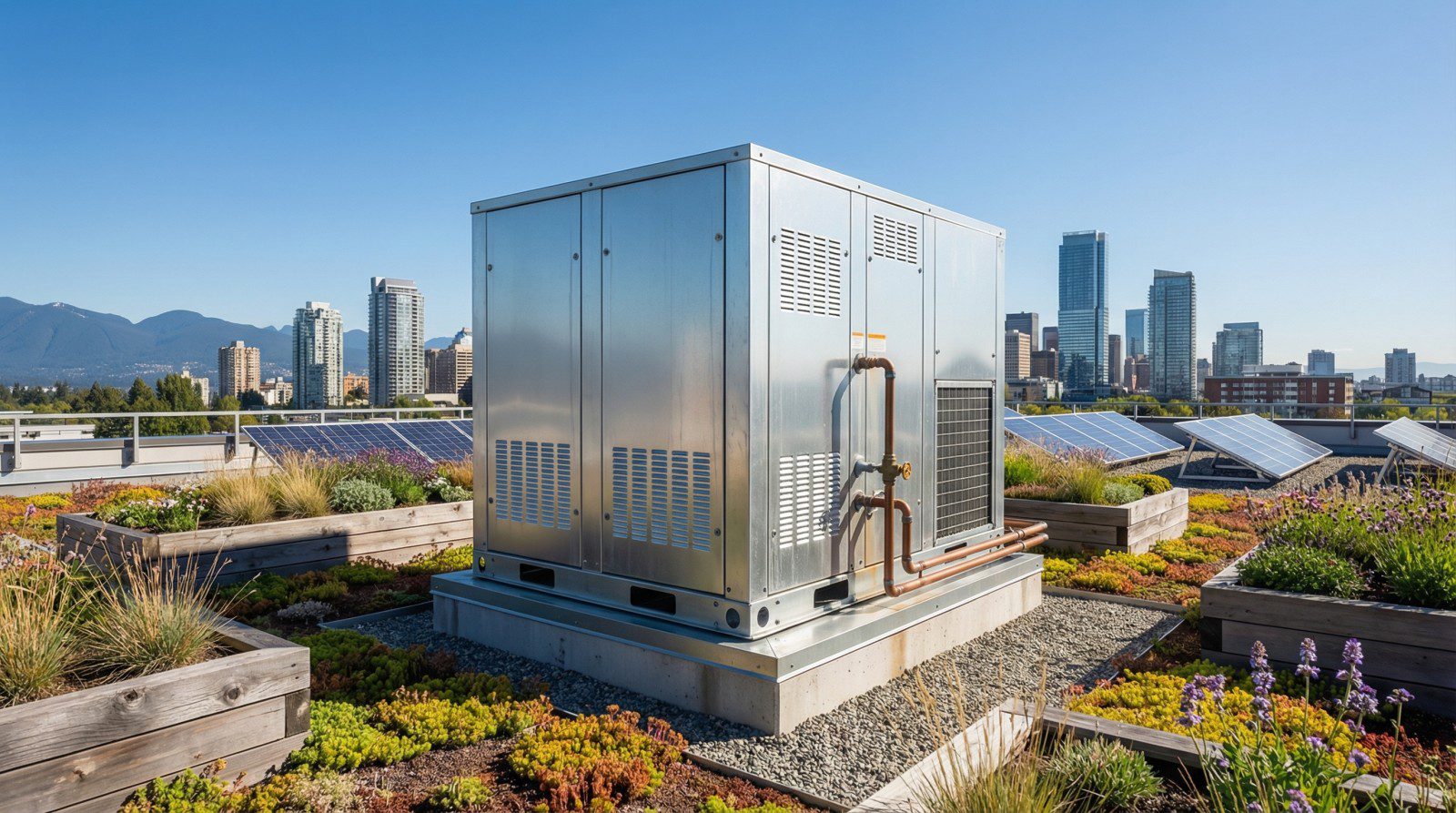
Commercial kitchen Type I hood exhaust systems terminate through curb-mounted rooftop penetrations that are among the most chemically aggressive environments a roofing membrane encounters. The grease-laden airflow exits at 300 to 500 degrees Fahrenheit and deposits condensed grease on the curb cap, the membrane within a 4-to-6-foot radius of the termination, and down the exhaust plume path across the roof field. Grease dissolves the plasticizers in TPO and EPDM membranes, causing brittleness, surface cracking, and eventually adhesion failure at the seams in the affected zone.
Our standard specification for restaurant roofs includes a grease-resistant membrane system in the exhaust plume zone: 80-mil TPO with aluminum-faced cap sheet terminations at the exhaust curb, or modified bitumen with smooth-surface cap sheet surfaced with reflective aluminum coating in the plume path. The curb-to-membrane flashing detail uses a clamp-ring connection at the exhaust collar rather than a standard bonded flashing, which allows the flashing to be serviced without cutting the membrane during kitchen exhaust fan maintenance.
We also document the condition of the kitchen exhaust system's grease containment at every restaurant building inspection. NFPA 96 requires commercial kitchen exhaust systems to have grease-collection devices at the fan and proper containment at the rooftop termination. When a building's exhaust penetration shows evidence of overflowing grease collection - which we see on LoDo buildings where kitchen volume has grown faster than the exhaust maintenance schedule - we flag this to the property owner as a fire code issue, not just a roofing maintenance issue.
After-Hours Production Around Restaurant Operating Schedules
Larimer Square is a historic dining corridor in LoDo with continuous restaurant service from 11 a.m. through late night seven days a week. Production work on any Larimer Square building must clear the sidewalk and entry approach before the earliest-opening tenant, which is typically 10:30 a.m. for lunch service. Early-morning production - crew arrival at 5 a.m., heavy demolition from 6 to 9 a.m., material delivery coordinated with Denver Downtown Partnership for sidewalk loading - is the only window that works for Larimer Square without affecting occupied service areas.
RiNo restaurant and hospitality venues along Brighton Boulevard typically open Wednesday through Sunday with dinner service starting at 4 to 5 p.m. and running to midnight or later on weekends. Production windows on active RiNo restaurant buildings run 6 a.m. to 2 p.m. - early enough to avoid the dinner service environment and late enough to allow an afternoon crew departure before peak customer arrival. Tear-off and material delivery happen in the first half of that window; membrane installation and penetration work in the second half.
Cherry Creek restaurant buildings along East 2nd and East 3rd avenues serve lunch at 11:30 a.m. and dinner through 10 p.m. seven days a week during spring and summer. Rooftop access for Cherry Creek restaurant buildings often requires coordination with the adjacent Cherry Creek North sidewalk and alley environment - parking and loading restrictions in the Cherry Creek North district limit material delivery windows to early morning and after 6 p.m. We establish the Cherry Creek North delivery window with the district management office before finalizing the logistics plan.
Rooftop Equipment on Denver Restaurant Buildings
Restaurant rooftops in LoDo, RiNo, and Cherry Creek carry the highest equipment density of any single-story commercial building type. Type I and Type II hood exhaust fans, makeup air units, HVAC rooftop units, refrigeration condensers, and walk-in cooler compressors can occupy 20 to 30 percent of the usable roof area on a full-service restaurant building. Each piece of equipment is a flashing detail that must be rebuilt during a reroof. We document every penetration during our pre-construction walk and include equipment curb flashing rebuild in the base scope - not as a line-item add-on that surprises the owner at closeout.
Rooftop dining and bar terraces on LoDo and Cherry Creek restaurant buildings add a programming dimension to the reroof scope. Rooftop terraces require waterproofing assemblies over the structural deck rather than standard commercial single-ply - the finish surface is a pedestal pavers or wood decking system over a waterproof membrane and drain mat rather than exposed TPO. We identify rooftop terrace areas during the inspection walk and scope them as a separate waterproofing system rather than applying a standard commercial membrane specification to an occupied-use surface.
Frequently asked questions
How do you manage grease exhaust penetration damage on a Denver restaurant roof?
We specify grease-resistant membrane in the exhaust plume zone - 80-mil TPO with aluminum-faced cap sheet terminations or modified bitumen with aluminum-coat surfacing in the plume path. The curb-to-membrane flashing uses a clamp-ring connection rather than bonded flashing, which allows servicing without cutting the membrane. Exhaust grease containment condition is documented at every inspection and flagged to the owner as an NFPA 96 issue when containment is overflowing.
What are the production windows for Larimer Square and LoDo restaurant reroofs?
Early morning: crew arrival at 5 a.m., heavy demolition 6 to 9 a.m., production complete and sidewalk cleared before 10:30 a.m. for the earliest lunch tenant. Material delivery coordinated with Denver Downtown Partnership for loading window. No production activity in the sidewalk approach zone during service hours.
Do you handle rooftop terrace waterproofing on Cherry Creek and RiNo restaurant buildings?
Yes. Rooftop terraces are scoped as a separate waterproofing system - not as standard commercial single-ply. The assembly is a waterproof membrane and drain mat under a pedestal paver or hardwood decking finish surface, with drains sized for the terrace drainage load rather than standard commercial roof drain capacity. We scope the terrace separately from the field membrane and identify both systems in the project closeout documentation.
Can you coordinate rooftop equipment documentation for a restaurant building in RiNo?
Yes. Every penetration - exhaust fans, makeup air units, HVAC, refrigeration condensers, walk-in compressors - is documented during the pre-construction walk and included in the base scope as a flashing rebuild. Equipment curb flashing is not a line-item add-on in our restaurant building scopes - it is part of the baseline.
| Scope Format | Written roof plan and photo record |
|---|---|
| Primary Market | Denver commercial buildings |