How We Build the Multi-Year CapEx Forecast
Multi-year roof CapEx forecasting for Denver commercial portfolios - sequencing replacement across building portfolios in Colorado's hail belt and supporting the capital ask to ownership and lenders.
Capital planning for commercial roofs in Denver is not the same as getting a replacement bid. It is a forward-looking financial model built on documented condition data, realistic cost escalation assumptions for the Colorado market, and a sequencing strategy that accounts for hail-event variability alongside the buildings' actual replacement urgency and the owner's capital availability.
The roof capital planning conversation in most Denver commercial portfolios happens in one of two modes: proactive (ownership wants to know what the roofs will cost over the next five to ten years before those costs surprise the P&L) or reactive (a hail event moved four buildings to the front of the queue simultaneously and ownership is asking why this was not in last year's budget). We support both modes, but the proactive version is worth dramatically more to the owner.
Our capital planning support service takes the condition data from our inspection program - or from a fresh portfolio audit if no prior condition data exists - and builds it into a multi-year CapEx forecast: which buildings need replacement in which year, what the estimated replacement cost is in Colorado's labor and material market, how that estimate should be escalated for construction cost inflation, and how the replacement sequence should be prioritized when multiple buildings are competing for limited capital in the same year. In Denver, we also model the probability-weighted capital impact of a major hail event in any given forecast year - because a portfolio that holds 20 buildings through a bad June in Adams County is not operating the same capital math as a portfolio in a non-hail market.
The output is not a sales proposal. It is a financial planning document that the owner's CFO, their lender, or their investor committee can use to set reserves, draw capital schedules, and evaluate refinancing timing. We produce it to the format and detail level those audiences expect.
The forecast starts with a condition baseline for every building in the portfolio. For buildings we have inspected, we use the most recent condition record and remaining-life estimate. For buildings we have not inspected, we schedule visits and produce condition records before building the forecast - a CapEx model built on assumed conditions is a guess, not a planning tool.
Each building's remaining-life estimate produces a replacement window: a two to three year range in which the roof is expected to require replacement based on current condition, degradation rate, and manufacturer service life data in Denver's climate. For Denver portfolio buildings, we distinguish between schedule-driven replacement windows (the membrane is simply aging to end of life) and event-driven acceleration risk (a building in the I-70 or I-225 high-frequency hail zones that is in Fair condition today faces a higher probability of accelerated replacement need than the same-rated building in a less exposed location). We document both in the forecast.
Cost estimates for each building's replacement are built from square footage, system specification assumptions, and current Denver commercial roofing labor and material costs - including the impact-rated cover board that every Denver specification requires. We apply a three to five percent annual cost escalation assumption, referenced to ENR Mountain Region construction cost data, to future-year costs. The result is a year-by-year CapEx table: what buildings, what systems, what estimated cost, what year - with a separate column showing the cover board specification and the projected insurance premium credit that the rated system will generate.
Sequencing - When Multiple Buildings Compete for the Same Capital Year
The most common capital planning challenge in a Denver portfolio: three or four buildings need replacement in years two through four of the forecast, but the owner's annual CapEx capacity cannot fund all of them simultaneously. The sequencing question - which buildings go first, which go last, and what is the cost of deferring each - is where we add the most value.
We prioritize sequencing based on five factors in Denver: condition urgency (buildings in Poor or Failed condition move to the front), active warranty status approaching lapse, tenant lease exposure (a UCHealth-anchored medical office building with a major lease renewal in year three needs a solved roof story before that renewal conversation), hail-zone exposure (buildings in the Buckley Space Force Base and I-70 Adams County corridor face higher event-acceleration risk and may warrant earlier sequencing), and construction mobilization efficiency (sequencing multiple buildings in the same geographic area - for example, three buildings across the Anschutz Medical Campus footprint, or three buildings along the DTC I-25 corridor - reduces per-building mobilization cost by eight to twelve percent).
For Denver portfolio owners with properties spread across multiple submarkets - office buildings downtown, warehouse assets in the I-70 and I-25 industrial corridors, medical office buildings near Anschutz or Rose Medical Center - we model the sequencing by submarket to identify mobilization and scheduling efficiency opportunities within each corridor and reduce aggregate project cost.
Supporting the Capital Ask to Ownership and Lenders
The capital planning document is only useful if ownership approves the capital. That approval conversation - whether it is a property manager presenting to a private ownership group, a REIT asset manager presenting to an investment committee, or a borrower presenting to a construction or bridge lender - requires documentation that goes beyond a contractor's bid. It requires condition evidence, lifecycle cost modeling, and a clear answer to the question: why this year, at this cost, rather than waiting? - and Denver's combination of hail belt, snow load, freeze-thaw cycling, and altitude UV reshapes every one of those considerations on the ground.
We produce the supporting documentation for that conversation: the condition summary (building by building), the remaining-life analysis with the degradation evidence, the cost escalation model (what the replacement costs now versus what it costs if deferred two years in Denver's active construction market), and the risk narrative - which in Denver includes the hail-event risk quantification (what is the cost exposure if a major hail event forces emergency replacement on a deferred building in year two rather than planned replacement in year three). This is the package that lets ownership evaluate the request on its merits.
For Denver commercial buildings being refinanced or recapitalized, lenders increasingly require third-party roof condition documentation as part of the property condition assessment. We coordinate with the PCA firm or produce standalone roof condition documentation formatted to ASTM E2018 when the lender specifies it. We have produced documentation used
Frequently asked questions
How far in advance can a roof CapEx forecast be reliably projected for a Denver portfolio?
A five-year forecast built on current condition data is reliable enough for capital reserve planning and lender presentations. A ten-year forecast is useful for ownership groups that hold assets long-term and want to understand the lifecycle capital picture, but ten-year cost projections carry wider uncertainty bands - we show the range explicitly in later years rather than a point estimate. In Denver, we also note that ten-year forecasts carry additional variability from hail-event frequency, which can accelerate replacement timing in ways that are documented but not fully predictable in advance.
Can you work with our existing property condition assessment firm on a Denver transaction?
Yes. Many of the Denver REIT and institutional portfolio transactions we support have a PCA firm managing the full property condition assessment scope. We provide the roof condition documentation and cost estimates in the format their PCA template requires. We have worked within PCA formats from Terracon, Bureau Veritas, and Partner Engineering, among others. The roof section is our scope; the PCA firm packages it with their overall report.
What if our ownership group has never done a formal roof capital reserve?
We start with a portfolio baseline inspection - every building gets a condition assessment, remaining-life estimate, and impact-resistance status documentation. From that baseline we produce the first-year capital plan and a proposed annual reserve contribution for each asset. The reserve calculation is straightforward: estimated replacement cost - including the cover board specification required in Colorado - divided by remaining service life years. For a Denver owner who has been managing roofs reactively, establishing a documented reserve and forward capital plan changes the conversation with lenders and investors, and it also surfaces the hail-exposure gap if any portfolio buildings are running non-rated systems.
Need a defensible roof CapEx forecast for your Denver commercial portfolio?
| Scope Format | Written roof plan and photo record |
|---|---|
| Primary Market | Denver commercial buildings |
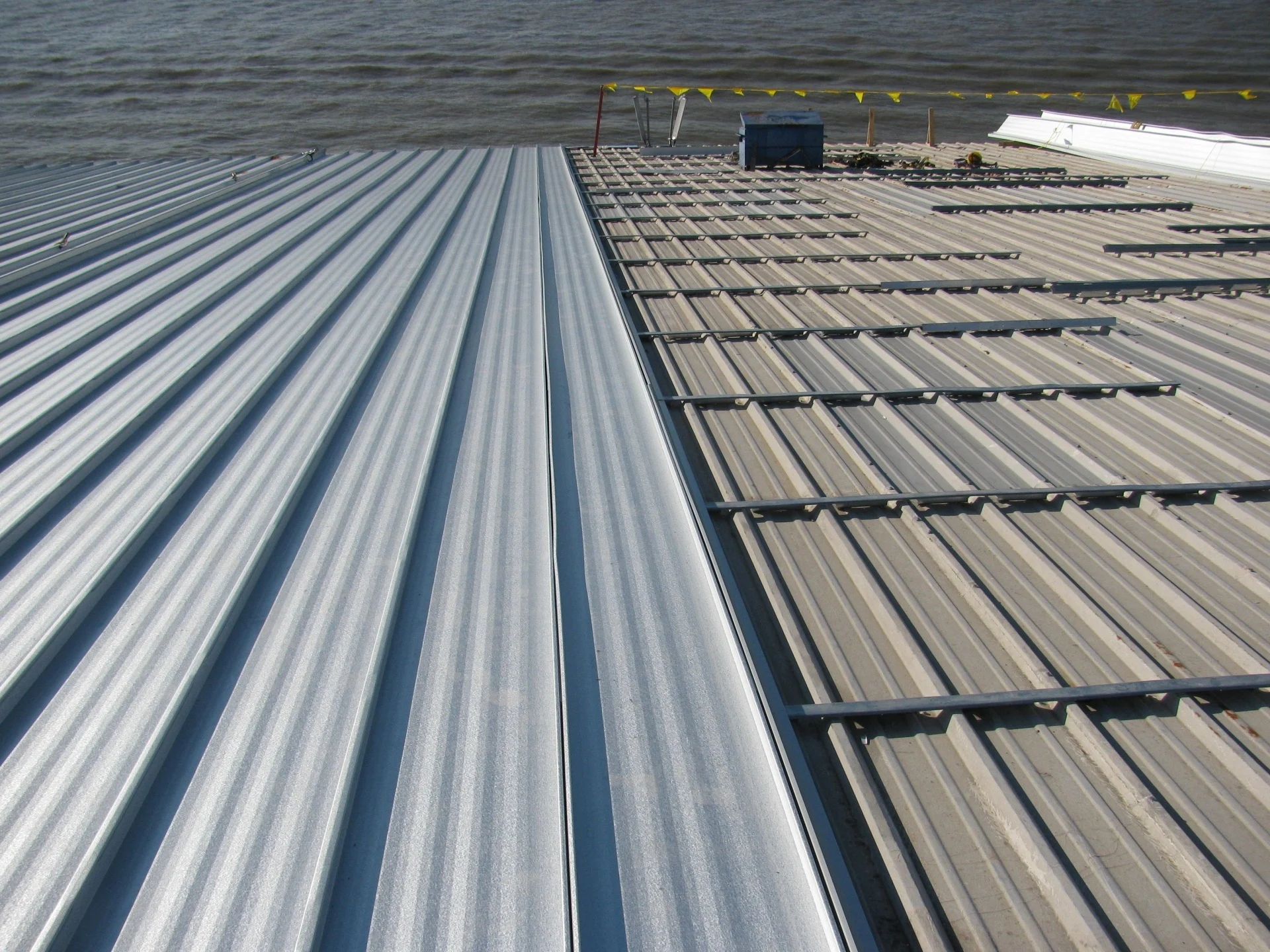
Commercial Re-Roofing in Denver, CO
Commercial Re-Roofing for commercial buildings across Denver.