Silicone Coating Specification for Denver's Climate Zone 5B
Fluid-applied silicone and SPF/silicone hybrid roof coatings for qualifying Denver commercial buildings - 20-year warranty paths, altitude-specific surface preparation, and honest qualification assessment before any coating is proposed.
Fluid-applied silicone coatings on qualifying Denver commercial flat roofs - 20-year manufacturer warranty paths, meaningful capital savings versus replacement, and a qualification assessment that accounts for the altitude UV and freeze-thaw environment before any coating is specified.
Silicone fluid-applied coatings are the most economical life-extension option for qualifying Denver commercial flat roofs - but the qualification process in Colorado's high-altitude, high-hail, high-freeze-thaw-cycle market is more demanding than in lower-elevation markets where contractors commonly promote coatings. A Denver commercial roof carries an insulation system that has been through 90 to 110 freeze-thaw cycles per year, UV degradation running 25 to 30 percent more intense than sea level, and annual hail seasons that range from granule loss to cover-board compression events. The coating qualification assessment has to account for all three.
We install silicone coatings, silicone over SPF (spray polyurethane foam) hybrid systems, and acrylic coatings on qualifying Denver commercial roofs. The qualifying criteria are strict and we apply them consistently: dry insulation confirmed by moisture-core pulls, serviceable seams or seams repairable at reasonable pre-coat cost, no structural ponding that the coating system cannot address, and a membrane surface that can bond to silicone. A coating over a Denver roof with saturated insulation does not just void the warranty - it traps moisture in a freeze-thaw environment that turns that moisture into a demolition force on the insulation and deck bond system. We do not propose coatings on roofs that cannot support them.
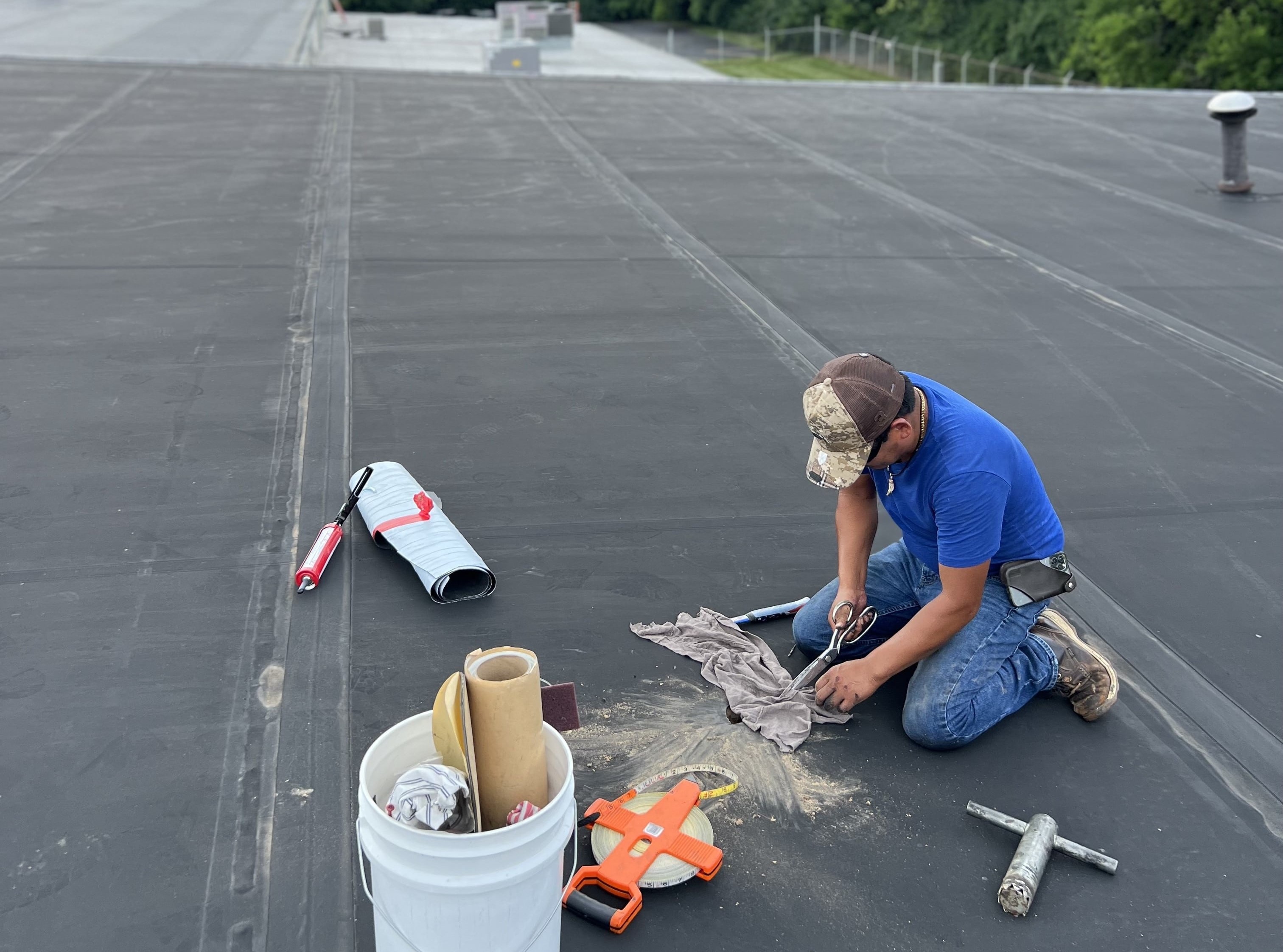
Our coating projects begin with the same documentation discipline as our replacement projects: a full roof walk, core pulls in five to ten representative locations, and a written qualification assessment. If the roof qualifies, we write a coating scope. If it does not, we tell you why in writing and present the honest alternative.
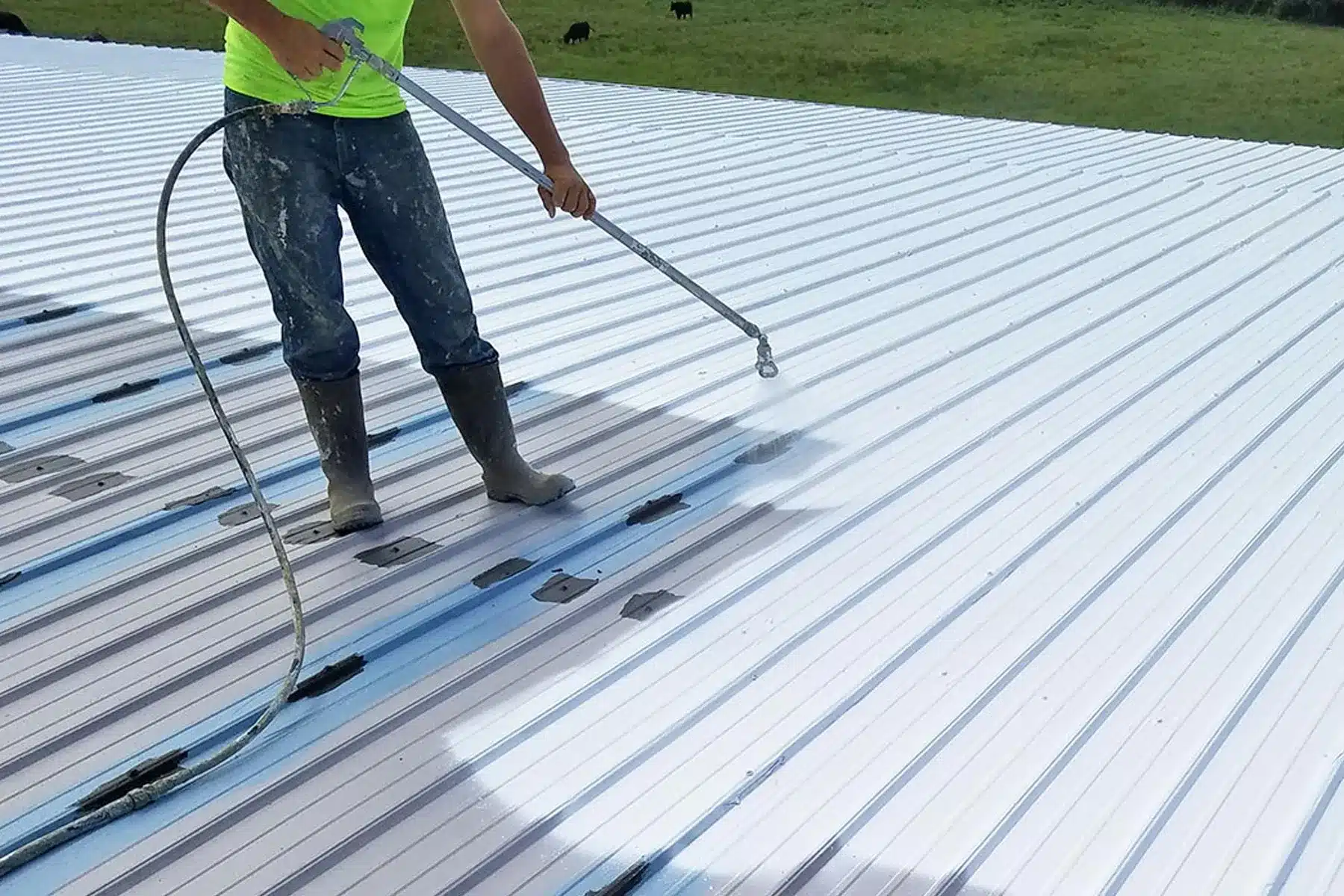
Denver sits in ASHRAE Climate Zone 5B - cold and dry - which creates specific considerations for silicone coating specification that differ from warmer, more humid markets. The dry climate reduces the moisture-drive risk that causes silicone coatings to bubble on improperly prepared substrates in humid markets, but the freeze-thaw cycling creates adhesion-failure risk at any point where surface preparation was incomplete. We pressure wash at 3,500 to 4,000 psi, allow full surface drying - typically 24 to 48 hours in Denver's low-humidity environment - and spot-prime all failed seam edges, re-flashed penetrations, and parapet base flashing terminations before coating application begins.
Base coat and topcoat: Standard 20-year warranty silicone systems require 30 mils DFT minimum - typically 20-mil base coat and 10-mil topcoat. Manufacturer field inspection verifies mil thickness at warranty issuance. We do not cut mil thickness to reduce product cost. An under-spec'd coating carries the same visual appearance as a properly applied coating but voids the warranty in the first manufacturer inspection.
SPF/silicone hybrid systems: Spray polyurethane foam applied at one to three inch thickness corrects ponding areas and upgrades insulation value simultaneously - R-6 to R-7 per inch - then receives a silicone topcoat for UV and weather protection. In Denver, this system is appropriate for buildings with minor ponding that cannot be corrected with tapered insulation spot replacement, and for building owners who want both insulation upgrade and life extension in a single project scope. The Lockheed Martin Space campus in Jefferson County and the UCHealth medical office inventory off I-25 are examples of the institutional building type where this hybrid has been specified for insulation-code compliance combined with life extension.
When Coating Makes Sense in Denver - and When It Does Not
Coating is appropriate when: cores confirm dry insulation throughout the field, the existing membrane seams are serviceable or repairable at pre-coat cost, structural ponding is absent or correctable with SPF fill, the cover board has not been compressed by hail impact, and the building owner's capital plan aligns with a 15 to 20-year performance expectation rather than a full system replacement.
Coating is not appropriate when: cores show saturated insulation in more than 25 percent of the field (in Denver's freeze-thaw environment, this is not a borderline case - coating over wet insulation here fails faster than anywhere), when hail events have compressed the standard-density insulation to the point where the membrane surface is irregular and the bond cannot be uniform, when systemic seam failure runs through the full membrane field, or when structural ponding cannot be corrected without insulation replacement that amounts to a full reroof.
We routinely see coating proposals sent to Denver building owners on roofs that should be replaced. The tell is a bid that omits moisture cores, skips the cover board condition assessment, and does not address the seam condition before coating. We do not propose coatings that way. If a coating does not hold its warranty in Denver's environment, the warranty denial comes back to us and we have no interest in that outcome.
Manufacturer Warranty Paths Available in Denver
10-year NDL: Available from Tremco, GS Roofing, and Conklin on 20-mil total DFT applications. Appropriate for qualifying Denver commercial roofs in the later stages of useful life where the owner wants warranty protection at minimum capital outlay - typically buildings with 5 to 8 years of remaining life on the existing system.
15-year NDL: Requires 25 to 30 mil total DFT. Available from Tremco and GS Roofing on qualifying assemblies. The most common selection for Denver commercial buildings in the eight to twelve-year remaining-life range where the owner wants mid-length warranty coverage with budget discipline.
20-year NDL: Requires 30 or more mils total DFT and a manufacturer field inspection at application. Available from Tremco, Henry, and Conklin on qualifying systems. The appropriate selection for Denver buildings where the owner is making a long-term capital decision and the roof can support the full 20-year performance expectation - dry insulation, good deck condition, all seams pre-repaired or pre-flashed before coating.
Frequently asked questions
Can silicone coating be applied over existing TPO or EPDM on a Denver commercial roof?
Yes, on roofs that TPO surfaces require light abrasion and TPO-compatible primer before silicone application. EPDM requires a solvent-based primer formulated for EPDM - generic silicone over un-primed EPDM in Denver's UV environment fails adhesion within two to three years. We do not skip the primer step regardless of pressure on project cost.
How does Denver's altitude affect coating application and cure?
Denver's low humidity accelerates surface drying after pressure washing, which is an advantage for preparation scheduling. The altitude UV environment accelerates cure time during application - early-morning starts are preferred to keep the membrane surface temperature below 130 to 140°F during application, above which silicone viscosity changes affect mil uniformity. Wind conditions along the Front Range require monitoring during spray application - Chinook gusts above 15 mph are a hold condition for spray-applied coatings. We schedule coating application in morning windows and hold for wind events.
Does coating affect my building's hail-impact resistance rating?
Silicone coatings do not independently qualify for FM 4470 Class 1 or UL 2218 Class 4 impact resistance ratings. The rating comes from the cover board in the system below the membrane, not from the coating surface. A building with HD polyiso or HD gypsum cover board in the existing assembly retains its impact-resistance basis after coating. A building with standard-density insulation does not gain impact-resistance qualification by adding a coating. We document the cover board condition during every coating assessment - if the cover board was compressed by a prior hail event, that affects both the coating qualification and the impact-resistance status.
Is your Denver commercial roof a coating candidate?
| Scope Format | Written roof plan and photo record |
|---|---|
| Primary Market | Denver commercial buildings |
Commercial Re-Roofing in Denver, CO
Commercial Re-Roofing for commercial buildings across Denver.