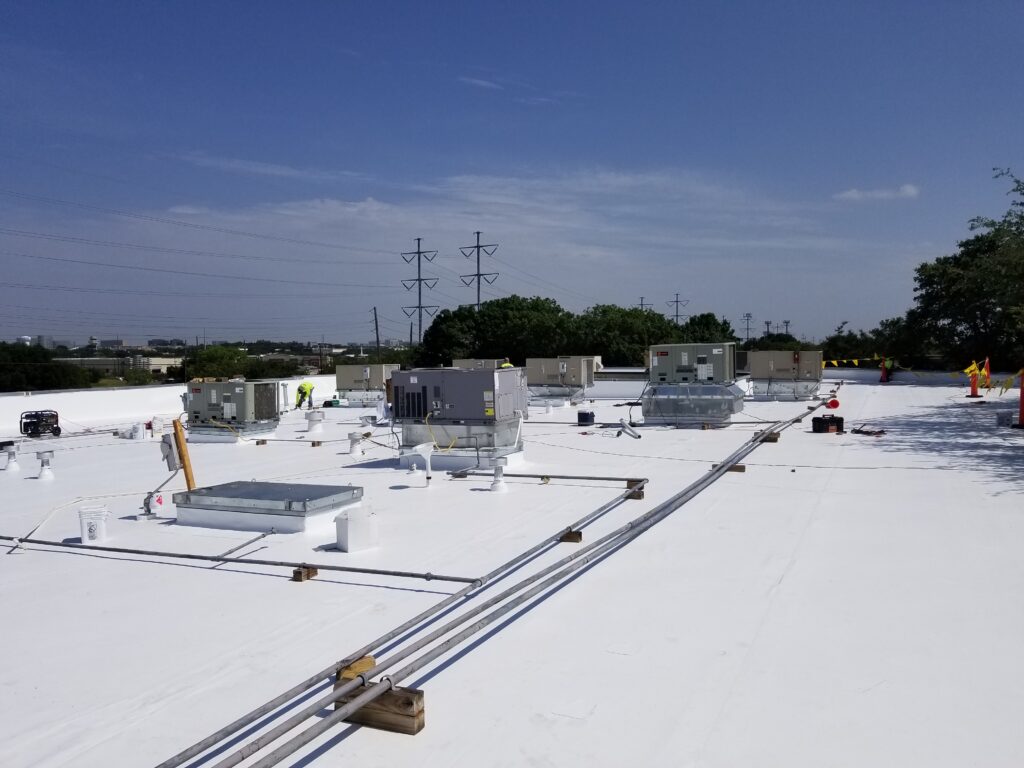
Denver Flat Roof Failure Modes - Climate-Specific
Commercial flat roof repair across Denver - parapet flashing failures driven by freeze-thaw cycling, drain ice-over, seam fatigue at altitude, and ponding correction.
We work on commercial buildings across the Denver urban core - the 17th Street and Broadway office corridor, Cherry Creek medical office, LoDo and Union Station mixed-use, the Five Points and RiNo commercial districts, and the Denver Health and UCHealth facilities along the West 8th Avenue campus. The buildings we repair have different ages, different systems, and different exposure histories, but the documentation discipline is the same on every project regardless of size.
Parapet flashing separation driven by freeze-thaw cycling: Denver's 90 to 110 annual freeze-thaw events put parapet wall assemblies through repeated thermal stress that exceeds what most original flashing details were engineered to tolerate. Standard through-wall flashing details from 1980s and 1990s construction - common on the 17th Street office inventory and the Capitol Hill mixed-use corridor - do not incorporate slip-sheet details that allow the wall assembly to move independently from the membrane. The result is adhesion failure at the base flashing, lateral water entry at the parapet wall, and interior staining that often shows up multiple floors below the actual entry point because water follows structural members down. Repair scope: remove the compromised flashing assembly, install a replacement base flashing with a flexible perimeter detail that accommodates freeze-thaw movement, terminate with surface-embedded counter-flashing at the wall face.
Seam fatigue at altitude UV exposure: Heat-welded TPO and PVC seams and adhesive-bonded EPDM laps on Denver commercial buildings experience accelerated surface aging from the high-altitude UV environment. Seams that would hold 25 years in a sea-level climate are showing fatigue at 15 to 18 years on older Denver inventory. Failure concentrates at perimeter seams where wind-uplift loads are highest - the Chinook wind events that produce sustained gusts exceeding 60 mph along the Front Range create fatigue stress at perimeter laps that does not occur in markets without this wind pattern. Repair scope: clean and dry the failed seam area, re-weld or apply compatible seam tape, probe-test the repair. Perimeter seam failures exceeding 40 linear feet in a concentrated zone shift the analysis toward field-section replacement rather than lap repair.
Drain ice-over and freeze-induced ponding: Denver's freeze-thaw cycling is particularly destructive to roof drainage systems on buildings that have not been maintained with pre-season inspections. Drains clogged with debris - windblown organic material, HVAC condensate deposits, gravel from adjacent ballasted sections - ice over completely during sustained cold periods and eliminate the drainage path entirely. The resulting ponding loads low-slope membrane systems with water weight, accelerates membrane creep at drain sumps, and in severe years - the winter of 2023-24 produced multiple sustained cold events across Denver County - produces drain-ring separation as the ice mass expands against the drain body. Repair scope: clear the drain, core-cut and replace the drain body if separation has occurred, re-flash the sump with compatible membrane, verify the drain connects unobstructed to the storm system.
- Parapet flashing separation - freeze-thaw cycling is the primary driver on pre-2000 Denver buildings
- Seam fatigue - altitude UV and Chinook wind events accelerate perimeter seam failure
- Drain ice-over and freeze-induced ponding - neglected drains in the freeze-thaw cycle
- Penetration boot failure - pipe boots and conduit sleeves at HVAC curb corners
- Cover board compression from hail impact - affects repairability of the insulation stack
Repair-vs-Replace Decision Framework for Denver Buildings
We pull moisture cores from five to ten representative locations on any Denver commercial roof where insulation saturation is suspected - sagging membrane, interior ceiling staining, roofs over 15 years old in the high UV and freeze-thaw environment, or any roof where a facility manager has observed active water intrusion. If more than 25 percent of cores read wet, replacement is the correct recommendation. Denver's freeze-thaw cycling turns saturated insulation into an expansion-contraction engine that destroys the membrane bond from below - recovering a wet insulation system in this market accelerates the next failure rather than preventing it.
When cores read dry and the failure is localized - a parapet run of 30 to 50 linear feet, a cluster of failed seams near one drain, a single ponded area - repair extends useful life and is the right capital decision. We do not upsell replacement on Denver commercial buildings that have remaining useful life. The decision is stated in writing in the scope document, with the core-pull map and the logic attached. If a building's insurer requires documentation of the repair decision for a claim submission, that written scope is the document they need.
Documentation Package Delivered at Repair Closeout
Every repair project closes out with a photo-keyed diagram of all repair locations on the roof plan, before-and-after photographs at every repair point, product data sheets for every material applied, and a written service record suitable for insertion into the building's roof asset file. For buildings on active manufacturer NDL warranties, we format the documentation to meet the manufacturer's warranty maintenance requirements - missing that format is the most common reason warranty claims get denied on Denver commercial buildings that have otherwise been properly maintained.
For buildings where the repair was preceded by a hail event, we include the NOAA storm-event cross-reference and the distinction between hail-related damage and pre-existing condition in the written record. That format aligns with the documentation standard that insurance adjusters and public adjusters use to advance claims on Colorado commercial properties.
Frequently asked questions
How do you price commercial roof repairs in Denver - fixed scope or time-and-materials?
Fixed scope after a documented inspection, every time. We do not run time-and-materials repair on commercial roofs. After the roof walk and moisture-core pulls where warranted, we deliver a written fixed-price repair scope. If we open a repair area and find additional damage that changes the scope, we stop, photograph it, and contact you before proceeding. The invoice matches the scope document.
Can you repair a Denver commercial roof that is still under a manufacturer's NDL warranty from a previous contractor?
My Denver building is actively leaking - how quickly can you respond?
Downtown Denver, LoDo, Cherry Creek, and Capitol Hill - four business hours during normal hours. For buildings in the inner suburbs - Lakewood, Englewood, Wheat Ridge - same day. After-hours and weekend emergency response routes to our on-call project manager, who can dispatch a crew for same-evening or early-morning dry-in. Buildings on our maintenance contracts receive priority dispatch. After major Front Range hail events, assessment protocols activate within 72 hours for maintained buildings.
Get a written repair scope for your Denver building.
We will walk the roof, pull moisture cores where saturation is suspected, and deliver a written repair scope - with an honest repair-vs-replace recommendation grounded in the core-pull data and no pressure toward replacement when repair is the right call.
| Scope Format | Written roof plan and photo record |
|---|---|
| Primary Market | Denver commercial buildings |
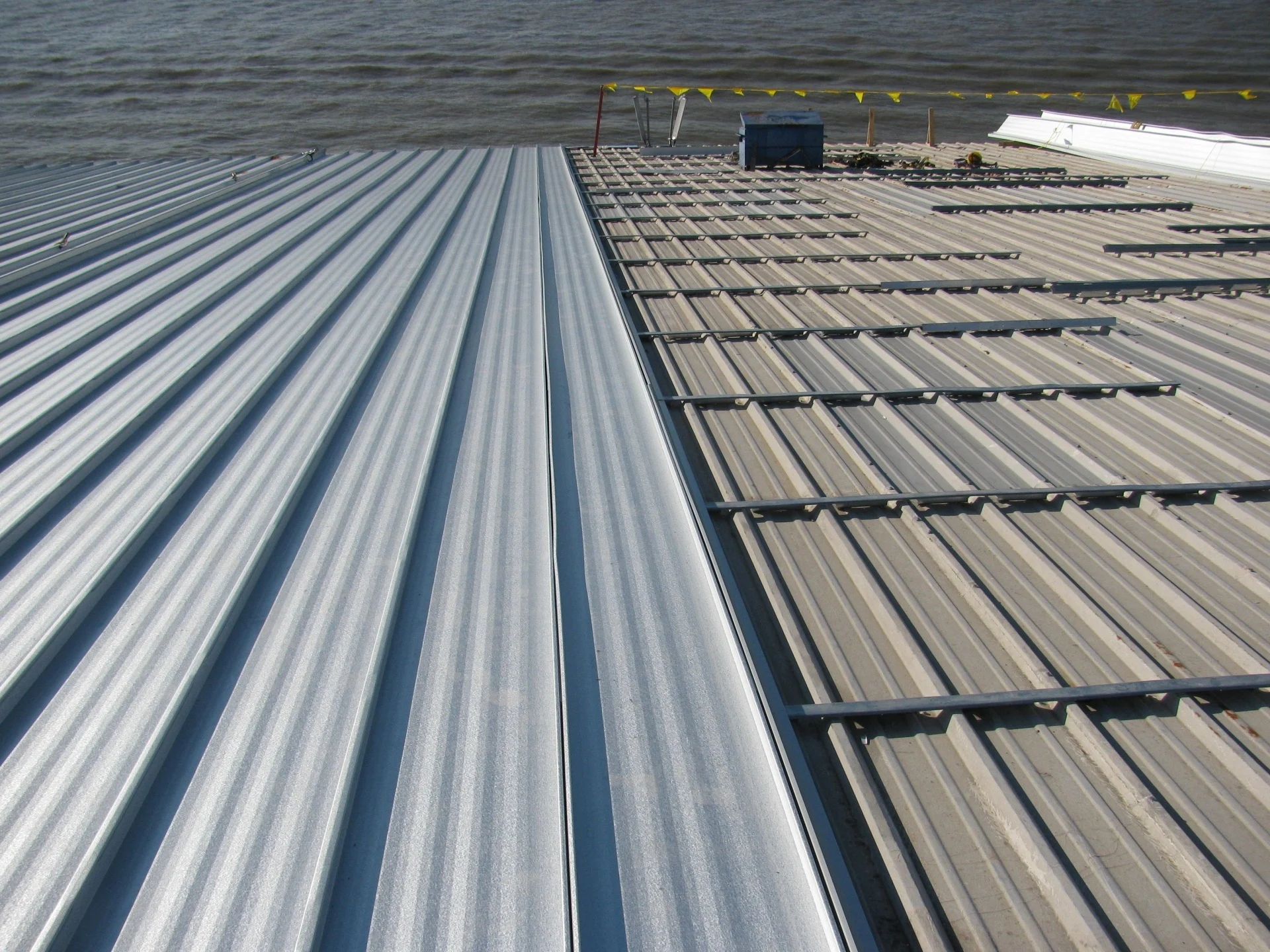
Commercial Re-Roofing in Denver, CO
Commercial Re-Roofing for commercial buildings across Denver.