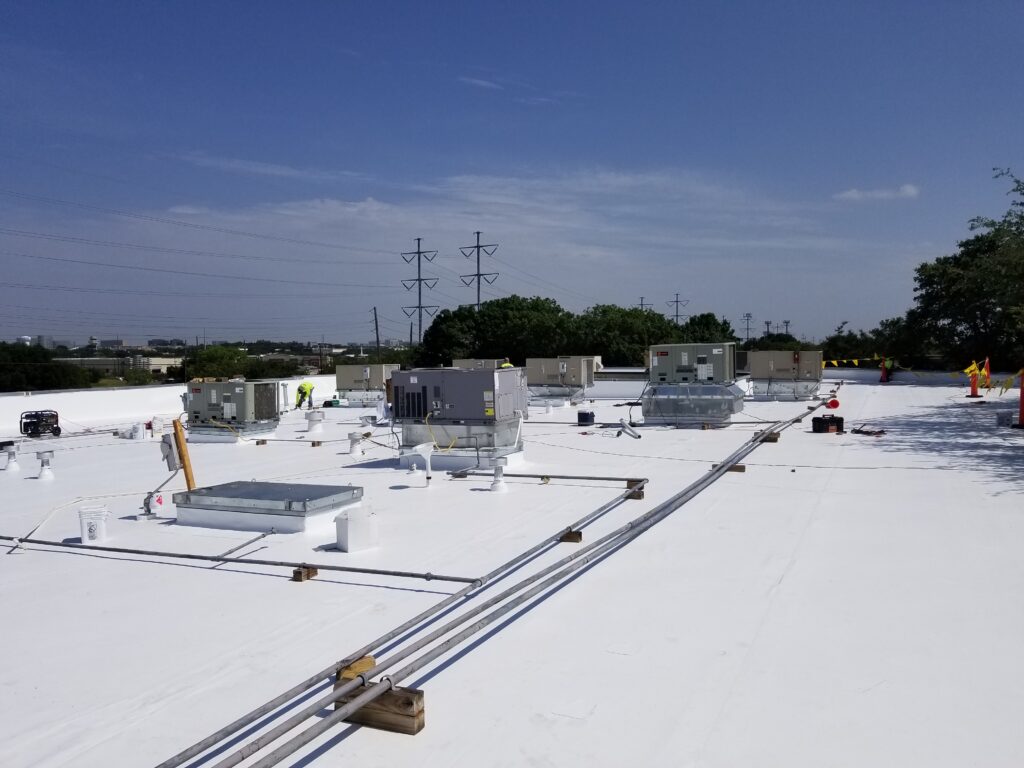
Response Time by Denver Zone
24/7 emergency commercial roof dry-in for Denver metro buildings.
Active leak in a Denver commercial building? We deploy emergency dry-in crews around the clock, stop the water intrusion, and then deliver a separate written permanent repair scope - two phases, both handled, no emergency-pressure upsell.
Denver's spring and summer storm pattern produces commercial roof emergencies in predictable seasonal clusters - and some that are not predictable at all. The May through August hail season routinely delivers baseball-sized hail across Adams, Arapahoe, Jefferson, and Douglas counties that peels membrane laps from perimeter edges and punctures standard-density cover boards on a single pass. The Front Range Chinook wind events - sustained gusts exceeding 60 mph that funnel down from the Rockies along the I-70 corridor - produce membrane blow-off on buildings where the original fastener density was engineered for standard exposure conditions but not for the higher dynamic pressures that occur in the foothills and near the western urban edge. And Colorado's freeze-thaw cycling produces drain ice-over events that turn a neglected roof drain into an ice dam that floods the interior when temperatures rise.
Emergency roof work is a two-phase problem and we handle it in two distinct phases. Phase one is stopping the water: compatible membrane lap over the failure zone, properly fastened tarp assembly weighted against the Chinook wind loads that are routine in this market, interior water diversion coordination with the building's facilities team where active ceiling damage exists. Phase two is the permanent repair - scoped after the building is stabilized, with moisture-core documentation, written fixed-price scope, and the repair-vs-replace analysis that the emergency situation does not allow time to complete properly at midnight. We separate these phases explicitly. Emergency dry-in does not commit the building owner to anything beyond stabilizing the building.
Emergency response dispatch is coordinated around active weather, access limits, and building operations. We dispatch our own crews with our own materials - we do not subcontract emergency response. downtown Denver and the inner urban core are less than ten minutes in off-peak conditions. The outer suburban corridors are same-day or next-day depending on distance and active-weather conditions across the metro.
Inner Denver (downtown, LoDo, Union Station, Cherry Creek, Capitol Hill, the Golden Triangle, Five Points, RiNo): Four-hour maximum dispatch during business hours. After-hours and weekend dispatch connects to our on-call project manager, who confirms response time and dispatches from . Typical after-hours arrival is two to four hours from initial call for buildings with active interior water intrusion.
Inner suburbs (Lakewood, Englewood, Wheat Ridge, Arvada, Westminster, Littleton, Thornton): Same-day dispatch. Typical arrival three to six hours from call, depending on crew availability and concurrent active-weather conditions across the metro. After-hours response available for severe events - active penetration into occupied tenant space or structural exposure.
Outer suburbs and corridor communities (Aurora, Centennial, Highlands Ranch, Lone Tree, Parker, Commerce City, Brighton, Longmont): Next-day dispatch for standard emergency calls. Same-day for documented major loss events - roof sections blown off by Chinook gusts, active penetration into occupied hospital or manufacturing space, multi-building complex events following hail.
What Emergency Dry-In Covers in Denver Conditions
Emergency dry-in on a Denver commercial building is a temporary stabilization, not a permanent repair. We cover the failure zone with a compatible membrane lap or a tarp assembly fastened to resist the sustained wind loads that are routine in this market - Chinook gusts exceeding 60 mph are not rare events along the Front Range, and a dry-in that blows off overnight is not a dry-in. We photograph the temporary installation, document the failure mode and extent, and leave the building weathertight against the next storm system.
After the building is stabilized - typically the following business day or once active weather has cleared - we return for the permanent scope walk. At that point we pull moisture cores if insulation saturation is suspected, document the full extent of the damage including any hail-related cover board compression or seam fatigue that the emergency obscured, and produce a fixed-price permanent repair scope. Emergency dry-in invoice and permanent repair scope are separate documents. Approval of each is independent. Nothing about the dry-in creates an obligation to use us for the permanent work.
Post-storm common scope items across Denver: membrane blow-off at perimeter edges where original fastener density did not account for Chinook wind loads, parapet cap and counter-flashing displacement from wind uplift, drain cover blow-off creating open drain bodies in active weather, and hail punctures to membrane field where standard-density cover board was used instead of HD polyiso or HD gypsum. The last item is why we specify cover board on every replacement scope we write - it is the difference between a hail event that requires emergency repair and one that requires documentation and a scheduled scope walk.
Winter Emergency Response - Freeze-Thaw and Ice Events
Denver's freeze-thaw cycling creates a category of winter commercial roof emergency that is distinct from storm events. When a sustained cold period - typically five or more consecutive days below freezing, which Denver sees in November through February - is followed by a rapid warm-up, ice that has accumulated in clogged drain bodies melts faster than the drainage system can handle and enters the building through drain-ring separations or overflowed sumps. The January 2024 Denver freeze event produced multiple commercial interior flooding calls from buildings across Denver County where drain debris had not been cleared in the fall.
Freeze-thaw emergency response requires drain assessment and clearing as part of the dry-in scope. If the drain body has separated from freeze-pressure expansion, we document it and emergency-replace the drain ring before re-establishing the drainage path. On buildings we maintain, we include a November pre-freeze drain inspection in the annual program - clearing debris and photographing drain condition before the first sustained cold window - specifically to prevent this category of emergency.
Frequently asked questions
Do we need to evacuate the building or stop operations for emergency dry-in?
Not typically. Emergency dry-in work is performed on the roof surface while normal operations continue below. If there is active ceiling collapse risk, water pooling near electrical panels or server rooms, or ongoing interior structural exposure, we coordinate the sequencing with your facilities team. For occupied healthcare buildings - Denver Health, UCHealth satellite facilities, or any building with active patient areas or clean-room operations - call that out when you contact us and we adjust the approach before dispatch.
Can you handle emergency dry-in on large commercial complexes - multi-building campuses or high-square-footage buildings?
Yes. We have run multi-building emergency dry-in operations across the Anschutz Medical Campus corridor in Aurora and across large-format industrial complexes in the I-70 and I-225 corridors. For large-complex emergencies, we dispatch two crews simultaneously and establish a triage sequence - occupied buildings with active interior penetration get dry-in first, unoccupied or lower-exposure buildings are sequenced next. We communicate the sequence to the building's facilities manager before work begins.
Will my insurance adjuster accept the emergency dry-in invoice for reimbursement?
We document emergency dry-in work to the format that Colorado commercial insurance adjusters require for protective-measures reimbursement: itemized labor and materials, photo documentation of the damage and the dry-in installation, a written description of the failure mode, and a NOAA storm-event cross-reference where the emergency was triggered by a hail or wind event. We do not file claims or negotiate with insurers - that is not our role. We give you clean, complete documentation to submit yourself or share with your public adjuster.
Active commercial roof leak in Denver?
Call or submit here - our on-call project manager will confirm response time and dispatch a crew. Inner Denver four-hour dispatch. We stop the water first, then scope the fix separately.
| Scope Format | Written roof plan and photo record |
|---|---|
| Primary Market | Denver commercial buildings |
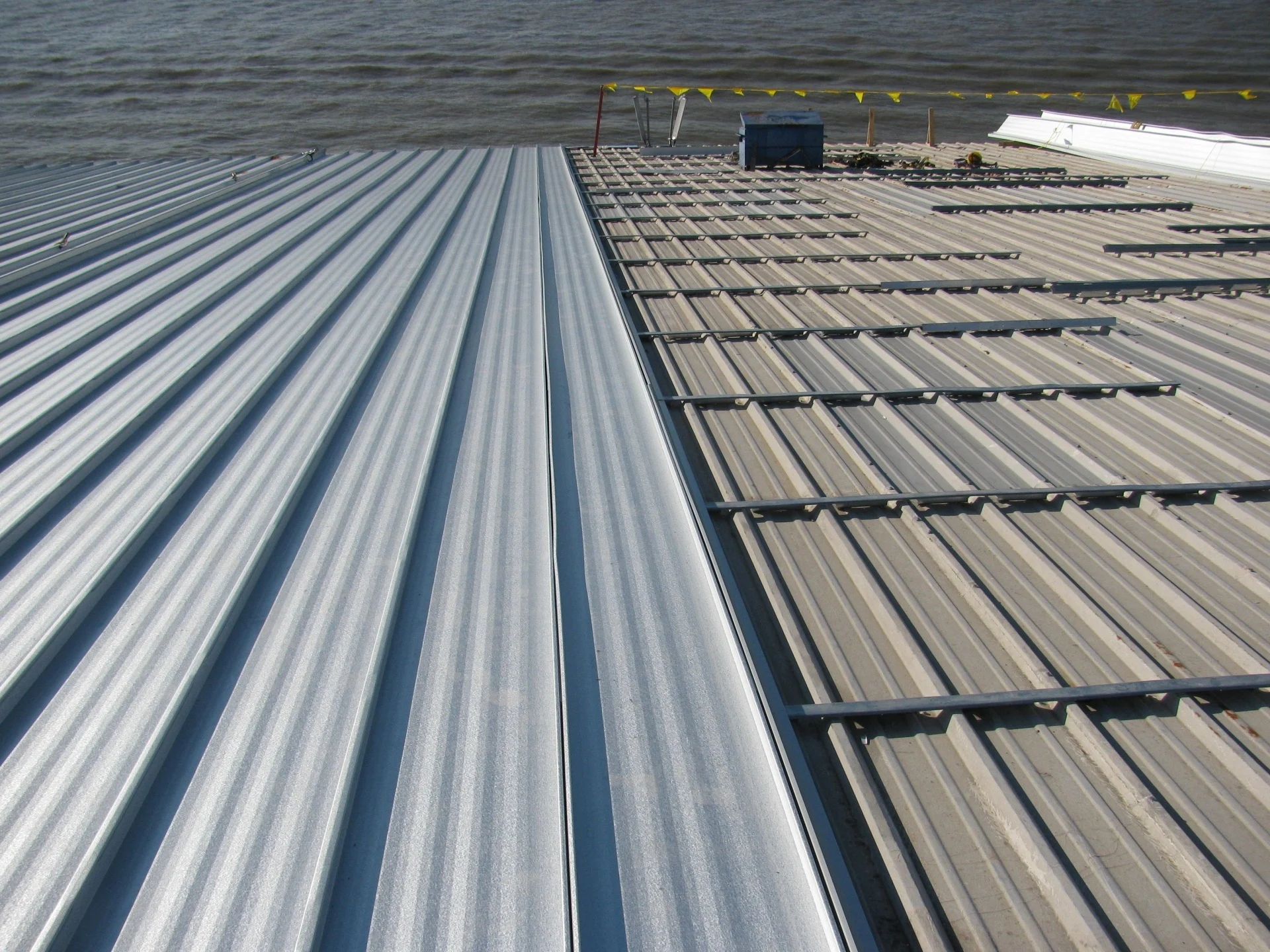
Commercial Re-Roofing in Denver, CO
Commercial Re-Roofing for commercial buildings across Denver.