Frequently asked questions
Commercial roofing for city halls, courthouses, fire stations, police stations, and public facilities throughout Denver, CO.
Denver's civic building portfolio spans everything from the grand granite City and County Building facing Civic Center Park to functional municipal service centers distributed across 154 square miles of consolidated city-county territory. The Denver City and County Building, completed in 1932 and listed on the National Register of Historic Places, is one of the most architecturally significant municipal structures in the Mountain West. Beyond that landmark, the Denver Department of Finance oversees roofing maintenance on the Lindsey-Flanigan Courthouse, the Webb Municipal Building, more than 60 Denver Fire Department stations, the Denver Police Department's headquarters on Decatur Street, and dozens of branch libraries in the Denver Public Library system. Managing this portfolio requires procurement infrastructure that can handle both emergency repairs and long-range capital replacement cycles.
Denver's Mile High altitude and Front Range climate create roofing conditions that contractors from lower-elevation markets often underestimate. Intense solar ultraviolet radiation at 5,280 feet degrades roofing membranes faster than at sea level, and the dramatic temperature swings - from summer highs above 100 degrees to winter nights below zero - place extraordinary thermal stress on roofing assemblies, flashings, and expansion joints. Denver averages more than 300 days of sunshine annually, and the resulting UV exposure is compounded by the region's hailstorm season, which runs from April through September and produces some of the largest insured hail losses in the nation. The City of Denver specifies Class 4 impact-rated roofing products on a growing share of municipal re-roofing projects following assessments that revealed widespread hail damage across the city's facility portfolio after major storms.
Colorado's energy codes and Denver's own ambitious sustainability commitments drive specific requirements into municipal roofing specifications. Denver's 2020 Climate Action Plan calls for carbon-neutral city operations by 2040, and the city's Sustainability Office has established an energy performance framework for public buildings that treats roof assemblies as critical components in achieving that target. Re-roofing projects on Denver city buildings routinely include requirements for continuous insulation meeting or exceeding ASHRAE 90.1 standards, and reflective membrane systems on flat and low-slope roofs contribute to both energy performance and Denver's urban heat island reduction goals. The city has used Xcel Energy utility rebates to partially offset the cost of insulation upgrades on several fire station and recreation center re-roofing projects.
Denver Fire Department stations present roofing challenges amplified by the city's topographic diversity and the heavy equipment loads that fire apparatus imposes on structure and roof systems alike. Mountain-facing stations in neighborhoods like Montclair and southeast Denver experience heavier snow accumulation than those in the flatter northwest quadrant of the city, and roof structural adequacy must be confirmed before any additional insulation or ballast is added during re-roofing. The city's Facilities Management Division coordinates with the Fire Chief's capital planning staff to sequence station re-roofing work across the 60-plus station network in a way that avoids simultaneous closures in adjacent response districts - a logistical constraint that shapes contract phasing requirements in the bid documents.
Federal prevailing wage compliance is required on Denver municipal roofing projects that use HUD Community Development Block Grant funding, EPA Environmental Justice grants, or FEMA Hazard Mitigation Grant Program dollars, all of which flow through the city's capital program. Davis-Bacon wage rates published by the U.S. Department of Labor for the Denver-Aurora metropolitan area apply to roofing and sheet metal classifications on these federally funded projects. Colorado does not have its own state prevailing wage law, so federal Davis-Bacon is the primary wage compliance framework contractors encounter on Denver public work. The city's Contract Compliance Division administers payroll audits on federally funded construction projects and has assessed back wages against contractors who failed to pay published rates or submitted inaccurate certified payroll records.
Bonding requirements on Denver public roofing contracts are consistent with Colorado state law for public works, which requires performance and payment bonds at 100 percent of contract value on projects above the statutory threshold. Surety companies must be authorized to do business in Colorado and must meet the Treasury Department's listing requirements for federal work that co-occurs with state and local procurement. Denver's scale means that some re-roofing contracts bundle multiple facilities into consolidated packages with contract values that challenge smaller contractors' bonding capacity. Contractors who maintain strong working capital ratios and documented completion records with their surety agents access higher single-project and aggregate bond limits that allow them to compete for the larger consolidated solicitations that Denver regularly issues.
The City and County of Denver issues a capital improvement plan annually that identifies roofing replacements scheduled over a five-year horizon, and contractors who track this plan can anticipate solicitations well before they are formally advertised. The city's Facilities Management Division conducts informational pre-bid meetings at Webb Municipal Building for major roofing projects, and attendance at these sessions provides insight into site conditions, sequencing requirements, and technical preferences that is not fully captured in the written bid documents. Denver's public sector roofing market rewards contractors who invest in understanding both the technical demands of high-altitude construction and the administrative requirements of a sophisticated municipal procurement system that places equal weight on price, technical approach, and small business inclusion.
Can you repair a leaking BUR roof in Denver without full replacement?
Sometimes. If the leak is isolated to a failed flashing at a penetration or parapet - common on Denver BUR roofs where freeze-thaw cycling works parapet base flashings loose - and the BUR field membrane is in sound condition confirmed by core cuts, targeted repair is the right scope. If the leak is coming from failed plies in the field, repair at the visible leak point will produce another leak nearby within one to two winters as freeze-thaw expands the moisture path. We will tell you which situation you are in before recommending any scope.
How do you handle gravel removal on a BUR tear-off in Denver?
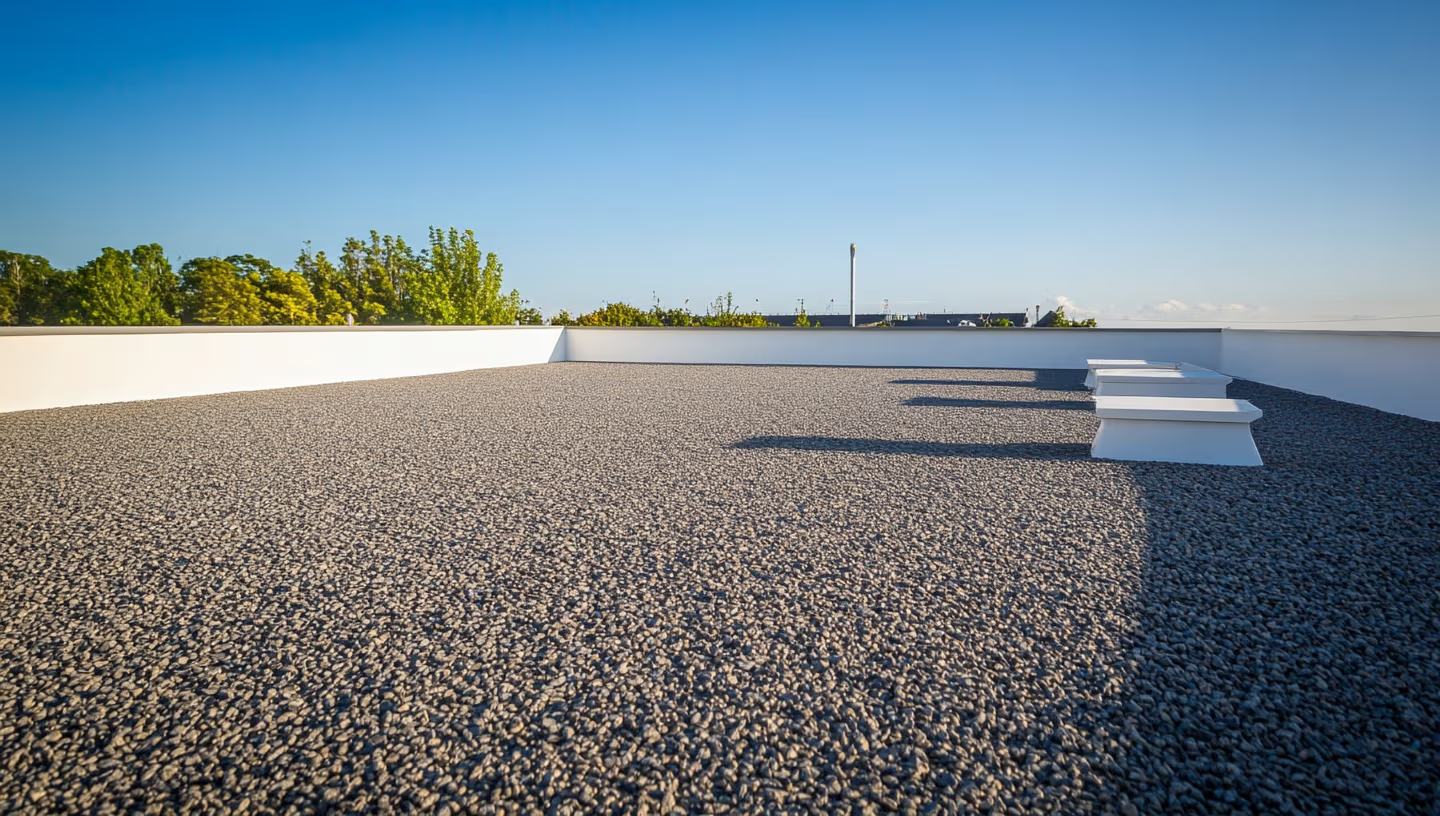
Gravel-surfaced BUR tear-off is labor-intensive and generates significant debris volume. On downtown Denver buildings with restricted site access - LoDo, the Golden Triangle, the 17th Street corridor - we use rooftop vacuum systems for gravel removal where dumpster placement is constrained by parking, street access, or neighbor proximity. Gravel is collected separately and coordinated for recycling at aggregate facilities when the owner's sustainability reporting requires documented diversion.
Is built-up roofing still installed new in Denver?
Rarely. New BUR has been largely displaced by SBS-modified bitumen, which achieves similar multi-ply performance with less installation complexity and without the hot-kettle and asphalt-fume exposure that creates complications in occupied urban Denver buildings. We can specify and install new BUR when a project requires it, but for most Denver commercial buildings, SBS modified bitumen or TPO with impact-rated cover board is the defensible recommendation for new work.
Aging BUR on a Denver commercial building?
We will walk the roof, pull core cuts, and produce a written assessment - replace vs. recover, with system options, installed cost bands, freeze-thaw and hail-resistance specifications, and warranty paths. No obligation.
| Scope Format | Written roof plan and photo record |
|---|---|
| Primary Market | Denver commercial buildings |
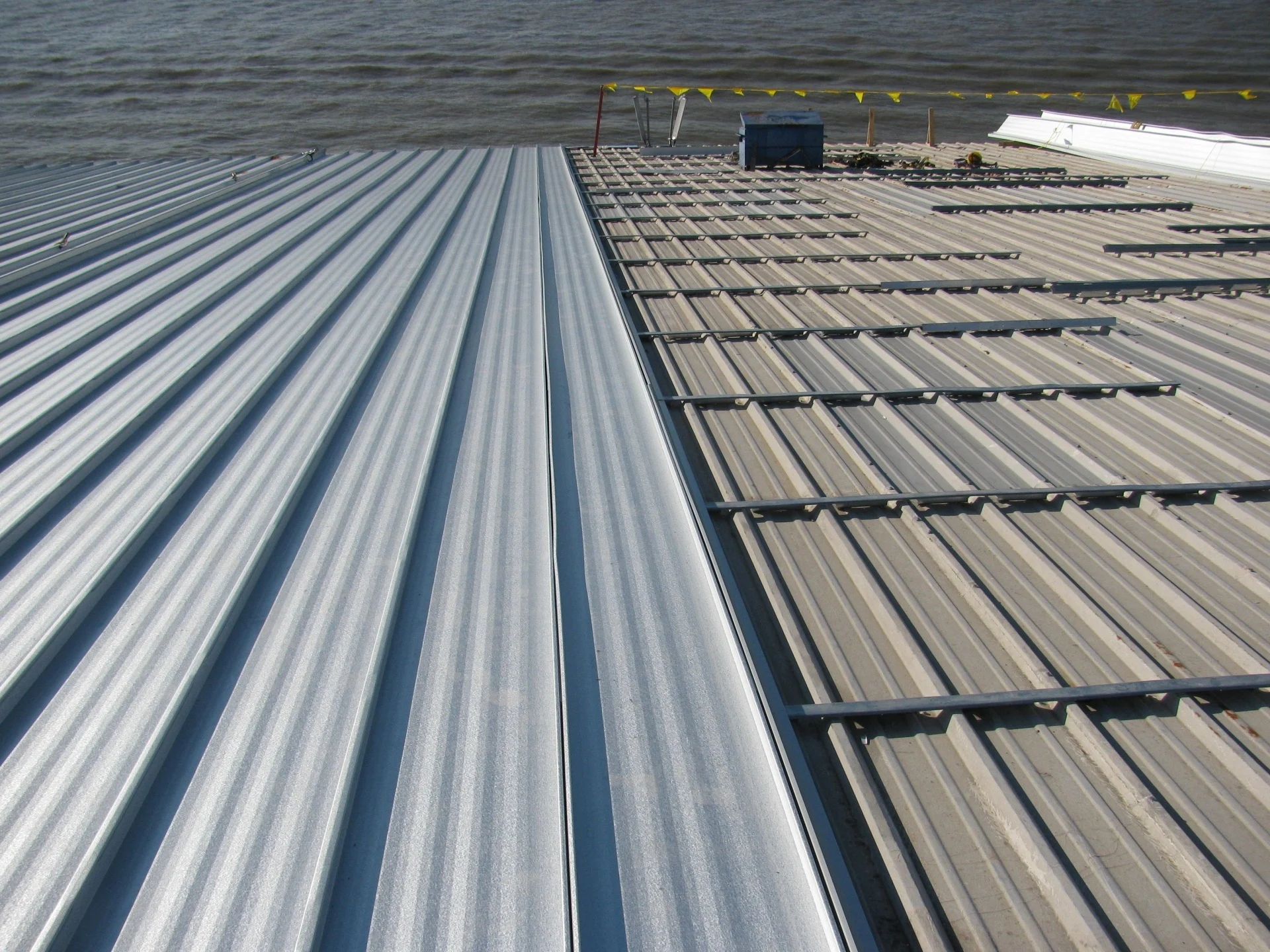
Commercial Re-Roofing in Denver, CO
Commercial Re-Roofing for commercial buildings across Denver.