FM 4470 Class 1 and UL 2218 Class 4 - What They Mean for Denver Buildings
Commercial roofing engineered for Colorado's hail belt - FM 4470 Class 1 and UL 2218 Class 4 rated systems, HD cover board as non-optional, insurance documentation, and post-hail assessment for Denver metro commercial buildings.
Colorado ranks in the top three states nationally for annual hail frequency and insured hail losses. The Denver metro's May through August season routinely produces baseball-sized stones across Adams, Arapahoe, Jefferson, and Douglas counties. We specify, install, and certify FM 4470 Class 1 and UL 2218 Class 4 impact-resistant systems - and we treat the cover board as non-optional.
No commercial roofing specification decision matters more in Colorado than hail resistance. The Front Range hail belt - running from Greeley and Fort Collins south through the Denver metro and into Colorado Springs - produces some of the most documented commercial roof losses in the United States each year. The May through August hail season delivers repeated events across Denver County, Adams County where Aurora's Anschutz Medical Campus and Buckley Space Force Base sit, Jefferson County where Lakewood and Wheat Ridge industrial buildings absorb regular hits, and Douglas County where Highlands Ranch commercial corridors have seen significant hail losses in recent seasons.
The specification that makes a commercial roof genuinely hail-resistant in Colorado is not complicated: a membrane tested and rated to FM 4470 Class 1 or UL 2218 Class 4 impact resistance, installed over an HD cover board - high-density polyiso or high-density gypsum - rather than standard-density insulation. The cover board is what makes the rating achievable. Without it, the membrane passes the Class 4 stone drop test in a factory setting but fails to maintain that performance in the field because the standard-density insulation beneath it compresses on impact, allowing the membrane to flex beyond its rated tolerance. We do not install single-ply over standard-density insulation on Denver commercial buildings. The cover board is in every spec we write.
Beyond the membrane specification, hail-resistance work involves three additional components that are often omitted: post-event rapid assessment documentation for insurance purposes, impact-resistance certification at closeout that the building's insurer can verify, and a defined threshold for repair versus full-section replacement after a documented hail event. All three are part of our standard engagement.
FM 4470 Class 1 is the Factory Mutual wind and hail resistance standard for commercial roofing assemblies. Class 1 approval means the full assembly - membrane, cover board, insulation, and attachment method - has been tested and approved as a system, not just the membrane alone. The approval is specific to the assembly configuration: you cannot mix an FM-approved membrane with a non-FM cover board and claim Class 1 status. We specify FM-approved assemblies by assembly number, document the number in the project closeout file, and verify that every component delivered to the job matches the approved configuration.
UL 2218 Class 4 is the Underwriters Laboratories impact resistance standard for roofing materials, tested by dropping a 2-inch steel ball from 20 feet onto the membrane. Class 4 is the highest rating in the standard. Most Colorado commercial property insurers require Class 4 impact resistance as a condition of full coverage or premium qualification on commercial flat roofs. We provide the UL 2218 Class 4 certification documentation at closeout - the specific document that your insurer's underwriter needs to apply the impact-resistance premium credit.
The practical difference between a Class 4 and a non-rated system in a Denver hail event is not theoretical. A 2-inch hailstone at 50 mph has roughly the same kinetic energy as a 2-inch steel ball dropped from 20 feet. Denver routinely sees stones in this size range during peak season events. A non-rated standard-density system sustains membrane punctures and insulation compression that require immediate repair or full section replacement. A Class 4 system over HD cover board sustains surface granule loss that can be documented, photographed, and submitted to an insurer as a condition report rather than an emergency repair call.
Cover Board Specification - Why It Is Non-Optional
The cover board is the component that most contractors leave out of the spec to hit a lower bid number, and it is the component that makes the difference between a membrane that passes a factory impact test and one that actually performs under Denver field conditions. Standard-density polyiso has a compressive strength of roughly 20 to 25 psi. High-density polyiso runs 60 to 80 psi. High-density gypsum runs higher still. When a 2-inch hailstone strikes a membrane over standard-density insulation, the insulation compresses, the membrane flexes, and the bond between the membrane and insulation experiences shear stress that degrades the adhesive system over repeated events.
Cover board requirements vary by membrane type and application. For TPO and PVC single-ply systems, HD polyiso at a minimum of 1/4 inch is the standard cover board specification for Class 4 qualification. For modified bitumen systems, HD gypsum at 1/4 inch or greater is often specified because it provides both the impact resistance and the fire resistance that many commercial building occupancies require. We specify the cover board by type, thickness, and manufacturer in every project scope, and we verify installation against the specification before the membrane goes down.
The cost premium for HD cover board over standard-density insulation runs approximately $0.30 to $0.50 per square foot on a typical Denver commercial reroof. On a 50,000 sq ft building, that is $15,000 to $25,000 added to the installed cost. The insurance premium reduction for Class 4 impact resistance on most Colorado commercial property policies runs $0.05 to $0.12 per $100 of insured value annually - on a building insured at $5 million replacement cost, that is $2,500 to $6,000 per year in premium reduction. The cover board pays for itself within the first warranty cycle without a single hail event.
Post-Hail Assessment and Insurance Documentation
When a documented hail event crosses the Denver metro - tracked by NOAA storm data and third-party weather verification services - we activate a rapid-assessment protocol for commercial buildings in our service area. The assessment produces a photo log keyed to a roof zone diagram, dated to the storm event and cross-referenced to NOAA storm data, with a written scope that distinguishes event-related damage from pre-existing condition. This is the documentation standard that adjusters and public adjusters require to settle commercial hail claims without a field reinspection.
For buildings with Class 4 impact-rated systems, the post-hail assessment typically documents surface granule loss, seam inspection results, and edge-metal condition - and in most cases confirms that the system performed as rated and no emergency repair is required. That documentation is itself valuable: it demonstrates to the insurer that the rated system performed, supports the next premium renewal discussion, and creates a timestamped baseline for the building's condition before the next event.
We do not act as public adjusters or represent insureds in the claims process. We provide technical documentation - the kind a building owner, property manager, or insurance adjuster can rely on to move a claim from dispute to settlement.
Denver Metro Hail Geography
Hail frequency and severity vary across the Denver metro in ways that affect specification decisions. The I-70 corridor east of downtown Denver - the Stapleton, Aurora, and Green Valley Ranch commercial districts - sits in one of the highest-frequency hail zones in Colorado, with documented events most years from May through August. The DTC and Lone Tree commercial corridor along I-25 in Douglas County has seen increasing hail-loss frequency as the county's commercial development has expanded into previously agricultural open-terrain exposure.
The downtown Denver and LoDo commercial core typically sees slightly lower hail frequency than the eastern plains corridors because the urban heat island effect can deflect or reduce storm intensity at the core. However, the buildings in this zone are older - many of the 17th Street and Broadway office towers were constructed in the 1970s and 1980s on original built-up or modified bitumen systems - and a direct hit on an aging non-rated system causes disproportionate damage. We assess the hail-zone exposure for every project and factor the expected return frequency into the system specification and maintenance schedule.
Frequently asked questions
What is the difference between FM 4470 Class 1 and UL 2218 Class 4?
FM 4470 Class 1 is a Factory Mutual assembly rating that covers both hail resistance and wind uplift - the full system, not just the membrane. UL 2218 Class 4 is an Underwriters Laboratories material impact rating that applies to the membrane or surface layer. On most Denver commercial insurance policies, insurers accept either standard for the impact-resistance premium qualification, but some underwriters require FM 4470 Class 1 for the full assembly rating. We document both where applicable and confirm the specific requirement with the building's insurer before closeout.
Will impact-resistant roofing reduce my commercial insurance premium?
On most Colorado commercial property policies, yes - FM 4470 Class 1 or UL 2218 Class 4 rated assemblies qualify for premium reductions that typically run $0.05 to $0.12 per $100 of insured value annually. We provide the certification documentation at closeout that your insurer needs to apply the reduction. The exact discount depends on your policy, your insurer, and your building's loss history - we do not quote insurance outcomes, but we provide the technical documentation that makes the discussion with your insurer based on verified facts.
| Scope Format | Written roof plan and photo record |
|---|---|
| Primary Market | Denver commercial buildings |
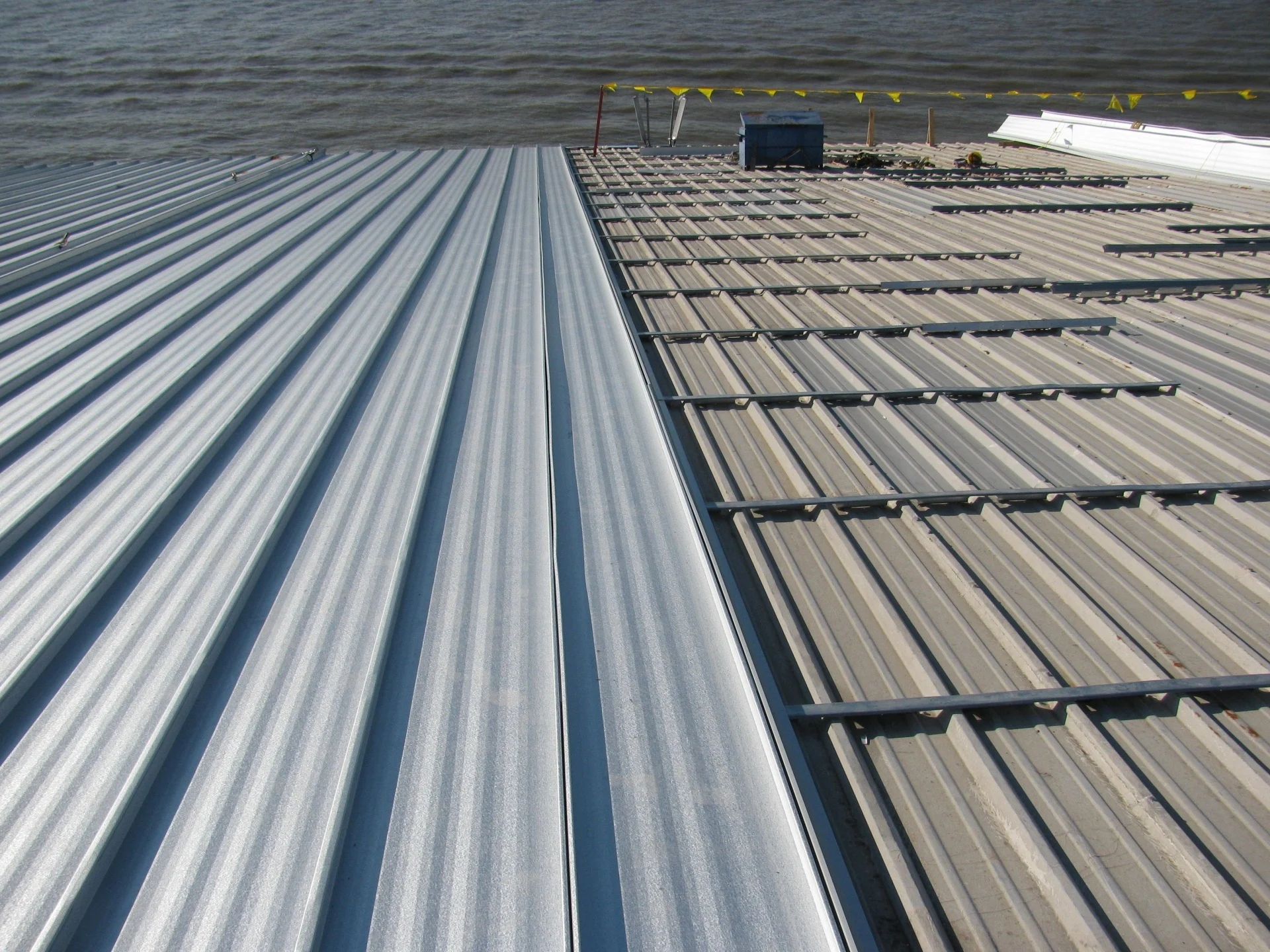
Commercial Re-Roofing in Denver, CO
Commercial Re-Roofing for commercial buildings across Denver.