Frequently asked questions
Commercial roofing for hospitals, medical office buildings, surgical centers, and healthcare facilities throughout Denver, CO.
Denver's healthcare sector has experienced dramatic growth over the past decade, with UCHealth, SCL Health, and Centura Health all completing major campus expansions along the I-25 corridor and in suburban markets like Highlands Ranch and Aurora. These large-scale medical complexes place extraordinary demands on roofing systems. A hospital roof isn't simply a weather barrier - it's a critical infrastructure component that directly affects patient safety, infection control protocols, and the uninterrupted delivery of care. When a roofing failure occurs over a sterile processing department or an occupied surgical suite, the consequences extend far beyond property damage. Denver roofing contractors who specialize in healthcare facilities understand this distinction and bring an entirely different level of precision to every project.
Colorado's climate creates a particularly challenging environment for roofing on medical buildings. Denver averages more than 300 days of sunshine annually, but that sun brings intense UV radiation at a mile-high elevation that degrades conventional membrane materials faster than at lower altitudes. Add the dramatic freeze-thaw cycling that can occur multiple times throughout a single autumn or spring day, and roofing systems on facilities like Presbyterian St. Luke's Medical Center or Denver Health face constant mechanical stress at every seam and penetration. EPDM membranes installed without proper UV stabilizers will chalk and crack within a few years in Denver's high-altitude solar environment. Healthcare facilities require materials and installation methods specifically rated for this combination of radiation intensity and temperature swing.
Medical buildings are defined by what passes through their roofs. Hospitals serving the Denver metro area - from the massive Anschutz Medical Campus in Aurora to community hospitals in Westminster and Thornton - route medical gas lines, vacuum systems, electrical conduit, and complex HVAC supply and exhaust equipment through their roof planes. Each penetration represents a potential failure point. Standard flashing techniques designed for commercial office buildings are insufficient when the penetration serves an operating room air handler or carries piped oxygen to patient floors. Healthcare roofing specialists use fabricated pipe boots, continuous weld details, and positive-drainage designs around equipment curbs to ensure that no penetration becomes a water intrusion pathway under Denver's heavy spring snowmelt or summer monsoon conditions.
Infection control is the governing constraint that shapes every decision on a healthcare roofing project in Denver. When the Joint Commission surveys facilities at hospitals like Rose Medical Center or Swedish Medical Center in Englewood, they evaluate not just current conditions but the systems and procedures that prevent problems. A roofing contractor performing work on an occupied medical building must implement Infection Control Risk Assessment protocols, which means sealed containment barriers, negative air pressure in work zones, HEPA filtration for dust and debris, and designated debris pathways that never cross patient care areas. Denver-area contractors who lack healthcare-specific ICRA training cannot legally or safely perform roofing work on accredited facilities, regardless of their general commercial competence.
After-hours and phased scheduling defines the operational reality of healthcare roofing in the Denver market. The new Saint Joseph Hospital campus near downtown Denver, and expanding urgent care networks operated by UCHealth and Centura across the metro, cannot simply shut down for roofing work. Projects proceed in carefully coordinated phases, often with work restricted to evenings, weekends, and overnight windows when patient census is lower and critical-care areas can be temporarily isolated. Strong-smelling adhesives require special approval because odors can migrate through HVAC systems into patient rooms. Roofing crews on Denver healthcare projects operate under hospital-specific protocols: background checks, ID badging, equipment staging in approved locations, and constant coordination with facilities management teams.
Flat and low-slope roofs dominate the medical building stock throughout the Denver metro. The UCHealth University of Colorado Hospital complex in Aurora - among the largest hospital campuses in the region - relies almost entirely on low-slope membrane roofing systems that must accommodate heavy mechanical equipment loads from chiller plants, cooling towers, and air handling units. TPO and modified bitumen systems with reinforced details around equipment pads have become standard on new construction. For facilities performing re-roofing on existing structures, vapor barrier assessment is critical in Denver's low-humidity climate, where the interior vapor drive differs significantly from coastal markets. Improper vapor management leads to interstitial condensation that destroys insulation R-value and promotes mold growth behind interior finishes - a catastrophic outcome inside a healthcare environment.
Preventive maintenance programs are not optional for Denver healthcare facilities - they are a requirement of responsible facilities management and often a condition of property insurance policies for medical buildings. A structured maintenance program for a hospital roof in the Denver metro involves biannual inspections timed around the hail season that peaks in May and June along the Front Range. These inspections include infrared scanning to detect wet insulation before it causes visible ceiling damage, drain clearing to prevent ponding that accelerates membrane aging, and photographic documentation that protects facilities managers when warranty claims become necessary. Denver's hail season is among the most severe in the nation, and hospital roofs with multiple penetrations and equipment pads have far more vulnerability points than a simple commercial warehouse.
Assisted living communities and skilled nursing facilities throughout the Denver metro - from Brookdale communities in Lakewood to senior campuses in Parker and Castle Rock - share many of the same roofing requirements as acute-care hospitals, though on a smaller scale. Resident safety and infection prevention are equally paramount, and the facilities typically operate under continuous regulatory oversight. A roof leak that penetrates a memory care wing during a Colorado spring snowstorm creates immediate health, safety, and compliance problems for the operator. Contractors serving this segment of Denver's healthcare real estate market must carry healthcare-specific liability coverage and maintain working knowledge of both ICRA protocols and the building codes that govern licensed care facilities in Colorado.
Selecting a roofing partner for a Denver healthcare facility requires verification that goes well beyond a standard contractor's license. The right contractor will carry evidence of completed projects at accredited hospitals or medical campuses, documented ICRA training for field crews, familiarity with Colorado's Department of Public Health and Environment construction requirements for licensed healthcare facilities, and relationships with the major roofing membrane manufacturers whose warranties include provisions specific to medical occupancy. Denver's healthcare real estate market is growing rapidly, and the roofing contractors who serve it successfully are those who treat every project as the high-stakes, operationally sensitive work it truly is.
Can you repair a leaking BUR roof in Denver without full replacement?
Sometimes. If the leak is isolated to a failed flashing at a penetration or parapet - common on Denver BUR roofs where freeze-thaw cycling works parapet base flashings loose - and the BUR field membrane is in sound condition confirmed by core cuts, targeted repair is the right scope. If the leak is coming from failed plies in the field, repair at the visible leak point will produce another leak nearby within one to two winters as freeze-thaw expands the moisture path. We will tell you which situation you are in before recommending any scope.
How do you handle gravel removal on a BUR tear-off in Denver?
Gravel-surfaced BUR tear-off is labor-intensive and generates significant debris volume. On downtown Denver buildings with restricted site access - LoDo, the Golden Triangle, the 17th Street corridor - we use rooftop vacuum systems for gravel removal where dumpster placement is constrained by parking, street access, or neighbor proximity. Gravel is collected separately and coordinated for recycling at aggregate facilities when the owner's sustainability reporting requires documented diversion.
Is built-up roofing still installed new in Denver?
Rarely. New BUR has been largely displaced by SBS-modified bitumen, which achieves similar multi-ply performance with less installation complexity and without the hot-kettle and asphalt-fume exposure that creates complications in occupied urban Denver buildings. We can specify and install new BUR when a project requires it, but for most Denver commercial buildings, SBS modified bitumen or TPO with impact-rated cover board is the defensible recommendation for new work.
Aging BUR on a Denver commercial building?
We will walk the roof, pull core cuts, and produce a written assessment - replace vs. recover, with system options, installed cost bands, freeze-thaw and hail-resistance specifications, and warranty paths. No obligation.
| Scope Format | Written roof plan and photo record |
|---|---|
| Primary Market | Denver commercial buildings |
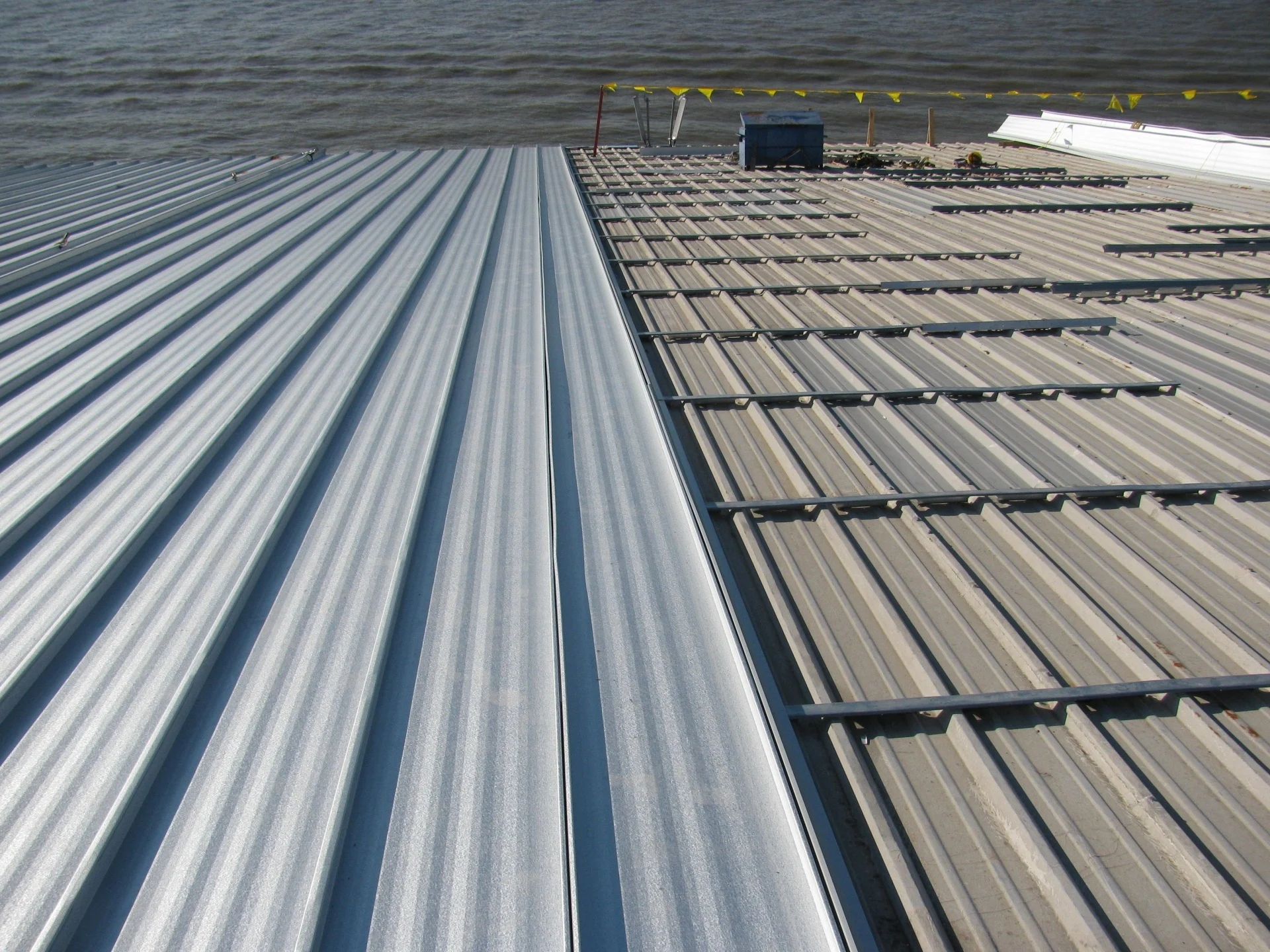
Commercial Re-Roofing in Denver, CO
Commercial Re-Roofing for commercial buildings across Denver.