Frequently asked questions
Commercial roofing for full-service hotels, limited-service hotels, extended-stay properties, and hospitality brands throughout Denver, CO.
Denver's hotel market has experienced one of the most dramatic expansions of any major American city over the past fifteen years, fueled by a booming outdoor recreation economy, the Colorado Convention Center's growing national event calendar, and the tech and energy sector employment growth that has reshaped downtown and the surrounding suburbs. From Union Station's boutique properties and the Gaylord Rockies Resort near DIA to the dense select-service corridor along I-25 and the resort-adjacent properties in Stapleton and RiNo, hotel operators in Denver face a climate that tests roofing systems in ways that combine high-altitude UV intensity, hailstorm frequency, and rapid thermal swings within a single 24-hour period.
Altitude fundamentally changes the UV exposure equation for Denver hotel rooftops. At 5,280 feet above sea level, solar radiation is approximately 25 percent more intense than at sea level, and UV degradation of membrane polymers accelerates accordingly. Roofing systems that carry a 20-year membrane warranty at sea level may show premature oxidation and surface cracking on Denver hotel rooftops when that UV factor is not properly accounted for in product selection. Manufacturers who rate their membranes for high-altitude performance include this in their technical data sheets, and specifying products that carry explicit high-altitude approval language provides a more defensible warranty position when early degradation is observed.
Hailstorms are among the most significant roofing risk factors for Denver hotels, and the I-25 corridor sits within the Front Range hail corridor that extends from Pueblo to Fort Collins. Golf ball-sized hailstones are not unusual in severe storm events, and a single hailstorm can cause membrane puncture, equipment damage, and skylight failure across an entire hotel property in a matter of minutes. Hotels operating near DIA are particularly exposed because the airport's flat terrain offers no topographic protection from approaching storm cells. Roofing membranes with hail-impact resistance ratings - specifically those tested to FM 4473 Class 4 standards - provide measurable protection compared to standard membranes and can also qualify for insurance premium reductions through commercial property insurers who recognize impact-rated roofing.
Denver's ski season creates a winter occupancy pattern unlike almost any other major urban hotel market in the country. Properties near Union Station, the Convention Center, and the I-70 mountain access corridors fill with destination ski travelers from October through April, leaving little room for extended roofing work closures during that window. Hotel operators who need to replace aging membranes or address PIP-required roofing work must carefully plan projects for the narrow window between Labor Day and early October, before the ski season occupancy surge begins. Alternatively, some owners phase projects into late spring after the season ends, accepting that spring snowstorms create additional scheduling uncertainty.
Full-service convention hotels in downtown Denver - including those directly connected to the Convention Center - maintain rooftop mechanical systems of substantial size and complexity to handle the HVAC demands of ballrooms, prefunction spaces, and large meeting room blocks. The density of rooftop penetrations on these buildings creates a high-maintenance flashing environment, and the thermal cycling caused by Denver's sunny, cold winters - where surface temperatures can swing 60 degrees between morning and afternoon - stresses sealants and pipe boot flashings more aggressively than in markets with more moderate temperature ranges. Semi-annual inspection schedules with specific attention to these penetration details are standard practice for large Denver convention hotel properties.
The Gaylord Rockies Resort and similar large destination resort properties near Denver International Airport represent a specific roofing challenge category: enormous low-slope roof fields with complex indoor atrium structures, waterpark areas, and convention center interconnects that create intricate waterproofing boundaries between occupied interior spaces and exterior roof surfaces. These mega-resorts require waterproofing system designs that accommodate differential structural movement between connected building sections, manage drainage from large roof fields during spring snowmelt, and provide accessible maintenance pathways for the ongoing upkeep that large resort rooftops demand.
Limited-service and extended-stay properties in the Denver Tech Center and Aurora submarkets serve a steady flow of technology company and federal government contractors whose travel is relatively insensitive to seasonal leisure patterns. Extended-stay guests at brands like Candlewood Suites, TownePlace Suites, and Staybridge Suites expect maintenance quality that matches a well-kept apartment community, and roofing issues that cause interior comfort disruptions - drafts, condensation on walls from thermal bridging, or ceiling discoloration - generate complaints that affect brand quality scores. Keeping these properties on preventive maintenance programs is especially important because the extended-stay guest notice cycle for maintenance issues is longer and more thorough than that of a two-night transient traveler.
Denver's Rocky Mountain News building renovation and several other high-profile adaptive reuse projects in the downtown core have established a template for converting industrial and commercial buildings into hotel properties, and many of these projects have addressed existing roofing systems that date from original construction. Before adaptive reuse hotel projects open, roofing systems should be fully evaluated and, if necessary, replaced to eliminate the deferred maintenance liability that an inherited roof represents. Investors and hotel brands assessing adaptive reuse projects want confirmation that the envelope is sound before committing capital to interior finishes, and a new roofing system with a manufacturer warranty provides that confirmation in a verifiable form.
Hotel operators across Denver have broadly embraced the value of long-term roofing maintenance agreements as a cost management tool. With hail events possible in any season, rapid thermal cycling year-round, and UV intensity above any comparable market at lower elevation, the per-year cost of a well-structured preventive maintenance program is a fraction of the emergency repair and interior remediation costs that follow a roofing failure during a fully-booked event weekend. Contractors who combine annual inspection services with priority emergency response commitments provide Denver hotel operators with the coverage they need to manage roofing risk across a climate that is genuinely more demanding than most hospitality operators originally anticipate when they enter this market.
Can you repair a leaking BUR roof in Denver without full replacement?
Sometimes. If the leak is isolated to a failed flashing at a penetration or parapet - common on Denver BUR roofs where freeze-thaw cycling works parapet base flashings loose - and the BUR field membrane is in sound condition confirmed by core cuts, targeted repair is the right scope. If the leak is coming from failed plies in the field, repair at the visible leak point will produce another leak nearby within one to two winters as freeze-thaw expands the moisture path. We will tell you which situation you are in before recommending any scope.
How do you handle gravel removal on a BUR tear-off in Denver?
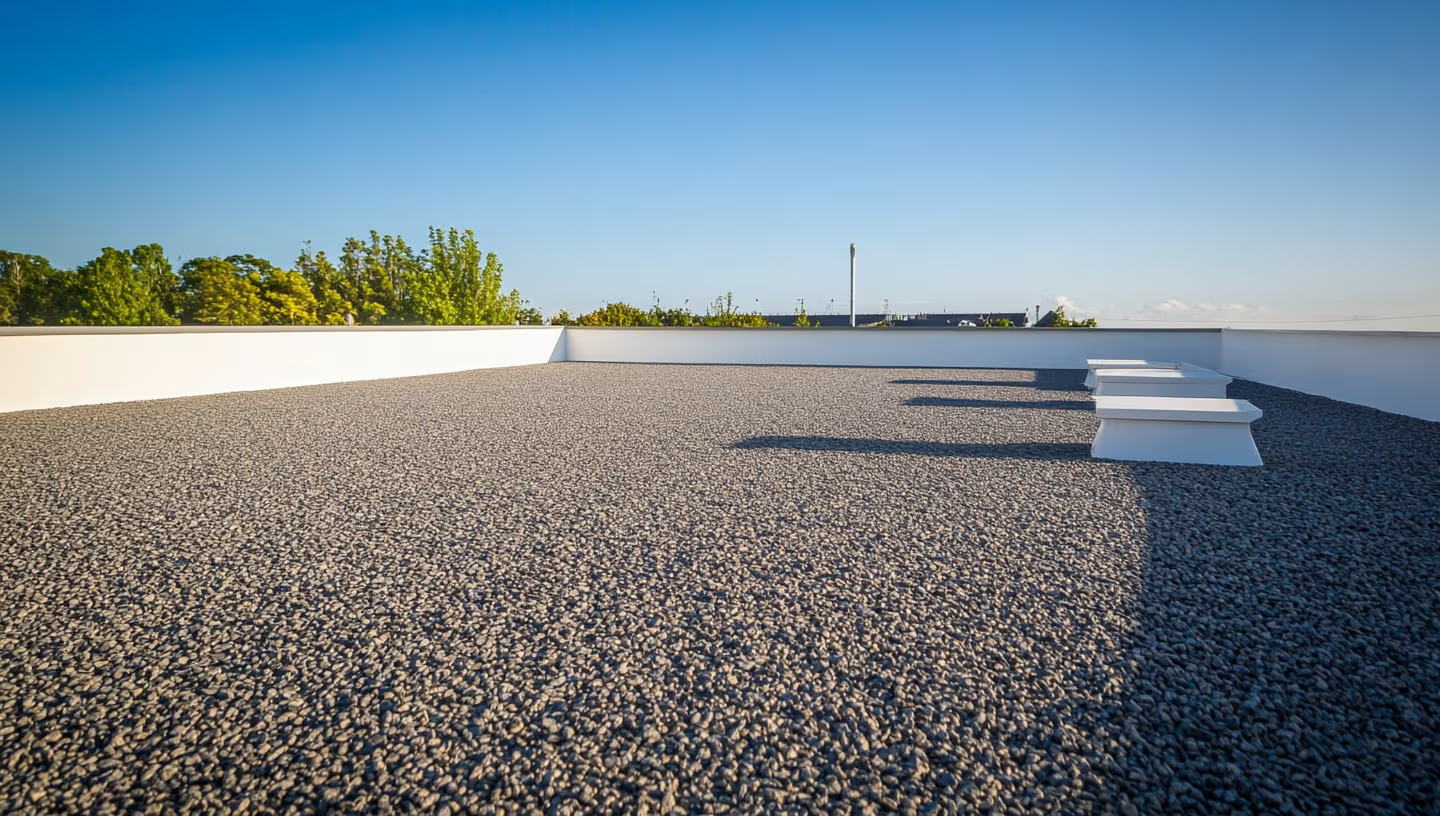
Gravel-surfaced BUR tear-off is labor-intensive and generates significant debris volume. On downtown Denver buildings with restricted site access - LoDo, the Golden Triangle, the 17th Street corridor - we use rooftop vacuum systems for gravel removal where dumpster placement is constrained by parking, street access, or neighbor proximity. Gravel is collected separately and coordinated for recycling at aggregate facilities when the owner's sustainability reporting requires documented diversion.
Is built-up roofing still installed new in Denver?
Rarely. New BUR has been largely displaced by SBS-modified bitumen, which achieves similar multi-ply performance with less installation complexity and without the hot-kettle and asphalt-fume exposure that creates complications in occupied urban Denver buildings. We can specify and install new BUR when a project requires it, but for most Denver commercial buildings, SBS modified bitumen or TPO with impact-rated cover board is the defensible recommendation for new work.
Aging BUR on a Denver commercial building?
We will walk the roof, pull core cuts, and produce a written assessment - replace vs. recover, with system options, installed cost bands, freeze-thaw and hail-resistance specifications, and warranty paths. No obligation.
| Scope Format | Written roof plan and photo record |
|---|---|
| Primary Market | Denver commercial buildings |
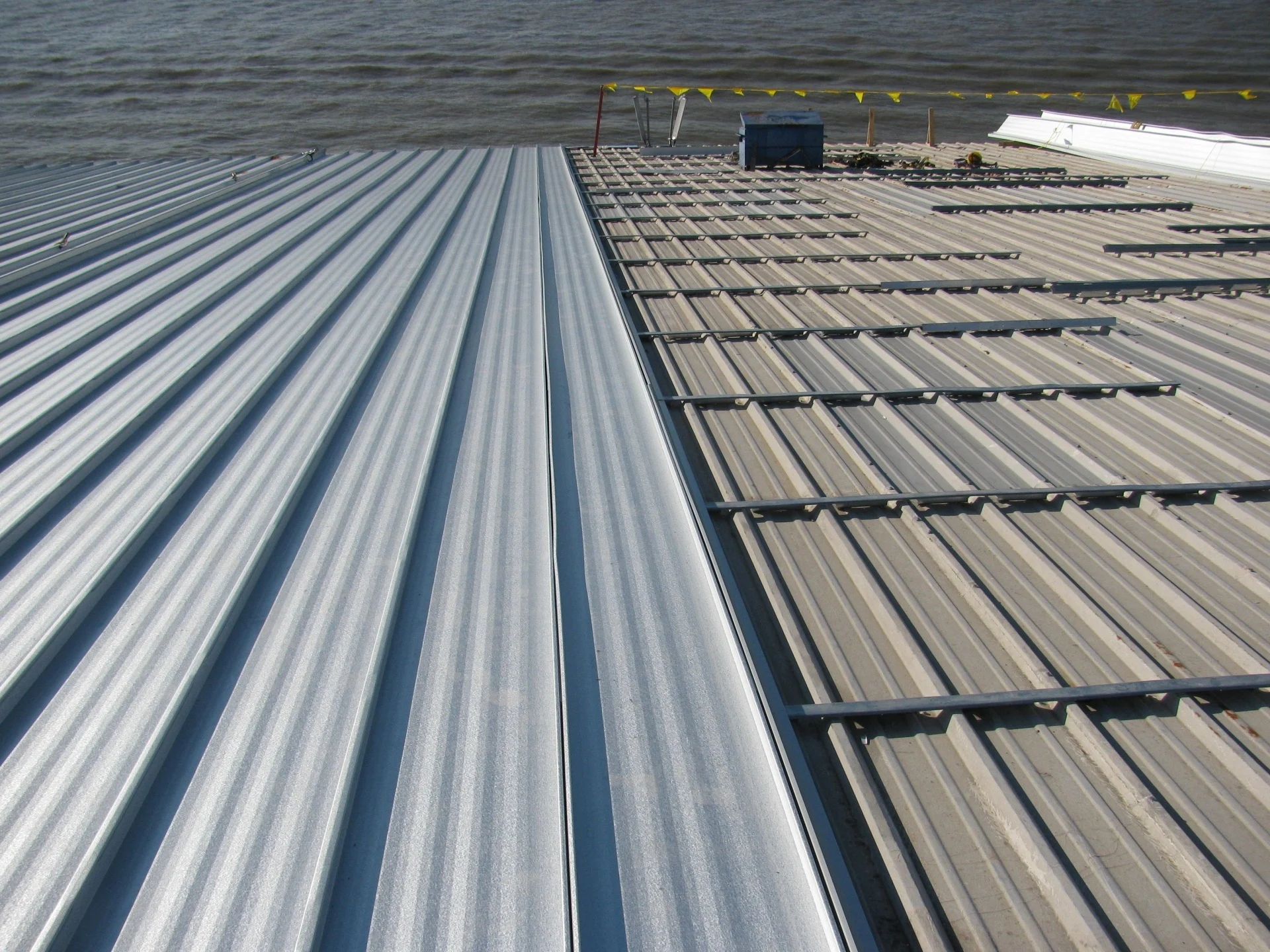
Commercial Re-Roofing in Denver, CO
Commercial Re-Roofing for commercial buildings across Denver.