Frequently asked questions
Commercial roofing for restaurants, quick-service chains, breweries, and food service facilities throughout Denver, CO.
Denver's restaurant and brewery economy has become one of the country's most celebrated, from the RiNo Art District's taproom corridor and the Ballpark Neighborhood's chef-driven concepts to the relentless fast-casual and QSR development filling Stapleton, Highlands Ranch, and the I-225 corridor in Aurora. The city's elevation of 5,280 feet above sea level creates a roofing environment distinct from most major markets - ultraviolet radiation is significantly more intense at altitude, the daily temperature swing between afternoon highs and overnight lows is pronounced for most of the year, and the spring and summer hail season sends golf-ball-sized hail through membranes that would hold up fine against the smaller stones common at lower elevations. Every one of those variables affects food service roofing systems more severely than standard commercial buildings because kitchen operations layer chemical and thermal stress on top of the atmospheric conditions.
Colorado's Front Range hail season is a structural fact of commercial roofing in Denver, not a background risk. Metro Denver averages one significant hail event per month from April through August, and the largest events produce hailstones large enough to puncture 45-mil single-ply membranes without difficulty. For restaurant buildings, a puncture near an exhaust curb or walk-in cooler base is especially damaging because those locations are already the highest-stress zones in the assembly - any additional damage there bypasses the membrane into areas where grease or condensate contamination already exists. Specifying a minimum 60-mil hail-rated membrane at initial installation, with re-inspection after any significant storm event, is the baseline standard for Denver food service roofing.
Denver's craft brewery density - concentrated in RiNo, Sunnyside, and the Baker neighborhood but distributed across the entire metro - creates a rooftop ventilation load that Colorado brewers often underestimate when planning building conversions. The city's altitude means air is thinner, so make-up air fans have to move more volume to achieve the same air exchange rate as the same equipment would achieve at sea level. Brewery ventilation engineers designing at altitude account for this with larger equipment - but larger equipment means heavier curbs, wider penetrations, and larger thermal bridges through the roofing assembly. The roofing contractor fabricating and installing those curbs needs to understand the altitude-driven sizing rationale to detail them correctly, not just install standard curbs under oversize equipment.
Grease exhaust management in Denver's restaurant buildings involves the same altitude physics that affect exhaust dispersion in Colorado Springs, compounded by the city's more intense urban heat island effect. Lower air density at 5,280 feet reduces the buoyancy of hot exhaust gases, causing them to linger at roof level before dispersing. In RiNo and the Ballpark Neighborhood, where restaurant buildings are tightly packed and the urban heat island adds several degrees to ambient roof temperature, exhaust vapor stays concentrated near stack terminations long enough to deposit a grease film significantly larger in radius than at sea level. PVC membrane extending 8-10 feet from exhaust stack centers - rather than the 4-6 feet adequate at lower elevation - properly accounts for this altitude-driven dispersion delay.
Walk-in cooler roofing details at Denver altitude face the diurnal temperature swing that defines Front Range climate. Denver regularly sees 40-50°F differences between daily high and overnight low temperatures even in summer, and that swing cycles the cooler curb assembly through thermal expansion and contraction far more frequently and severely than coastal cities experience. Rigid fill materials at cooler curb terminations crack under hundreds of such cycles per year, while flexible TPO or PVC membrane terminations with expansion accommodation continue to perform. Specifying flexible terminations as standard - not as a premium option - is the appropriate baseline for any Denver food service building.
The I-225 corridor in Aurora and the Highlands Ranch and Parker commercial areas along C-470 represent the suburban Denver food service roofing inventory: standard QSR and fast-casual outparcel buildings from the 1990s through early 2010s, many approaching membrane end-of-life, all experiencing the altitude-accelerated UV degradation that has reduced their effective service life relative to similar buildings in lower-elevation markets. Building owners and franchisees operating in those corridors who are still running original membranes from 15 or more years ago are statistically past the point where continued patching is the lowest-cost strategy. A re-roof with a properly hail-rated, UV-stabilized 60-mil system resets the clock and eliminates the liability of an aging system during peak hail season.
Denver's health code enforcement for commercial kitchen exhaust, administered through Denver Environmental Health, requires exhaust systems to terminate with adequate clearance from fresh-air intakes and combustible materials, in compliance with the Colorado Mechanical Code. At altitude, the lower air density can affect the performance calculations for exhaust clearance distances, and a system designed precisely to sea-level code minimums may not achieve adequate dilution at Denver's elevation. Contractors installing exhaust curbs and flashing on Denver restaurant buildings should be familiar with the altitude-adjusted mechanical code interpretation that Denver Environmental Health applies, since a system that passes the calculation at sea level doesn't automatically pass at 5,280 feet.
Denver's snowfall, though lighter than mountain resort areas, creates a specific problem for restaurant rooftops because the city experiences frequent rapid melt cycles - heavy snowfall followed within 24-48 hours by chinook warming that drives temperatures into the 50s and 60s. That rapid melt produces high-volume drainage events that test every drain and penetration flashing in the system simultaneously. Grease accumulation near exhaust curbs can clog drains and divert drainage to low spots in the membrane field during those melt events, creating ponding loads that exceed design intent. Clearing drains and removing any grease accumulation from drain approaches before each significant snowfall forecast is a practical preventive step that the Denver climate makes worth the habit.
Selecting a commercial roofing contractor for a Denver food service building is a decision that should weight altitude-specific experience heavily. The contractor who has re-roofed RiNo breweries, QSR buildings in Aurora, and sit-down restaurants in Washington Park has encountered Denver's specific combination of hail vulnerability, UV acceleration, altitude-driven exhaust dispersion, and diurnal temperature stress in a food service context. General Colorado commercial experience, or Front Range construction experience outside the food service sector, does not substitute for that combination. The questions that reveal food service altitude expertise are not complicated: How do you size PVC zones around exhaust penetrations in Denver compared to sea-level installations? What hail rating do you specify as a minimum for this market? The answers should come immediately and with specificity from a contractor who has actually done the work.
Can you repair a leaking BUR roof in Denver without full replacement?
Sometimes. If the leak is isolated to a failed flashing at a penetration or parapet - common on Denver BUR roofs where freeze-thaw cycling works parapet base flashings loose - and the BUR field membrane is in sound condition confirmed by core cuts, targeted repair is the right scope. If the leak is coming from failed plies in the field, repair at the visible leak point will produce another leak nearby within one to two winters as freeze-thaw expands the moisture path. We will tell you which situation you are in before recommending any scope.
How do you handle gravel removal on a BUR tear-off in Denver?
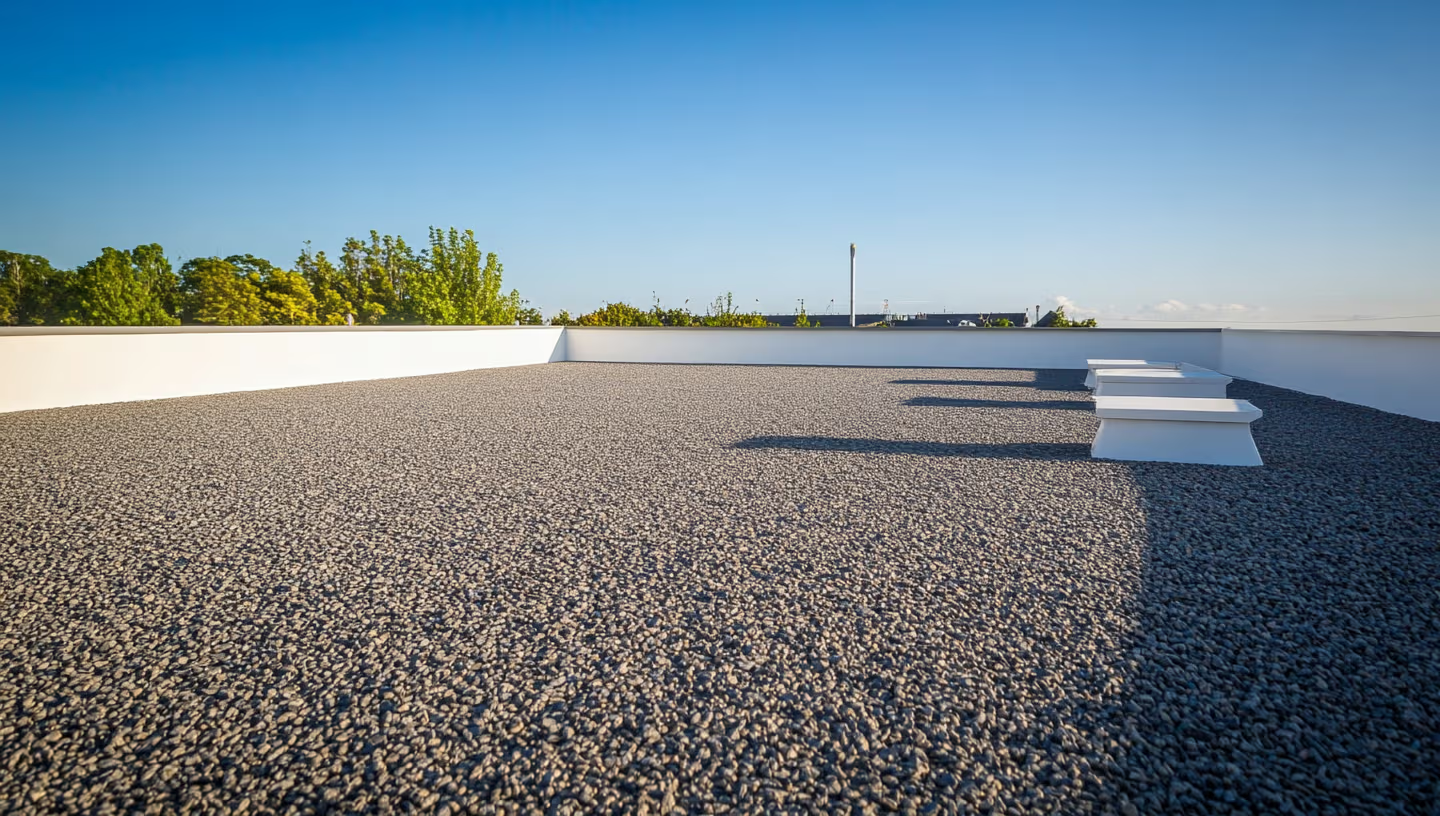
Gravel-surfaced BUR tear-off is labor-intensive and generates significant debris volume. On downtown Denver buildings with restricted site access - LoDo, the Golden Triangle, the 17th Street corridor - we use rooftop vacuum systems for gravel removal where dumpster placement is constrained by parking, street access, or neighbor proximity. Gravel is collected separately and coordinated for recycling at aggregate facilities when the owner's sustainability reporting requires documented diversion.
Is built-up roofing still installed new in Denver?
Rarely. New BUR has been largely displaced by SBS-modified bitumen, which achieves similar multi-ply performance with less installation complexity and without the hot-kettle and asphalt-fume exposure that creates complications in occupied urban Denver buildings. We can specify and install new BUR when a project requires it, but for most Denver commercial buildings, SBS modified bitumen or TPO with impact-rated cover board is the defensible recommendation for new work.
Aging BUR on a Denver commercial building?
We will walk the roof, pull core cuts, and produce a written assessment - replace vs. recover, with system options, installed cost bands, freeze-thaw and hail-resistance specifications, and warranty paths. No obligation.
| Scope Format | Written roof plan and photo record |
|---|---|
| Primary Market | Denver commercial buildings |
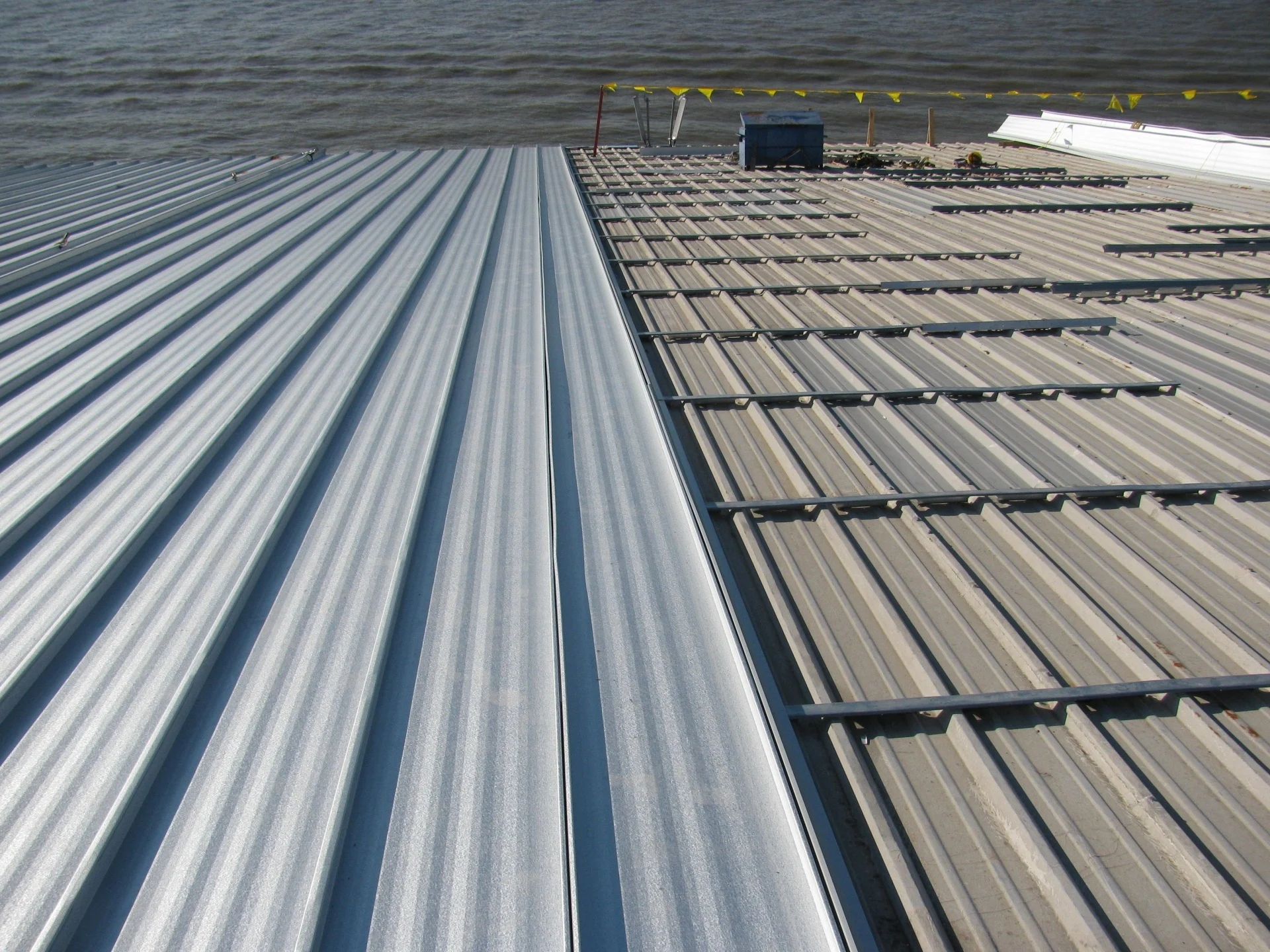
Commercial Re-Roofing in Denver, CO
Commercial Re-Roofing for commercial buildings across Denver.