
What We Inspect and Document on Each Visit
Multi-building roof asset management for Denver commercial portfolios - condition data over time, capital horizon planning, and proactive maintenance across hail belt and freeze-thaw exposures specific to Colorado.
Managing a portfolio of Denver commercial buildings means managing dozens of roof assets in different lifecycle stages - some in warranty, some approaching reroof, some already past it - all in a climate where a single hail season can move three buildings simultaneously to the front of the capital queue. Our roof asset management program gives you condition data, capital horizon estimates, and maintenance coordination across the full portfolio on a recurring cadence.
Reactive roofing in Denver is expensive roofing. A building with a roof failure that nobody tracked - because nobody was looking systematically - spends emergency repair money, loses tenant goodwill during the leak event, and then faces unplanned replacement capital in a market where the hail season has already driven up contractor scheduling demand. For a Denver owner or property manager with five buildings, this is an occasional problem. For one managing twenty or fifty buildings across the DTC, Cherry Creek, Aurora, and the I-25 and I-70 corridors, it is a budget and reporting crisis that happens multiple times per year.
Our roof asset management program replaces reactive with planned. We inspect every building in the portfolio on a recurring schedule - annual for buildings in the last five years of expected service life, biennial for mid-life buildings, triennial for new or recently replaced buildings - document condition data consistently across all buildings, track condition trends over time, and produce the capital horizon estimates that let ownership plan replacements on a five to ten year forward schedule rather than a 90-day emergency timeline.
The program is not a warranty-maintenance contract dressed up with a new name. It is a systematic approach to treating roof assets the way the rest of the building's mechanical systems are treated - with recurring inspection, documented condition trending, and proactive capital planning. It also includes a documented hail-event response protocol: after any NOAA-verified hail event affecting portfolio zip codes, we run rapid condition assessments on affected buildings and update their condition records within 72 hours.
Every inspection produces a structured condition record for the building's roof asset file. Field inspection covers: membrane condition (field, flashings, seams, penetrations, parapets), drainage performance (drain bowls, overflow drains, scupper condition, any active ponding or snowmelt-related freeze zones at drains), rooftop equipment condition (curb flashings, equipment condition, foot traffic impact), and parapet and wall flashing condition - with specific attention to freeze-thaw flashing failures at parapet base and inside corners, which are the most common maintenance finding on Denver commercial buildings.
For portfolio accounts managing ten or more Denver-area buildings - medical office portfolios in the Anschutz and Rose Medical campus areas, industrial portfolios across the I-70 and I-25 corridors, corporate campus facilities like the Lockheed Martin Littleton complex or the Raytheon Aurora campus - we use a standardized data capture template so condition records are directly comparable across buildings and across inspection years. A facilities director managing properties in Cherry Creek, the DTC, and Stapleton can compare asset condition on a common scale, not three different inspection formats from three different contractors.
Post-inspection reporting is delivered within five business days of the site visit: the updated condition record, all photos keyed to the zone diagram, deficiencies with priority classification (Critical - repair within 30 days / Significant - repair within 90 days / Watch - monitor at next inspection), and the updated remaining-life estimate for each roof zone. After documented hail events, we add a storm-event addendum to the condition record with findings specific to the event - distinguishing pre-existing condition from event-related damage.
Capital Horizon Planning - 5 and 10-Year Windows
Once we have two or more years of condition data on a building, the asset file supports capital horizon planning. Condition trend data - is the membrane degrading faster or slower than expected, and has hail-event frequency accelerated the degradation rate? - combined with the manufacturer's expected service life and the building's current condition rating produces a projected replacement window: a two to three year range that ownership can plan capital budgets against.
For Denver portfolio owners, we produce a five-year and ten-year capital schedule showing every building, its current condition rating, its projected replacement window, and a rough capital estimate in current-year dollars. The estimate includes the cover board and impact-resistance specification that every Denver replacement requires - we do not produce capital estimates based on bare-minimum specifications that would not qualify for Colorado insurance requirements. This document goes to ownership and lenders for capital planning conversations, not as a contractor bid but as professionally documented asset assessment.
We update the capital schedule annually as inspection data comes in. A building that absorbs a documented 2-inch hail event and shows accelerated membrane degradation moves earlier on the capital schedule. A building that holds condition better than projected moves later. The owner's capital horizon reflects what the roofs are actually doing.
Maintenance Coordination and Warranty Protection
For Denver portfolio owners with multiple buildings on multiple warranty terms, tracking which building's warranty requires what maintenance in which year is its own administrative task. We manage that calendar and notify the building's facility contact when a warranty maintenance visit is due - and we produce the maintenance record in the format the manufacturer's warranty desk requires, not a generic contractor invoice.
Hail-event response for portfolio accounts: buildings on our asset management program receive priority rapid-assessment scheduling after documented NOAA-verified hail events. Our current average response time for portfolio-account hail assessments in the Denver metro is within 72 hours for all portfolio buildings - critical in Colorado where the insurer's claim window often runs from the event date and documentation submitted within the first week supports faster claims processing.
Frequently asked questions
What is the minimum portfolio size for your roof asset management program in Denver?
We take portfolio accounts starting at three buildings in the Denver metro. Below three buildings, the economics of a structured program are harder to justify against per-project inspection fees - we would tell you so and suggest inspection-on-request instead. For ten or more buildings, the program delivers the most value: standardized data across the portfolio, meaningful trend analysis, defensible capital planning documentation, and a systematic hail-event response protocol.
Do you manage roofs installed by other contractors?
Yes. We inspect and asset-manage roofs we did not install. We document the existing system, request the original warranty from the prior contractor or manufacturer, and integrate it into the asset record. One specific value point in Denver: we research whether the existing system carries an impact-resistance rating. Many buildings acquire roofs without knowing whether the installed system qualifies for FM 4470 Class 1 or UL 2218 Class 4 - we determine that during the initial asset baseline and include it in the condition record.
How do you handle a building in the portfolio that needs emergency replacement mid-cycle?
Buildings on the program receive priority scheduling for emergency replacement scoping and mobilization. We already have the condition data, the zone diagram, and the system history - so scope development that typically takes two weeks on a new project relationship takes two to three days on a program building. In Denver's contractor-constrained spring hail season, that head-start on scheduling is meaningful.
Managing multiple Denver commercial buildings and flying blind on roof condition?
We will audit your current portfolio - inspect each building, document condition, and produce a five-year capital horizon estimate - so you are managing on data rather than reacting to hail seasons and emergency calls.
| Scope Format | Written roof plan and photo record |
|---|---|
| Primary Market | Denver commercial buildings |
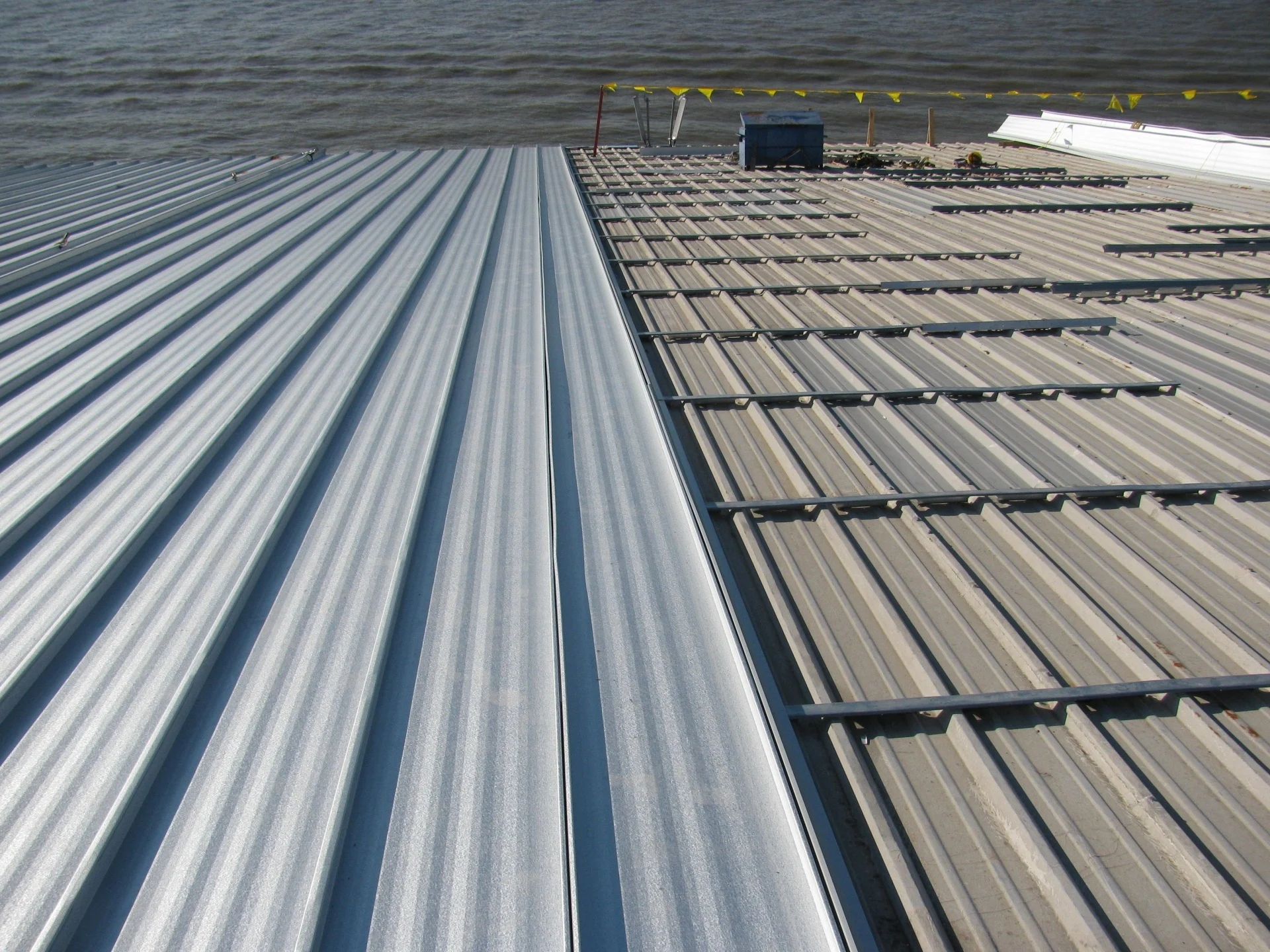
Commercial Re-Roofing in Denver, CO
Commercial Re-Roofing for commercial buildings across Denver.