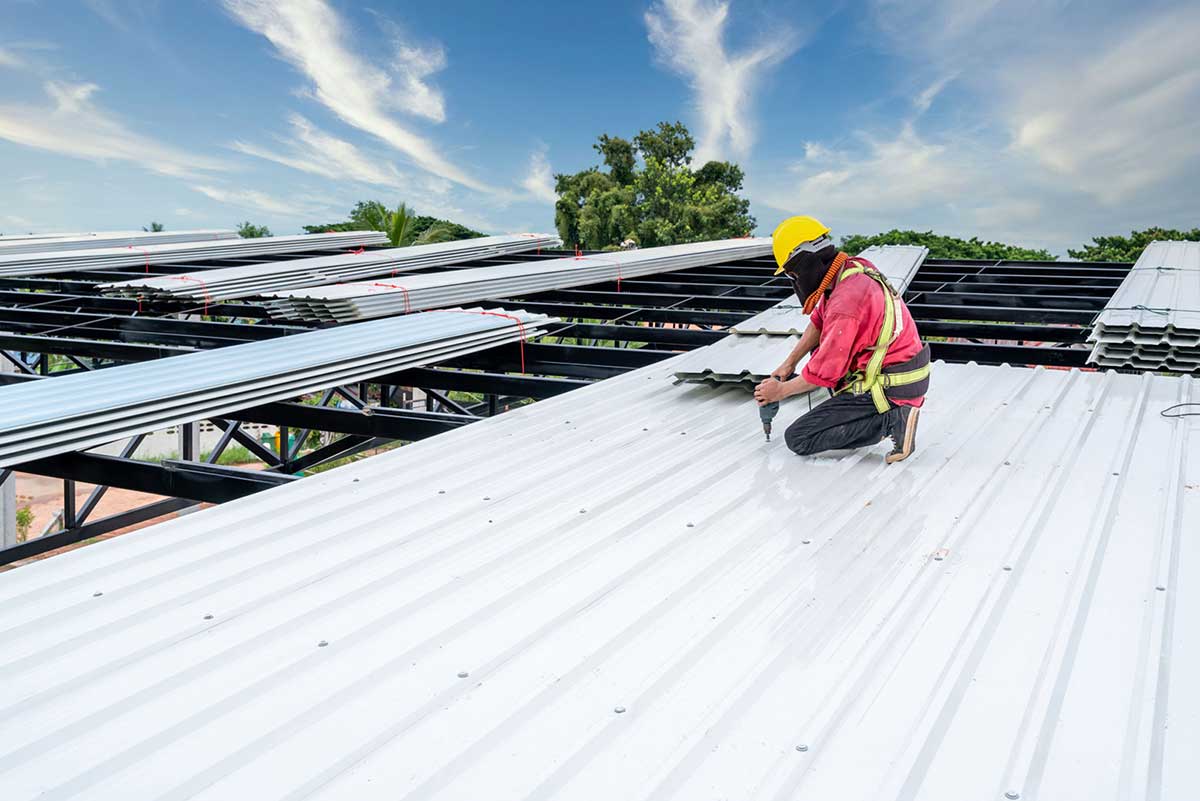
Moisture Core Sampling Protocol
Recover-vs-replace decision framework, moisture core sampling protocol, and recover system design for Denver commercial flat roofs - with freeze-thaw, snow load, and hail-belt considerations specific to Colorado.
A recover system - new insulation overlay plus new membrane installed over an existing roof - can extend a Denver commercial building's roof asset by 15 to 20 years at roughly half the capital cost of full tear-off replacement. The condition of the existing insulation determines whether recover is an honest option, and Denver's freeze-thaw climate makes that determination more consequential than in most markets.
The recover-vs-replace decision is the most consequential scoping question on any aging Denver commercial flat roof. Get it right and you either save the building owner 40 to 50 percent of replacement cost (if recover qualifies) or you avoid installing a warranted membrane over wet insulation that will freeze-expand through the first winter, buckle the new membrane, and void the warranty within 18 months (if it does not). Denver's 90 to 110 freeze-thaw cycles per year make wet-insulation-under-cover the most expensive mistake in this market.
We have no financial incentive to push replacement over recover or recover over replacement. A recover project on a 100,000 sq ft Denver warehouse might run $9 to $11 per sq ft installed versus $15 to $17 per sq ft for full replacement on the same building. If recover is the honest scope, we scope it. If the insulation is wet, we scope replacement - because covering wet insulation in Colorado does not solve the problem; it accelerates it.
The decision framework rests on two physical conditions: the moisture content of the existing insulation, and the structural condition of the existing roof deck. Both are assessed by physical investigation - not by surface appearance, and not by assumption.
We pull moisture cores at a density of one per 4,000 to 5,000 sq ft on roofs being considered for recover - minimum six cores on any roof we evaluate, regardless of size. Core locations sample all roof zones: field areas, areas near drains, areas near reported leak points, and any zones with visible surface anomalies. On a 50,000 sq ft single-story Denver industrial building, that means ten to twelve core pulls during the inspection visit.
Each core is inspected visually (wet insulation changes color from white to yellow or brown, and in Denver buildings may show ice-crystal expansion damage during winter inspections), weighed before and after oven-drying to quantify moisture content, and photographed in place before the plug is replaced. Core locations are marked on the roof zone diagram and each finding is documented. The written report includes the core map and the finding at each location.
Our threshold: if more than 25 percent of core pull locations show wet insulation, recover is not the honest scope. In Denver's freeze-thaw climate this threshold is more consequential than in warm-climate markets - wet insulation that might slowly dry out in a Houston or Phoenix building under a recover membrane will instead freeze repeatedly through each Colorado winter, expanding the moisture front and accelerating both insulation and deck deterioration. Below 25 percent wet cores, targeted insulation replacement at wet areas combined with a recover membrane can produce a warranted system with full expected service life.
Denver-specific consideration: the 1970s and 1980s office buildings along 17th Street, Lincoln, and the Golden Triangle corridor frequently show a pattern of localized wet insulation at mechanical curbs and drain pans - locations where the original flashing details have degraded after decades of freeze-thaw cycling. These wet zones are often repairable without full replacement if the field insulation is dry. We document wet-zone distribution carefully because geography matters: a building with 30 percent wet cores clustered entirely around mechanical curbs has a different repair path than a building with wet cores spread evenly across the field.
Recover System Design for Colorado Buildings
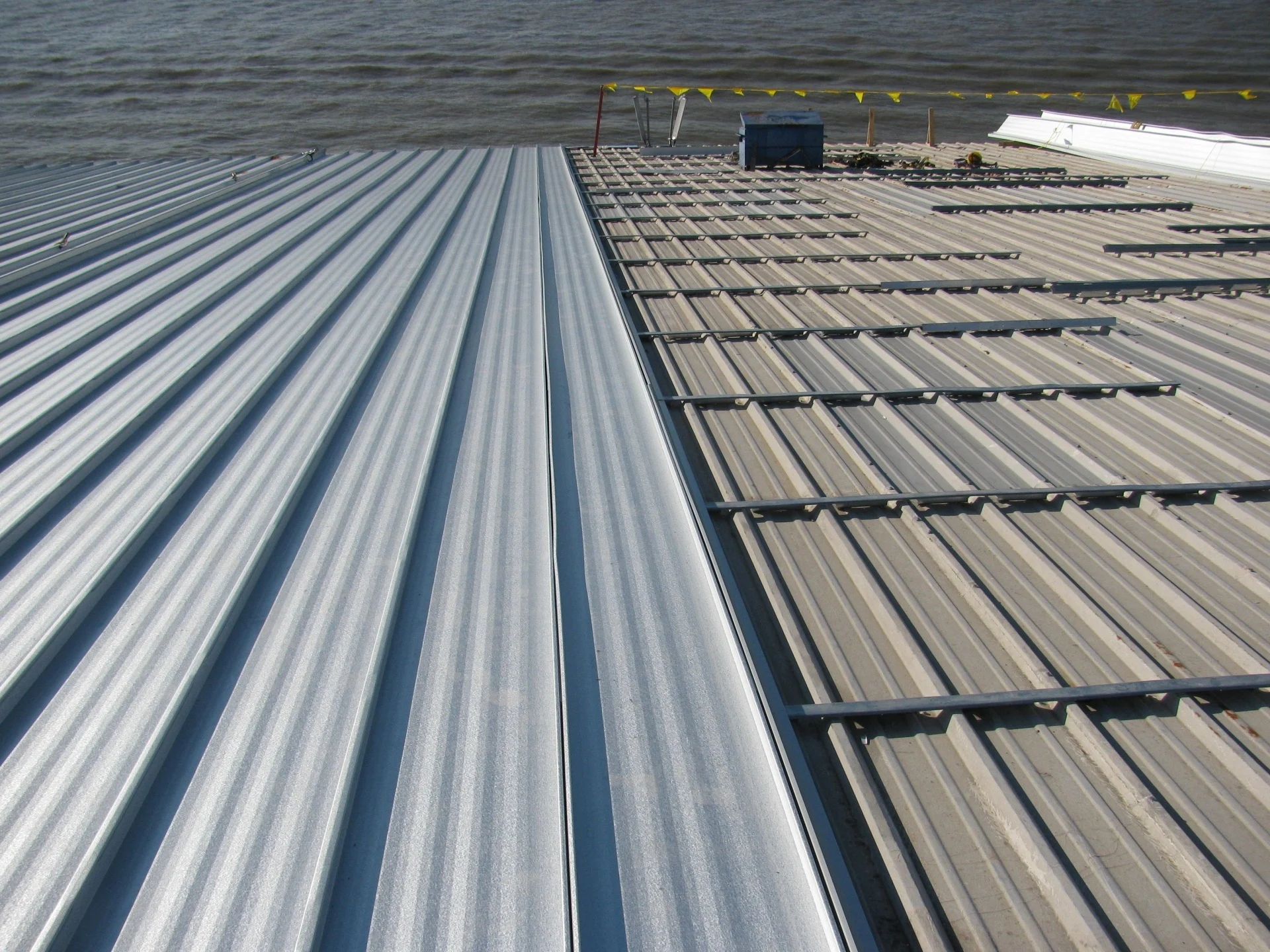
A recover system has three components: the attachment method to the existing roof, the new insulation overlay, and the new membrane. Each is specified based on the existing roof's condition, the manufacturer's recovery system design package, and - in Denver - the building's snow load and hail exposure requirements.
Attachment: most recover systems on Denver commercial buildings are mechanically attached - screws and plates driven through new insulation, the existing membrane, and the existing insulation into the deck. The fastener pattern is designed to the building's wind-uplift requirement based on Denver's exposure category and the relevant wind zone. On existing roofs with significant membrane degradation, a cover board over the existing membrane creates a consistent substrate before the new insulation layer.
Insulation overlay: the overlay spec must account for Denver's snow load. If the existing insulation contributes to the stack R-value and the recover overlay adds more mass, the structural deck must support both the new insulation weight and the design snow load. We calculate the existing-plus-new R-value for IECC energy code compliance and verify the structural capacity with the building's engineer of record when the snow load calculation is near the deck's design capacity.
Membrane: the recover membrane is specified with the same hail-resistance requirement as a new installation - impact-rated cover board plus TPO, PVC, or SBS modified bitumen tested to FM 4470 Class 1 or UL 2218 Class 4. A recover system in Colorado that omits the impact-rated cover board to hit a lower price point is not a code-compliant or insurer-qualifying specification. We include the cover board in every Denver recover scope.
When Recover Makes - and Does Not Make - Sense in Denver
Recover makes sense when: insulation is dry at more than 75 percent of core locations, the deck is sound under every core pull, the existing membrane has no active open seams or delamination in the field, and the building is within the single-recover rule. On a Denver commercial building meeting all four conditions, a recover system at $9 to $11 per sq ft installed versus $15 to $17 per sq ft for replacement delivers meaningful capital savings with equivalent warranty protection.
Recover does not make sense when: wet core percentage exceeds 25 percent, the existing roof already has a recover layer installed (Colorado building code requires tear-off at that point), the deck has structural deterioration, or the existing membrane is so degraded it cannot provide a uniform substrate for the recovery system's attachment. In Denver, any wet-insulation finding above the threshold is a harder disqualifier than in warm climates because the freeze-thaw consequence of covering wet insulation is severe.
One pattern we track in the Denver commercial portfolio: buildings where a coating or recover was done 12 to 18 years ago and the installer may have applied over marginally damp insulation - a condition that is harder to detect in summer but shows clearly after the first winter in core samples that reveal ice-crystal fracturing in the insulation board. Buildings in the 17th Street corridor, the DTC, and the Fitzsimons-area medical office market from the late 2000s recover wave sometimes show substantially worse insulation condition than the surface appearance suggests. This is exactly why we pull cores rather than rely on visual inspection.
Frequently asked questions
How much does a Denver commercial roof recover system cost vs. full replacement?
A recover system on a qualifying Denver commercial flat roof typically runs $9 to $11 per square foot installed, compared to $15 to $17 per square foot for a full tear-off replacement on the same building. The savings come from eliminating tear-off and disposal costs and reducing the insulation scope. The savings are only real if the recover scope is honest - a recover over wet insulation in Colorado's freeze-thaw climate fails its warranty and costs the full replacement price within two to three winters.
How do you patch the core holes after inspection?
We replace the core plug in the hole and seal it with compatible peel-and-stick flashing tape. The repair is watertight and leaves no permanent damage to the membrane. We photograph each patched core as part of the inspection documentation, and on Denver buildings inspected during winter or shoulder season, we verify that the patch material is rated for application at ambient temperature before proceeding.
Can I recover a building that already had one recover layer installed?
| Scope Format | Written roof plan and photo record |
|---|---|
| Primary Market | Denver commercial buildings |
Commercial Re-Roofing in Denver, CO
Commercial Re-Roofing for commercial buildings across Denver.