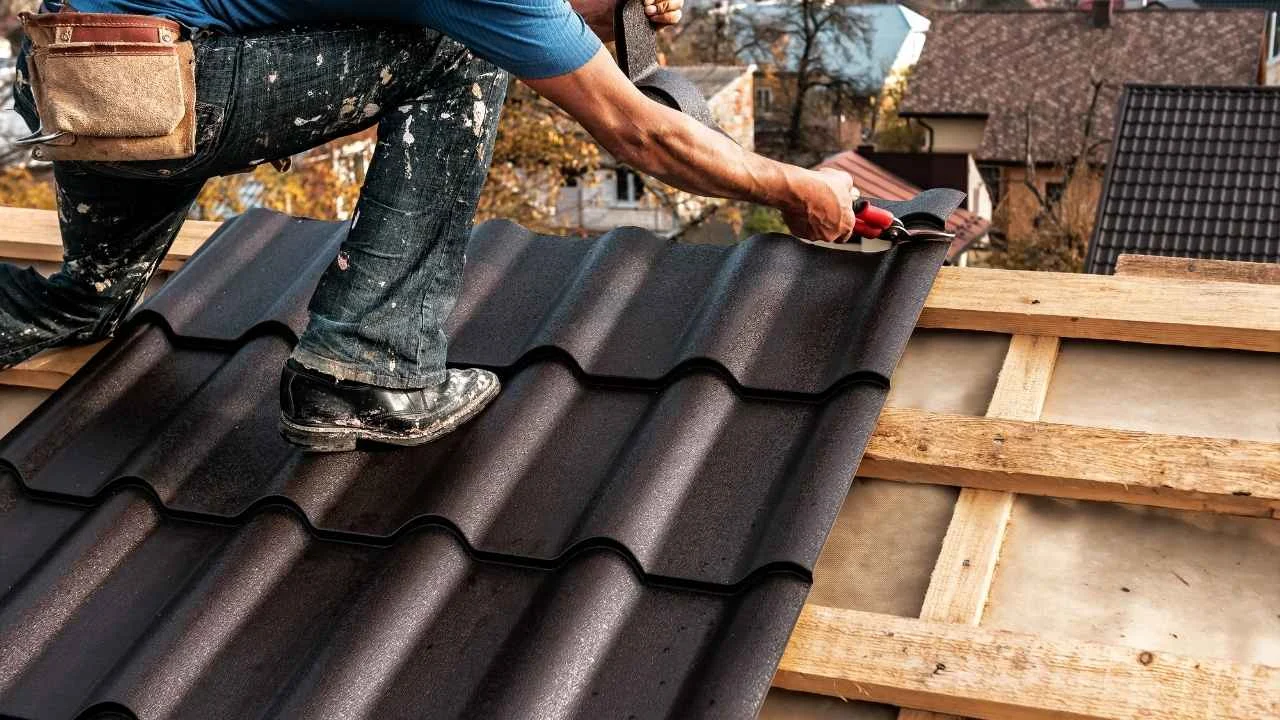
Galvalume vs. Painted Finish - Denver Context
Architectural standing seam metal roofing for Denver commercial buildings - Galvalume and Kynar-painted finishes, snap-lock and mechanical-seam systems, impact-resistant specifications, and 40-year substrate warranty paths engineered for Colorado altitude UV and hail.
Standing seam metal roofing on Denver commercial buildings - whether you are covering a new Lockheed Martin campus structure in Littleton or reclading a converted RiNo industrial building - carries the longest service life of any roofing system we install. We scope, install, and close out standing seam with substrate warranties up to 40 years and hail-impact specifications matched to Colorado's Front Range exposure.
Standing seam metal roofing has been appearing on Denver commercial projects in two distinct contexts. The first is adaptive reuse: RiNo's converted brick-and-timber warehouse buildings and the Curtis Park and Five Points redevelopment corridors have put standing seam on repurposed industrial structures where the exposed panel lines work as intentional architectural detail rather than afterthought cladding. The second is new commercial and institutional construction where the owner's capital horizon is 40-plus years and the lifecycle math - higher upfront cost, dramatically lower reroof frequency - outperforms single-ply alternatives over that window.
Denver's climate makes standing seam a more compelling specification than in most US commercial markets. At 5,280 feet, UV radiation runs 25 to 30 percent more intense than at sea level, accelerating membrane aging on single-ply systems that standing seam simply does not experience. Colorado's 90 to 110 freeze-thaw cycles per year attack flashings and seams on every roofing system - standing seam, correctly detailed with thermally free clips, handles that cycling better than any other low-slope or transitional-slope system we install. And in the hail belt, steel standing seam panels at 26-gauge or heavier outperform every single-ply membrane in impact resistance on a like-for-like basis.
We install standing seam on commercial and institutional buildings - not on the multifamily side. Every project is scoped against the building's actual slope, structural capacity, thermal movement range, and manufacturer warranty requirements. Standing seam fails at the details - clips, flashings, transitions - not the panels, and the details require precise adherence to the manufacturer's published specifications for warranty to be valid at closeout.
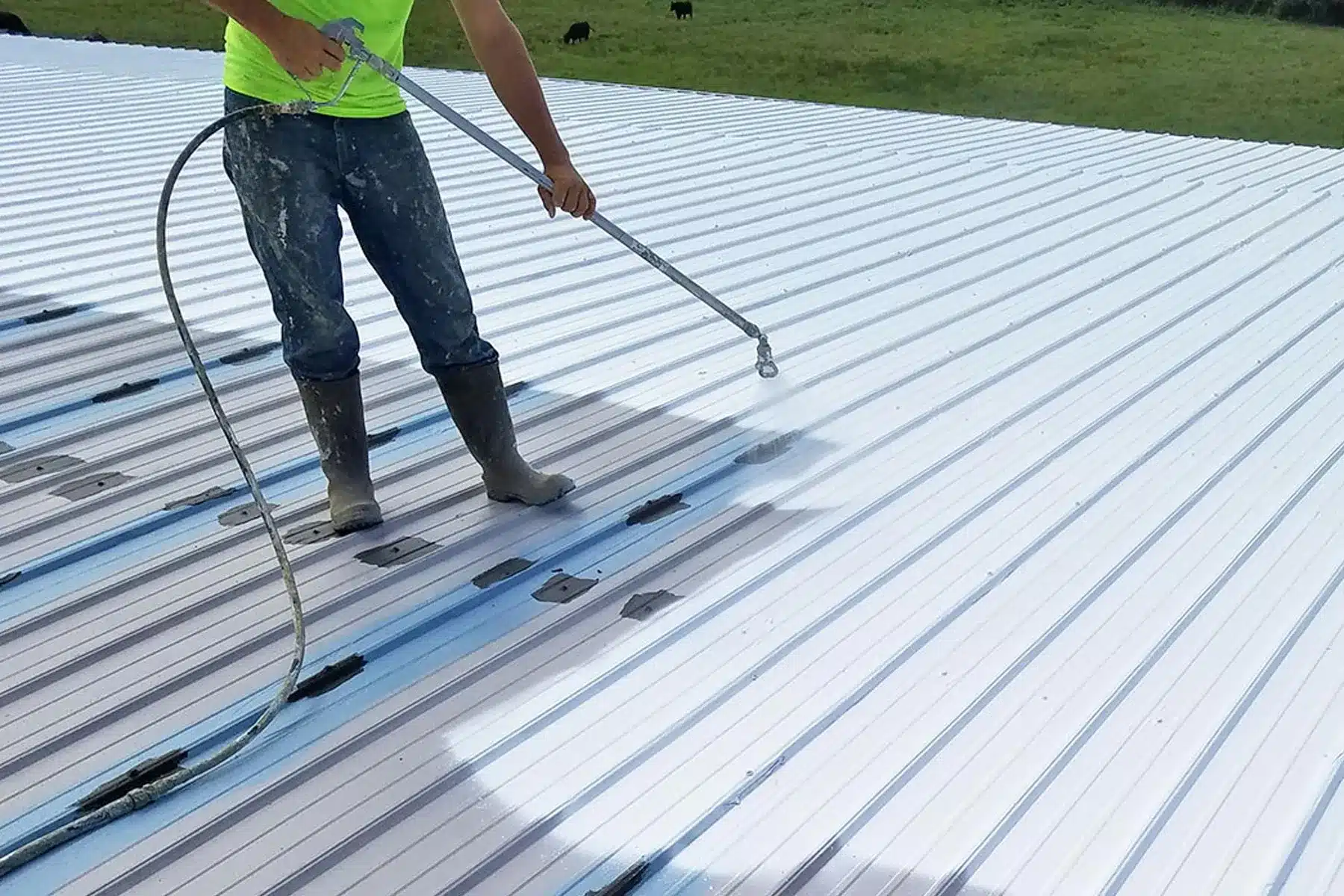
Galvalume - the zinc-aluminum alloy coating on the steel substrate - is the base durability standard for commercial standing seam. It carries a 40-year substrate warranty from major manufacturers including Drexel Metals, McElroy, and MBCI (all of which ship to Front Range distributors) and handles Denver's thermal cycling and elevated UV load without the color-fade degradation seen on older painted finishes. If the building does not need a color specification, Galvalume is the straightforward choice: maximum longevity, lowest price per square, no repainting maintenance.
Kynar 500 or 70%-PVDF painted finishes add architectural flexibility. These are the finishes prominent on the RiNo and LoHi mixed-use projects where the metal system is part of the building's design identity - charcoal, dark bronze, and weathering-steel looks have become a signature of Denver's adaptive-reuse wave. Kynar finishes carry a 40-year substrate warranty and a 30-year color/chalk/fade warranty from most manufacturers. They cost more per square than Galvalume but do not require repainting over the system's life.
Denver's 300-plus annual days of sunshine drive significant solar gain, but the city's dry climate and cold winters mean that highly reflective white Kynar finishes - appropriate on Dallas commercial buildings chasing cool-roof credits - are not always the right specification in Denver, where winter heat retention has value. We specify the finish after reviewing the building's energy model and orientation, not by default.
Snap-Lock vs. Mechanical Seam
Snap-lock panels interlock at the seam without a mechanical seaming tool. They install faster, cost less per square in labor, and are the correct choice for slopes above 3:12 where the panel drains freely and the seam is not under standing-water pressure. Most of the standing seam we install on sloped warehouse and industrial-annexes in Denver's I-70 and I-25 corridors, and on the sloped roofs of converted RiNo structures, is snap-lock.
Mechanical seam panels are crimped - 180° or 360° - with a powered seaming tool after installation. The double-lock seam provides a weather barrier rated down to slopes of 1:12, which is where most commercial flat-to-low-slope standing seam applications land. Any standing seam project on a Denver commercial building with slope below 3:12 should be mechanical seam. Snap-lock below 3:12 is a failure waiting to happen under Denver's spring snowmelt and runoff load, and we will not specify it regardless of budget pressure.
Thermal movement is more pronounced in Denver than in most US commercial markets. A 200-foot panel run on a Denver building operating through a temperature swing from -5°F in January to 100°F in July expands and contracts significantly more than the same panel on a Dallas or Phoenix building. The clip system - concealed clips that hold the panel to the structural substrate while allowing longitudinal movement - is where most standing seam failures originate when the clips are under-specified for the actual thermal range. We design the clip pattern to the building's specific thermal exposure, the panel's coefficient of expansion, and the manufacturer's published allowance for this climate zone.
Hail Performance and Impact-Resistance Specification
In Colorado's hail belt, standing seam's impact resistance is a primary specification driver - not a secondary benefit. Steel panels at 26-gauge or heavier are the standard specification for any Denver commercial standing seam project. Panels in this range absorb impacts from hailstones up to approximately 1.75 inches in diameter without functional compromise. Above 2 inches, denting can occur, but denting on a structurally sound standing seam panel does not compromise watertight performance or the manufacturer's warranty unless the dent opens a seam or creates a crack.
For insurance qualification purposes, we document the UL 2218 Class 4 rating for the specified panel at closeout - most Colorado commercial property insurers recognize standing seam steel roofing at 26-gauge or heavier as meeting impact-resistance thresholds equivalent to single-ply over HD cover board. We confirm the specific documentation requirement with the building's insurer before closeout and provide the certification package the underwriter needs.
The structural substrate considerations that apply to any standing seam project - metal deck span, clip pattern, insulation type - are the same in Denver as elsewhere, with one addition: snow load. The City and County of Denver carries a 30 psf ground snow load under ASCE 7-22. The insulation stack under the standing seam panels must be specified to the structural deck's capacity under this load, and we coordinate with the building's structural engineer of record on any project where the snow load calculation approaches the deck's design capacity.
Frequently asked questions
Can standing seam go on a Denver building with an existing flat roof?
Yes - a standing seam retrofit over an existing flat roof is a recover or retrofit system. We install a sub-framing system over the existing roof surface, creating positive slope and providing attachment points for the standing seam panels. The existing membrane stays in place as an air and vapor barrier. This approach is particularly useful on Denver's 1970s and 1980s warehouse and light-industrial buildings where the owner wants to add slope - improving drainage and snowmelt performance - without a full tear-off. The sub-framing also provides an air gap that improves thermal performance.
How does standing seam handle Colorado hailstorms?
Steel standing seam at 26-gauge or heavier handles hail up to approximately 1.75 inches without functional damage. Above 2 inches, denting can occur but does not compromise watertight performance unless a seam or crack opens. This is a meaningful difference from single-ply membranes, where 2-inch-plus stones can cause punctures. We document the UL 2218 impact rating for the specified panel at project closeout, which supports insurance premium qualification under most Colorado commercial property policies.
What is the installed cost range for commercial standing seam in Denver?
Installed cost on a Denver commercial standing seam project runs roughly $20 - 30 per square foot depending on panel gauge, finish, seam type, slope complexity, and substrate condition - somewhat higher than Dallas or Phoenix market equivalents due to Colorado's labor market and the more demanding thermal and hail specifications. This is $7 - 12 more per square foot than 80-mil TPO, but standing seam delivers a 40-year service life versus 25 - 30 years for TPO at altitude. The lifecycle cost per year of service is often comparable on buildings with long capital horizons.
Scoping a standing seam project on a Denver commercial building?
| Scope Format | Written roof plan and photo record |
|---|---|
| Primary Market | Denver commercial buildings |
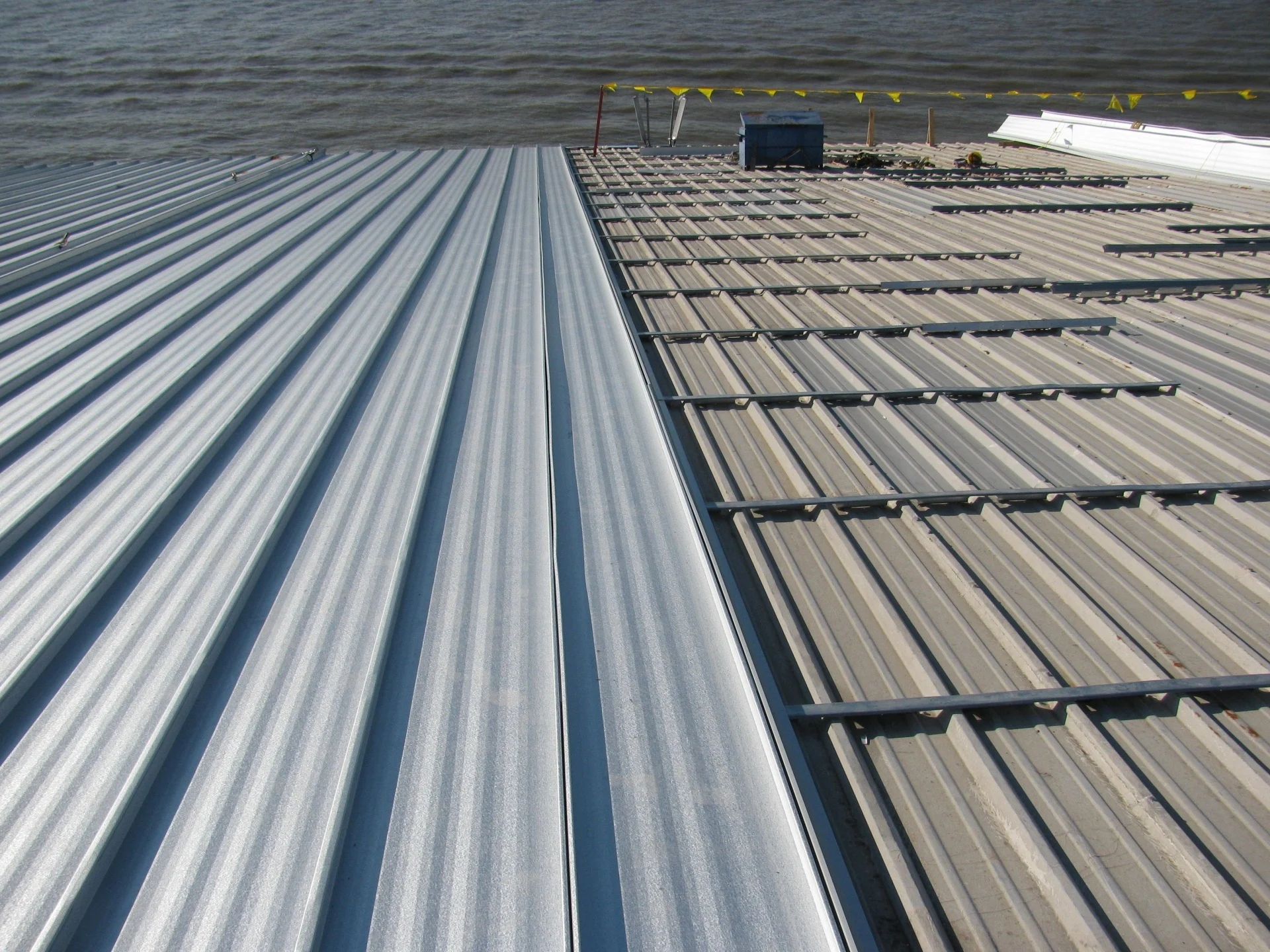
Commercial Re-Roofing in Denver, CO
Commercial Re-Roofing for commercial buildings across Denver.