EPDM and TPO Expansion Joint Cover Systems
EPDM and TPO expansion joint cover repair and replacement for Denver commercial flat roofs - addressing Colorado freeze-thaw structural movement, failed joint covers, and full replacement for joints that can no longer be patched.
Expansion joints fail when they are filled, bridged, or covered with a material that cannot accommodate the movement they were designed to absorb. In Denver's climate - 90 to 110 freeze-thaw cycles per year plus thermal swings that exceed 100 degrees Fahrenheit from summer peak to winter low - that movement range is larger than most original specifications anticipated. We repair or replace the cover system. We do not fill the joint.
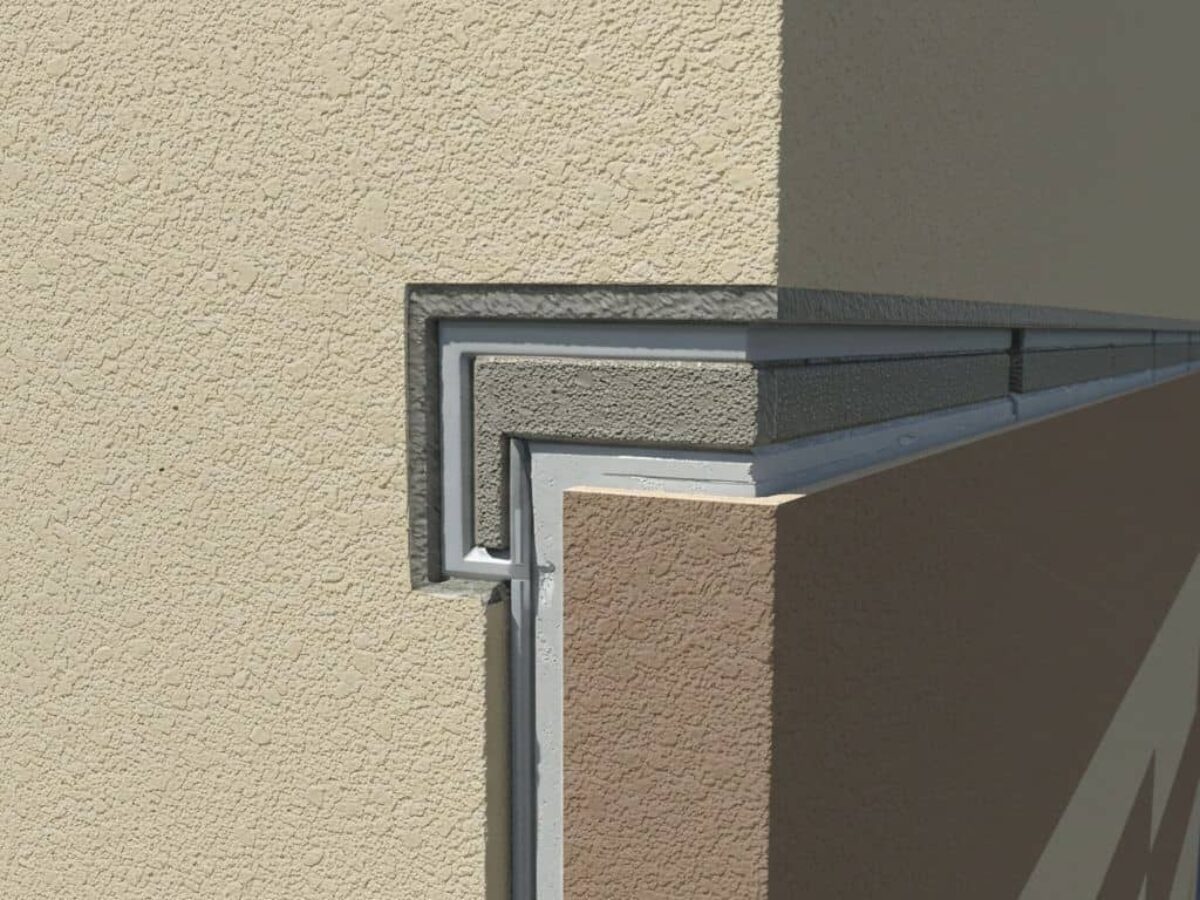
Expansion joints in commercial buildings exist because no building material - concrete, steel, masonry, or roofing membrane - can accommodate the full range of thermal and structural movement a large building experiences without cracking or tearing. The joint is a designed gap, typically one to three inches wide, that allows adjacent building sections to move relative to each other. The roof expansion joint cover is the flexible assembly that spans that gap at the roof surface and keeps water out while the joint opens and closes beneath it - and Denver's combination of hail belt, snow load, freeze-thaw cycling, and altitude UV reshapes every one of those considerations on the ground.
Denver commercial buildings experience an expansion joint loading that is more severe than most other US markets for two compounding reasons. First, Denver's thermal range is extreme: rooftop surface temperatures on a July afternoon at altitude can exceed 150 degrees Fahrenheit, while overnight lows in January can drop to single digits Fahrenheit. A joint that opens and closes across that full range cycles through more total movement than the same joint in a market with a milder temperature profile. Second, Denver's 90 to 110 annual freeze-thaw cycles mean the joint crosses the critical water-to-ice threshold repeatedly through fall and spring - moisture that enters a partially failed joint freezes, expands, and works the failure wider with each cycle.
We repair and replace expansion joint covers on Denver commercial buildings using EPDM and TPO bellows cover systems engineered to accommodate the movement range the building actually experiences - not just the thermal movement range the joint was originally specified for. Every expansion joint repair we do starts with measuring the joint width at multiple points and, where possible, at multiple times of year to understand the actual movement range before we specify a replacement cover.
EPDM bellows covers are the most common system on Denver commercial buildings from the 1980s and 1990s. The bellows - a flexible loop of EPDM that spans the joint opening - accommodates horizontal movement by extending or compressing. The cover is mechanically terminated on both sides of the joint with metal bars embedded in the roofing membrane. When the termination bars separate from the membrane or the bellows tears, the joint leaks. In Denver's climate, EPDM bellows material also hardens and loses flexibility over time as plasticizers migrate out - a process accelerated by Denver's high-altitude UV exposure - leaving a cover that cannot accommodate the movement range it was originally installed to handle.
For joints on buildings with existing modified bitumen or built-up roofing systems - common in the 17th Street and Golden Triangle office corridors and in the older DTC buildings along I-25 - we use a preformed expansion joint cover in a modified bitumen-compatible formulation, torched or hot-mopped into the surrounding membrane. These systems are less flexible than single-ply bellows covers and require more careful movement range estimation. In Denver's climate, we err toward a deeper bellows specification to provide safety margin against the extreme thermal cycling.
Denver's Thermal Range and Freeze-Thaw Loading
Denver's combination of high-altitude summer heat and high-altitude winter cold produces a total thermal range at the roof surface that exceeds most US commercial markets. We account for this by measuring the actual joint opening at the time of assessment and cross-referencing against historical temperature data to estimate the full seasonal movement range. For older buildings where the joint was originally specified for a smaller movement range than the building has experienced over its life - common on 1970s and 1980s construction that was not engineered to current thermal movement standards - we specify a cover with a bellows depth that accommodates the actual range plus a safety factor for the freeze-thaw cycling that will work the cover repeatedly through the shoulder seasons.
Freeze-thaw loading is a distinct concern from thermal cycling. A cover that can accommodate the full summer-to-winter thermal movement may still fail if water infiltrates a partially compromised joint and freezes. The ice expansion works the failure wider, and the next thaw leaves the joint slightly more open than before - a ratchet mechanism that produces progressive failure through repeated cycles. Our joint cover specifications include sealed termination details that prevent water from reaching the joint gap even when the cover is under maximum extension.
For buildings where we determine that freeze-thaw loading has been the primary failure driver - rather than simple age degradation of the cover material - we discuss improving roof drainage in the vicinity of the joint with the building owner. Water that cannot pond near a joint cannot infiltrate it. A drainage improvement that keeps the joint area dry during snowmelt events and sustained rainfall is sometimes more cost-effective than repeated cover replacements.
When Joints Need Full Replacement vs. Cover Repair
Cover repair - patching a torn bellows, re-terminating a pulled termination bar, or reseating a displaced cover - is appropriate when the failure is isolated and the cover material still has adequate flexibility and thickness to perform. We probe the EPDM or TPO cover material at the repair area and at representative points along the joint to verify the material is not too far degraded to hold a repair. In Denver's UV environment, EPDM covers that have been on a south-facing or west-facing parapet exposure for more than fifteen years often show full-thickness hardening that makes them unsuitable for repair - replacement is the right call.
Full cover replacement is indicated when the bellows material has hardened or cracked along its full length, when the termination bars have corroded or pulled out of the membrane over more than 30 percent of the joint length, or when the joint width has changed significantly from the original specification due to differential foundation settlement or cumulative freeze-thaw movement. In these cases, repair is not a durable option - the failure will recur at a different point along the joint within one or two Denver winters.
We do not fill expansion joints. A filled joint becomes a cracked membrane, and the crack will always open at the structural joint location regardless of what material was used to fill it. In Denver's freeze-thaw climate, filled joints fail faster than in gentler climates because the ice cycling works the fill loose and then tears the adjacent membrane as the fill moves with the joint. We encounter filled joints on buildings where a prior contractor applied urethane caulk or spray foam to an expansion joint - the fill has failed and left the joint in worse condition than before, with both the original failure and new membrane tearing at the fill-to-membrane bond. The repair for a filled joint is to remove the fill material, restore the joint gap to its original width, and install a proper bellows cover system.
Frequently asked questions
How do I know if a crack in my Denver roof membrane is at an expansion joint or just a field membrane crack?
Field membrane cracks follow random paths - stress points, seam lines, areas of settlement. Expansion joint failures follow the joint line exactly, because the crack is propagating along the structural joint below. If you have a linear crack that runs parallel to a visible building joint or a break in the roofline, it is almost certainly at an expansion joint. In Denver buildings, these linear cracks often appear or worsen after a cold winter when the freeze-thaw movement has worked the joint through its full range.
My building was constructed in the 1980s and I do not think it has expansion joints. Is that possible?
Yes. Expansion joint requirements depend on building length, material, and structural system. Some Denver commercial buildings from that era were built without roofing expansion joints and have developed field membrane cracks at structural transitions over time - sometimes mistaken for parapet failures or general membrane aging. If your building has recurring cracks at consistent locations year after year, those locations may need expansion joint covers installed retroactively. We assess this as part of our diagnostic walk.
Can expansion joint covers be installed over an existing Denver roof without a full reroof?
Yes, in most cases. The cover system is terminated into the existing membrane with mechanical bars and sealant, or heat-welded if the existing membrane is TPO or a compatible single-ply. We require that the membrane on both sides of the joint be in sound condition - installing a bellows cover over a deteriorated membrane just relocates the failure to the nearest seam.
How long do replacement expansion joint covers last in Denver's climate?
EPDM bellows covers in good condition last 15 to 20 years before the material degrades to where replacement is warranted - though Denver's high-altitude UV and extreme thermal range can move that timeline toward the lower end on south-facing and west-facing parapet exposures. TPO heat-weldable covers on new TPO systems typically match the life of the surrounding membrane. Buildings with particularly active freeze-thaw loading - older structures on sites with poor drainage that accumulates near the joint - may see shorter cover life and should be on a more aggressive inspection schedule.
| Scope Format | Written roof plan and photo record |
|---|---|
| Primary Market | Denver commercial buildings |
Commercial Re-Roofing in Denver, CO
Commercial Re-Roofing for commercial buildings across Denver.