How Wind Damage Shows Up on a Denver Commercial Roof
Wind and storm damage roof insurance claim documentation for Denver commercial buildings - Chinook windstorm and thunderstorm gust inspection, uplift evidence, and written scope packages.
Denver commercial roofs face two distinct wind exposures, and they don't behave the same way on a roof. Chinook winds come down off the Front Range foothills in sustained, high-velocity gusts - often strongest in late fall through spring - and they load a roof steadily over hours rather than in a single sharp burst. Severe summer thunderstorms bring a different pattern: short, intense straight-line gusts, often arriving with the same storm cells that produce the metro's hail events, so a single summer storm claim can involve both perils on the same roof at the same time. We're your roofing contractor, not a public adjuster - we document and substantiate the roof damage so you and your adjuster work from an accurate scope.
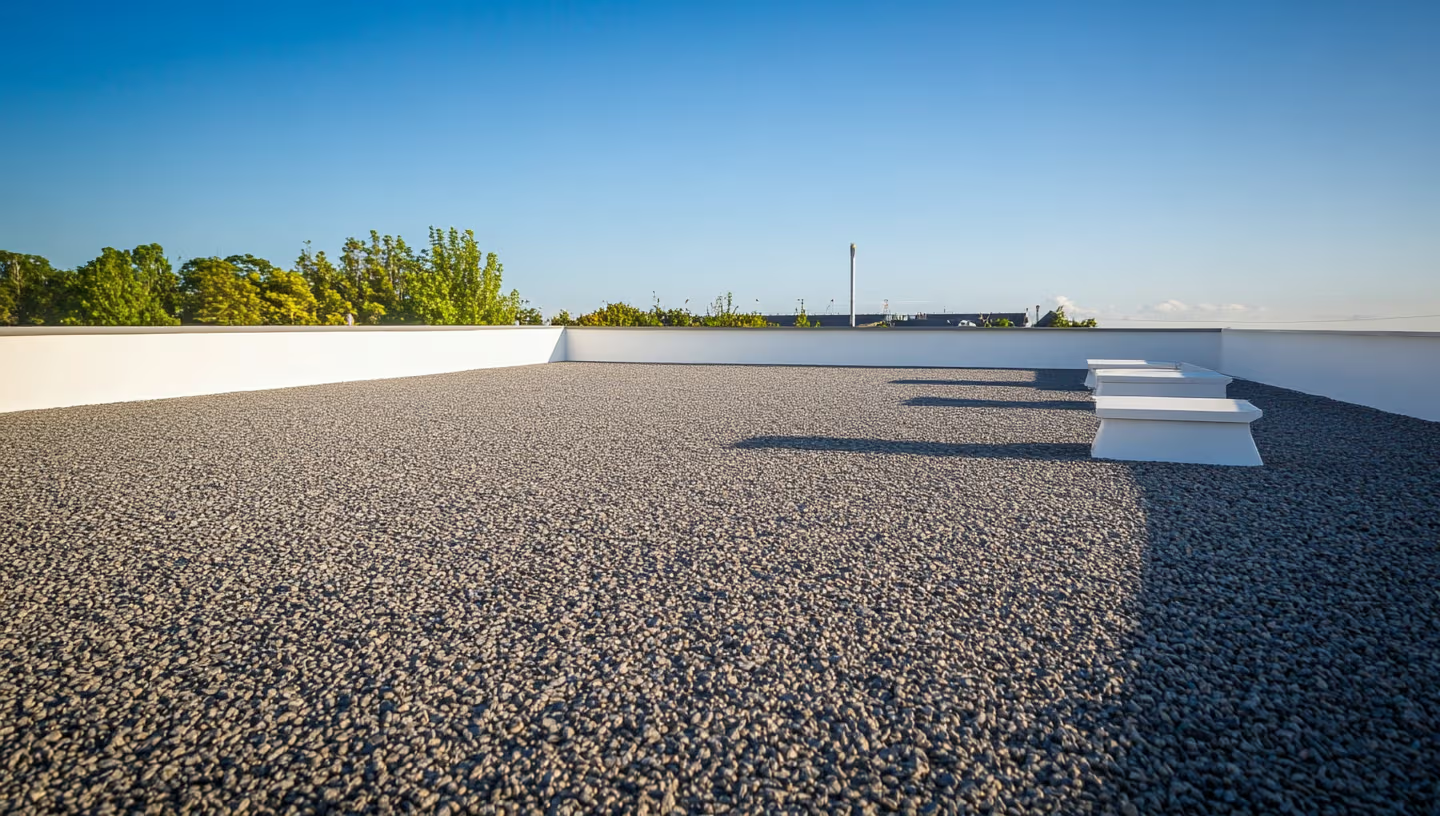
Wind-uplift failure concentrates predictably: roof corners and perimeter edges carry the highest uplift pressure in any wind event, which is where we look first. On mechanically attached single-ply systems, that shows up as membrane lifting off the fastening pattern, sometimes with the membrane still intact but no longer secured; on adhered systems it shows up as adhesive failure and membrane billowing. Parapet coping and counter-flashing are common failure points in Chinook events specifically - sustained loading works metal coping loose at the seams over hours, rather than tearing it off in one gust the way a short thunderstorm burst might. Rooftop equipment curbs, HVAC unit anchoring, and loose gravel ballast are the other places we check on every wind claim inspection, since displaced ballast and shifted equipment are both direct wind evidence and a secondary damage source if they've scored or punctured the membrane on the way.
Documenting a Chinook Event vs. a Thunderstorm Gust
The documentation differs by event type. For a Chinook wind claim, we note the sustained-duration character of the damage pattern - progressive fastener pull-through, coping seam separation along a run rather than at a single point - and reference the general wind pattern for the storm window the owner reports. For a thunderstorm wind claim, damage tends to be more localized and often overlaps with hail evidence from the same storm cell; where both perils are present, we separate the documentation by peril at the zone level so a wind-only or hail-only coverage distinction in the policy doesn't get lost in a combined damage description.
Scope Framing for Wind Claims
A wind claim scope covers more than re-securing the membrane. If uplift has compromised the fastening pattern across a roof section, current wind-load code requirements for that building's exposure category often call for an upgraded fastening density on the repair or replacement - not a simple like-for-like reattachment. We itemize that code-driven requirement in the written scope, along with parapet flashing and coping replacement, equipment re-anchoring, and any matching considerations where a partial-roof wind repair would create a visible seam-pattern or membrane-age mismatch with the undamaged field.
Frequently asked questions
How windy does it have to get to damage a commercial roof in Denver?
There's no single threshold - it depends on the roof's attachment method, age, and exposure. Chinook events along the Front Range regularly produce sustained gusts strong enough to work parapet coping loose and stress fastening patterns on older or under-secured roofs. Severe summer thunderstorms can produce short bursts strong enough to lift membrane at corners and edges even on newer roofs if the fastening density wasn't specified for the building's wind-exposure category.
What does wind damage look like on a flat commercial roof?
Membrane lifted or billowing at corners and perimeter edges, loose or missing parapet coping and counter-flashing, displaced ballast on ballasted systems, and shifted or unanchored rooftop equipment. Some of it is visible from the ground; most of it requires a roof walk to document properly.
Can a single storm claim cover both wind and hail damage?
Yes - Denver's summer thunderstorm pattern often produces wind and hail from the same storm cell. We document each peril separately at the zone level so the claim reflects which damage came from which cause, since policies can treat wind and hail coverage differently.
Do Chinook winds count as a covered peril?
Wind is generally a named peril on commercial property policies in this market given how common high-wind events are along the Front Range. Coverage specifics depend on your policy language. We document the damage pattern and its wind-driven cause; your carrier makes the coverage determination.
Will a wind repair just re-secure the membrane, or does the scope cover more?
It depends on what caused the failure. If the original fastening pattern wasn't adequate for the building's wind-exposure category, code often requires an upgraded pattern on repair or replacement, not a like-for-like reattachment. We itemize any code-driven or matching requirements in the written scope so they're part of the claim record from the start.
| Scope Format | Written roof plan and photo record |
|---|---|
| Primary Market | Denver commercial buildings |